
Japan Advances With South Korea and Others as Cherry Blossom Tourism Shapes Spring Travel
Japan Advances With South Korea and Others as Cherry Blossom Tourism Shapes Spring Travel

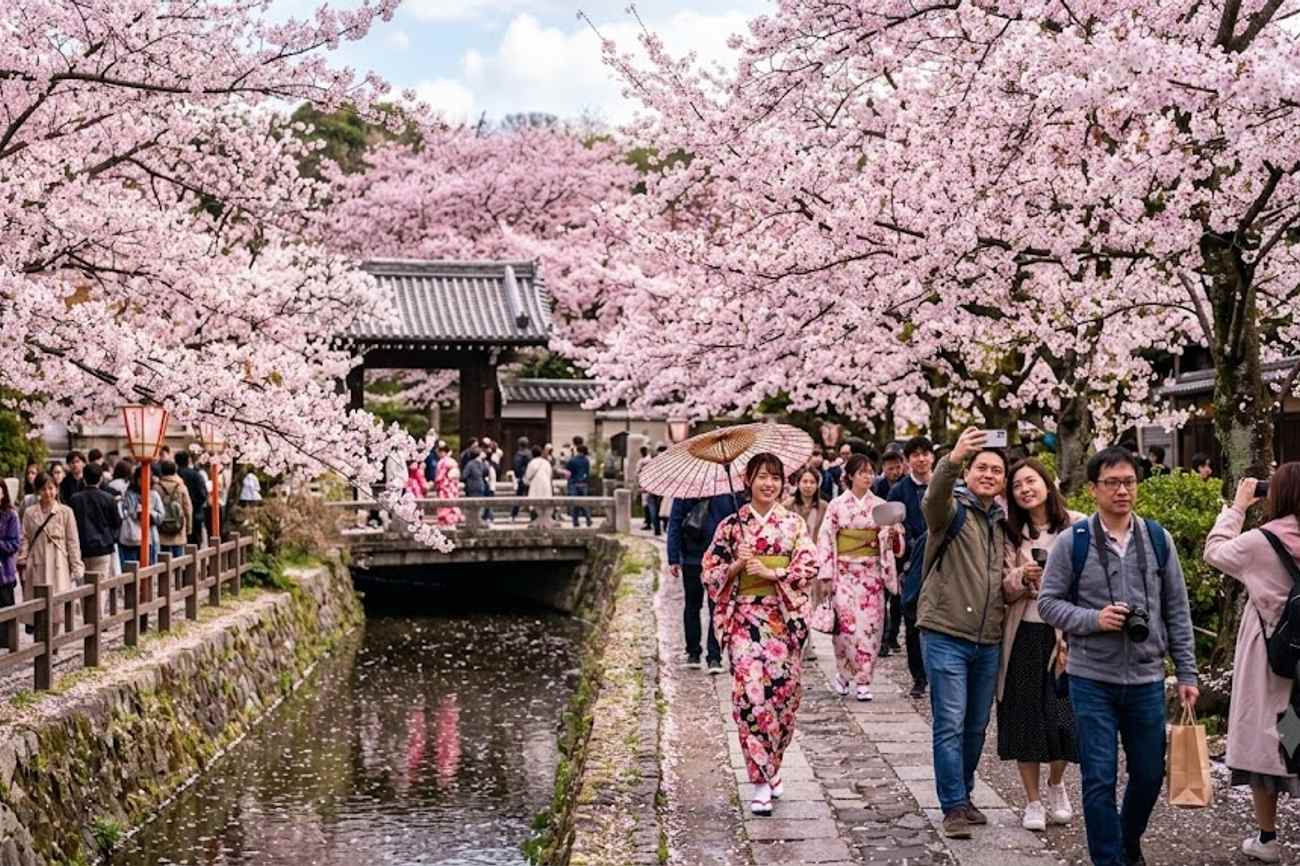
Image generated by AI
East Asian inbound arrivals from South Korea grew by 21.2% between January and August 2026, while Taiwan saw a 19.8% increase over the same period—a surge in regional mobility that is fundamentally altering how spring blossom tourism is managed across the continent. This shift indicates that the "sakura economy" is no longer a Japan-centric event but a coordinated regional industry where South Korea, Taiwan, and China are deploying sophisticated infrastructure to capture the same seasonal demand.
The Infrastructure of Unpredictability: 2027 Data Points
The travel industry is currently operating in a data vacuum regarding the 2027 Japanese cherry blossom dates, as the Japan Weather Association and JNTO typically only release forecasts between January and April of the active year. For context, the 2026 forecasting cycle began on 29 January with 53 locations and concluded on 8 April with 84 locations. Despite the lack of specific dates, the 2027 season is anchored by a massive fixed event: the International Horticultural Expo in Yokohama. Scheduled from 19 March to 26 September 2027, this expo is projecting 15 million total participants, including over 10 million paying visitors.
This creates a high-density tourism overlap. The expo's opening coincides with the traditional sakura window in central Japan, meaning the Tokyo-Yokohama corridor will face unprecedented capacity pressure. For travel planners, the data suggests a move away from "peak bloom" chasing toward "event-based" anchoring. When a fixed event like the Yokohama Expo overlaps with a variable event like the sakura, the fixed date becomes the primary driver for hotel contracting and flight capacity, while the blossom dates remain a secondary, flexible variable.
Regional Market Shifts and Competitive Benchmarking
The competition for spring tourism is intensifying as neighboring nations formalize their own blossom economies. While Japan remains the primary draw, the structural data from JNTO shows a volatile but high-volume flow of travelers from East Asia. Between January and August 2026, Japan recorded 27,626,300 international arrivals, with August alone contributing 3,098,900 visitors.
The regional approach to seasonal tourism is diverging. Japan is moving toward "granular monitoring," as seen in Kyoto's 2026 model, which tracked specific sites (Gion, Kiyomizu, Arashiyama) rather than treating the city as a single zone. In contrast, South Korea is utilizing "packaged integration." The Korea Tourism Organization (KTO) highlighted the scale of this effort in Jinhae, which manages 360,000 cherry trees, and Seoul’s Yeouido road, featuring 1,800 trees over 1.7 kilometers.
The following table illustrates the current market dynamics for the primary East Asian feeders into Japan, highlighting the growth patterns that influence regional spring travel planning.
| Market Feeding Japan | Jan–Aug 2026 Arrivals | Year-on-Year Change | August 2026 Arrivals | August Change |
|---|---|---|---|---|
| South Korea | 7,420,300 | +21.2% | 850,500 | +28.7% |
| Taiwan | 5,402,000 | +19.8% | 666,000 | +7.3% |
| China | 2,904,600 | -56.7% | 418,000 | -59.0% |
This data suggests a strategic pivot. With China's arrivals down significantly (-56.7%), the regional focus has shifted toward South Korean and Taiwanese travelers, who are more likely to engage in multi-destination spring itineraries. According to IATA, regional connectivity in Asia-Pacific is recovering at different speeds, and the growth in Korea-Japan travel suggests a burgeoning "Blossom Circuit" where travelers visit both countries' spring festivals.
Practical Traveler Advisory and Strategic Insights
The data indicates that the "perfect bloom" window is becoming a high-risk booking strategy. Because the Japan Weather Association's forecasts are subject to temperature fluctuations observed from autumn through spring, booking a trip based on a single date is statistically precarious.
Actionable Booking Advice:
- Diversify Your Geography: Do not book your entire stay in one city. In 2026, Tokyo's bloom at Chiyoda was 19 March, while Sapporo didn't bloom until 19 April and Kushiro until 5 May. To maximize your chances of seeing blooms, plan a North-South trajectory.
- Leverage the Yokohama Pivot: For 2027, if you are visiting in March or April, use the International Horticultural Expo as your anchor. Book accommodation in the Kanagawa or Tokyo regions now, as the projected 15 million visitors will create a supply crunch that exceeds normal sakura demand.
- Shift to Granular Planning: Follow the "Kyoto Model." Instead of searching for "Kyoto bloom dates," monitor site-specific data for the Philosopher's Path or Arashiyama. This allows for mid-trip itinerary adjustments.
As Japan and South Korea strengthen their tourism ties, travelers can expect enhanced flight connectivity between the two nations, with major airlines such as Japan Airlines and Korean Air operating frequent services, for more information on flight schedules and bookings, visit the Japan Airlines official website for the latest updates. The Cherry Blossom festival is a major draw, attracting millions of visitors each year. This surge in tourism is expected to boost the local economies of both countries. 4. Explore the Korean Alternative: Given the sophisticated packaging in South Korea—such as the Gunhangje Festival in Jinhae—consider a dual-country spring trip. South Korea's 2026 blooms began as early as 25 March in Jeju, providing a wider temporal window for blossom viewing.
Forward Projection: The 2030 Tourism Nation Goal
The current management of sakura tourism is a microcosm of the Japan Tourism Agency’s 2026–2030 Tourism Nation Promotion Basic Plan. The agency is targeting 60 million international visitors and ¥15 trillion in spending by 2030. However, the data shows a clear tension between these growth targets and the reality of "overtourism."
The move toward site-level monitoring in Kyoto and regional dispersal is a direct response to this. We can project that by 2027, the industry will move away from "National Forecasts" and toward "Real-Time Demand Maps." Travelers will likely see AI-driven tools that redirect them from overcrowded spots like the Philosopher's Path to under-utilized regional blooms in real-time to maintain the balance between residents and visitors.
Furthermore, the integration of seasonal transport and crowd-management systems currently being deployed in China will likely be mirrored in Japan and South Korea. The goal is to transform a natural, unpredictable event into a managed industrial flow. According to UNWTO, sustainable tourism growth requires this type of precision management to prevent destination degradation.
FAQ: East Asia Blossom Tourism 2027
Will hotel prices increase for Spring 2027? Yes. The overlap of the International Horticultural Expo in Yokohama (15 million projected visitors) and the sakura season will create unprecedented demand in the Tokyo-Yokohama corridor. Early booking is essential to avoid extreme price surges.
Is it too early to book flights for the 2027 sakura season? While exact bloom dates are unknown, the "seasonal window" (late March to early May) is consistent. Because of the Yokohama Expo, capacity will be tighter than usual; securing flights 6-9 months in advance is recommended.
Which destinations offer the most reliable bloom experiences? Kyoto and Tokyo offer the most granular data, but for those seeking a wider window, a multi-city itinerary from Kyushu to Hokkaido is the safest bet due to the staggered blooming dates across latitudes.
Are South Korean cherry blossoms a viable alternative to Japan? Absolutely. With massive infrastructure like the Jinhae Gunhangje Festival and integrated tour packages from Seoul and Busan, South Korea provides a highly organized and often less congested alternative to Japan's primary hubs.
The era of chasing a single date is over; the future of seasonal travel is granular, regional, and data-driven.
Related Travel Guides
- Brazil Travel Soars As National Survey Tracks 22500 Visitors Across 50 Destinations To Shape Tourism Future
- Georgia Moves With Cambodia To Accelerate Tourism Trade And Investment Cooperation Across New Economic Frontiers
- Finnair Shines As Premium Travel Champion After Winning Northern Europe’s Best Airline Crown Once Again
Disclaimer
This article is for informational and educational purposes only. It does not constitute legal, financial, or professional advice. While we strive to provide accurate and up-to-date information, travel policies, regulations, and conditions change rapidly. Always verify information with official sources before making travel decisions. Nomad Lawyer makes no representations about the accuracy, reliability, completeness, or suitability of the information provided. Readers should consult qualified professionals for advice specific to their circumstances. The views expressed in this article are those of the author and do not necessarily reflect the views of Nomad Lawyer.
Kunal K Choudhary
Co-Founder & Contributor
A passionate traveller and tech enthusiast. Kunal contributes to the vision and growth of Nomad Lawyer, bringing fresh perspectives and driving the community forward.
Learn more about our team →