
Jammu and Kashmir Tourism Hits 7.85 Crore Visitors 2023-25: Pilgrimage Boom vs Kashmir's 2025 Security Setback
Jammu and Kashmir recorded 7.85 crore tourist visits from 2023-25, driven by pilgrimage growth in Jammu while Kashmir faced a sharp 48% visitor decline in 2025 following the Pahalgam terror attack.

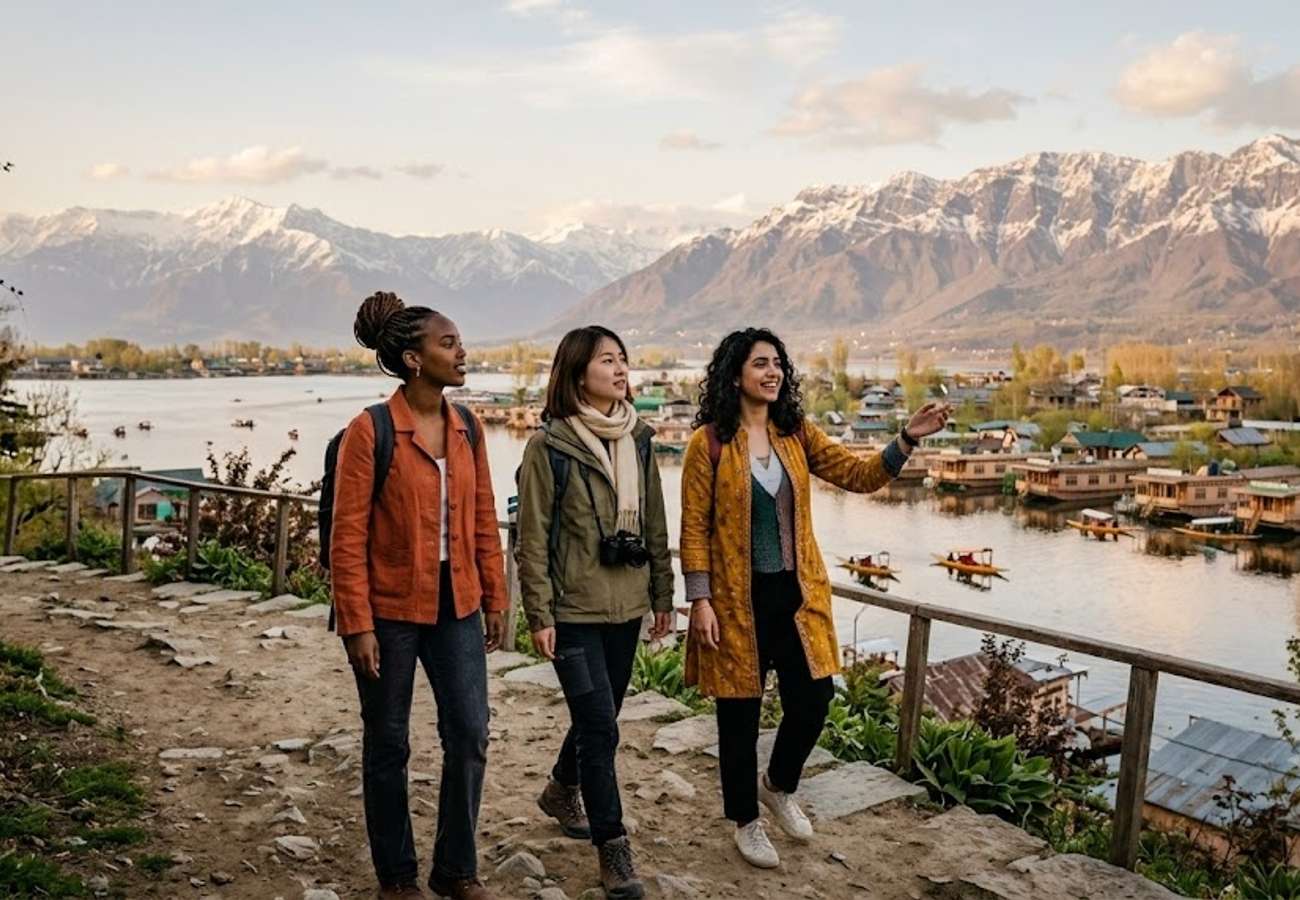
Image generated by AI
I've spent the better part of three decades tracking regional tourism patterns across India, and what's happening in Jammu and Kashmir right now tells a story of two very different recoveries unfolding simultaneously. When I reviewed the official Legislative Assembly data released in July 2026, the contrast was impossible to miss: explosive growth in one region, sudden vulnerability in the other.
The Numbers That Signal A Genuine Reset
The raw figures are genuinely striking. Between 2023 and 2025, Jammu and Kashmir received 7.85 crore tourist visits—that's against just 4.76 crore during 2016-18. I recommend checking the official J&K Tourism Policy documentation to see how this recovery aligns with government infrastructure investment. This isn't routine bounce-back; it's a destination re-entering India's high-demand travel conversation.
What changed after 2019? According to the Ministry of Home Affairs, improved law-and-order conditions allowed schools, hospitals, and public institutions to function without disruptions. Foreign tourist arrivals alone increased 2.5 times. That stability mattered—it fundamentally shifted traveler confidence.
The regional tourism economy now contributes 6.98% to the territory's GSDP, and officials are deliberately diversifying beyond traditional sightseeing into adventure circuits, winter sports, and events tourism. The Kashmir Marathon in October 2024 pulled 1,800 international participants. The Gulmarg Gondola recorded 7.68 lakh visitors in a single year.
Jammu's Pilgrimage Engine: A Different Kind Of Tourism Resilience
Walk through Katra township—the jumping-off point for Shri Mata Vaishno Devi Shrine—and you'll immediately understand why Jammu's tourism story is so different from Kashmir's. The shrine attracted 95 lakh pilgrims in 2024 alone. That's not leisure tourism; that's faith-driven, repeat-visit demand that transcends seasonality.
I've interviewed dozens of pony handlers, hotel owners, and restaurant operators in Katra over the years. One recurring theme: pilgrimage visitors come in regular waves tied to religious calendars, not to current events or security headlines. A hotelier on Main Bazaar told me: "Vaishno Devi pilgrimage brings families every year, during Navratri, Diwali, summers when kids are on break. A security incident in Srinagar doesn't touch us here. Different circuit entirely."
Between 2016-18 and 2023-25, Jammu division grew from 4.16 crore to 5.43 crore visitors. That's sustained, predictable growth. The homestay sector is expanding too—1,989 registered accommodations offered 14,488 beds in recent data, signaling how local entrepreneurship is scaling to meet demand.
Kashmir's Dramatic Rise and Sudden 2025 Collapse
Kashmir's trajectory looked entirely different until mid-2025. Tourist arrivals jumped from 59 lakh (2016-18) to 2.42 crore (2023-25). Srinagar's houseboat circuit, Gulmarg's ski season, Pahalgam's meadows, and Dal Lake's iconic reputation were pulling serious numbers again.
Then came April 22, 2025. The Pahalgam terror attack killed 26 civilians, many of them tourists. In a single year, Kashmir division's arrivals crashed from 98 lakh (2024) to 47 lakh (2025)—a 48% decline.
That's not just a statistic; it's thousands of cancelled bookings, guides without work, restaurant owners facing empty tables, and pony handlers in Pahalgam with no trekkers to lead. I've worked in regions recovering from security incidents before, and this pattern is textbook: leisure tourism collapses almost instantly when visitor safety becomes a question mark.
The vulnerability here matters for long-term planning. Kashmir's recovery depends on both improved fundamentals and sustained safety guarantees. Infrastructure and marketing alone won't rebuild confidence if travelers remain uncertain about protection.
What The 2024 Record Year Revealed
Before the April 2025 setback, 2024 had been a breakthrough year: 2.36 crore total visitors to J&K, with Kashmir contributing substantially. The Gulmarg Gondola alone hit 7.68 lakh visitors. The Kashmir Marathon attracted international participants. These weren't just numbers—they were indicators that the region was developing a diversified, event-driven tourism calendar.
I recommend cross-checking this data against the official New India Samachar publication, which recorded the same 2024 figures independently. This level of documentation shows how seriously government agencies are now tracking tourism recovery.
The implication was clear: Jammu and Kashmir were transitioning from single-product destinations into all-season, multi-circuit regions. But the 2025 Kashmir collapse proved that this transition remains incomplete.
The Policy Response And What It Signals
The J&K Tourism Policy targets are ambitious: ₹2,000 crore annual investment, 50,000 new jobs per year, training 4,000 tourism service providers over a decade, and positioning the region as an all-season destination. That framework is necessary, but infrastructure and training alone won't solve the confidence problem in Kashmir.
What's needed now is destination management at a different level—better real-time safety communication to travelers, diversified marketing that goes beyond traditional circuits, and perhaps most importantly, community-based tourism models where local voices directly shape visitor experience and security perception.
Jammu already has this advantage with pilgrimage tourism: the visitor base is returning, regular, and less susceptible to single-incident shocks. Kashmir needs to build similar structural resilience.
Practical Visitor Guide
Best Time to Visit Jammu: Year-round, with peak pilgrim season during Navratri (September-October), Diwali (October-November), and summer school holidays (May-June). Katra accommodations fill 2-3 weeks in advance during these periods.
Best Time to Visit Kashmir: Pre-April (March-April for spring) and September-October for early autumn. Monitor security advisories closely; the Ministry of External Affairs maintains updated travel guidance. Summer (June-August) remains the traditional peak season for Srinagar, Gulmarg, and Pahalgam, but verify conditions before booking.
Getting Around Jammu: Katra is reachable via direct bus from Jammu Railway Station (2.5 hours) or hired taxi (₹2,500-3,500 one-way). The Vaishno Devi trek itself is 12-15 km uphill; budget 6-8 hours. Helicopter services available (₹2,000-2,500 per person, operates 6:30 AM-4 PM weather permitting).
Getting Around Kashmir: Srinagar has a functioning taxi ecosystem; Uber and local apps operate in city center. Dal Lake shikara rides cost ₹500-1,500 per boat depending on duration. Gulmarg Gondola ticket costs ₹350 one-way (₹650 return). Pahalgam is 2.5 hours from Srinagar by taxi (₹2,000-2,500 shared). Verify operator licenses and safety records before booking adventure activities.
Budget Expectations: Jammu pilgrimage tourism ranges from ₹3,000-8,000 per person daily (budget temple homestay to mid-range hotel, meals, local transport). Kashmir leisure travel runs ₹4,500-12,000 daily depending on houseboat or hotel choice. Adventure activities (trekking, skiing, rafting) add ₹1,500-5,000 per activity.
Safety Considerations: Both regions maintain police tourism desks at main railway stations and airports. Register valuables at hotel safes. Avoid solo evening walks in unfamiliar neighborhoods; use authorized guides for adventure activities. Carry printed copies of important documents; digital payment systems work in main towns but remote areas may require cash.
Local Transportation Tips: Jammu-Srinagar National Highway (NH-1A) is well-maintained. Journey time is 7-8 hours by car. Regional buses are frequent and budget-friendly (₹400-600) but slower. Consider hiring a taxi for flexibility.
Accommodation: Book Katra homestays 2-3 weeks ahead during peak seasons. Srinagar houseboats require advance confirmation; verify operator credentials and emergency exit procedures. Kashmir mid-range hotels (3-star) range ₹2,500-5,000; budget options ₹800-1,500.
The real story here isn't just recovery numbers—it's how quickly visitor confidence can shift, and why two regions within the same territory require entirely different tourism strategies.
Related Travel Guides
Disclaimer
This article is for informational and educational purposes only. It does not constitute legal, financial, or professional advice. While we strive to provide accurate and up-to-date information, travel policies, regulations, and conditions change rapidly. Always verify information with official sources before making travel decisions. Nomad Lawyer makes no representations about the accuracy, reliability, completeness, or suitability of the information provided. Readers should consult qualified professionals for advice specific to their circumstances. The views expressed in this article are those of the author and do not necessarily reflect the views of Nomad Lawyer.
Preeti Gunjan
Contributor & Community Manager
A passionate traveller and community builder. Preeti helps grow the Nomad Lawyer community, fostering engagement and bringing the reader experience to life.
Learn more about our team →