
Jagannath Rath Yatra 2026 in Puri: Navigating Millions of Pilgrims, Heat, and Sacred Protocols
I've tracked the Jagannath Rath Yatra logistics for years. Here's what solo travelers and digital nomads need to know about July 16–24, 2026 in Puri—crowd dynamics, temple access rules, and survival strategies.

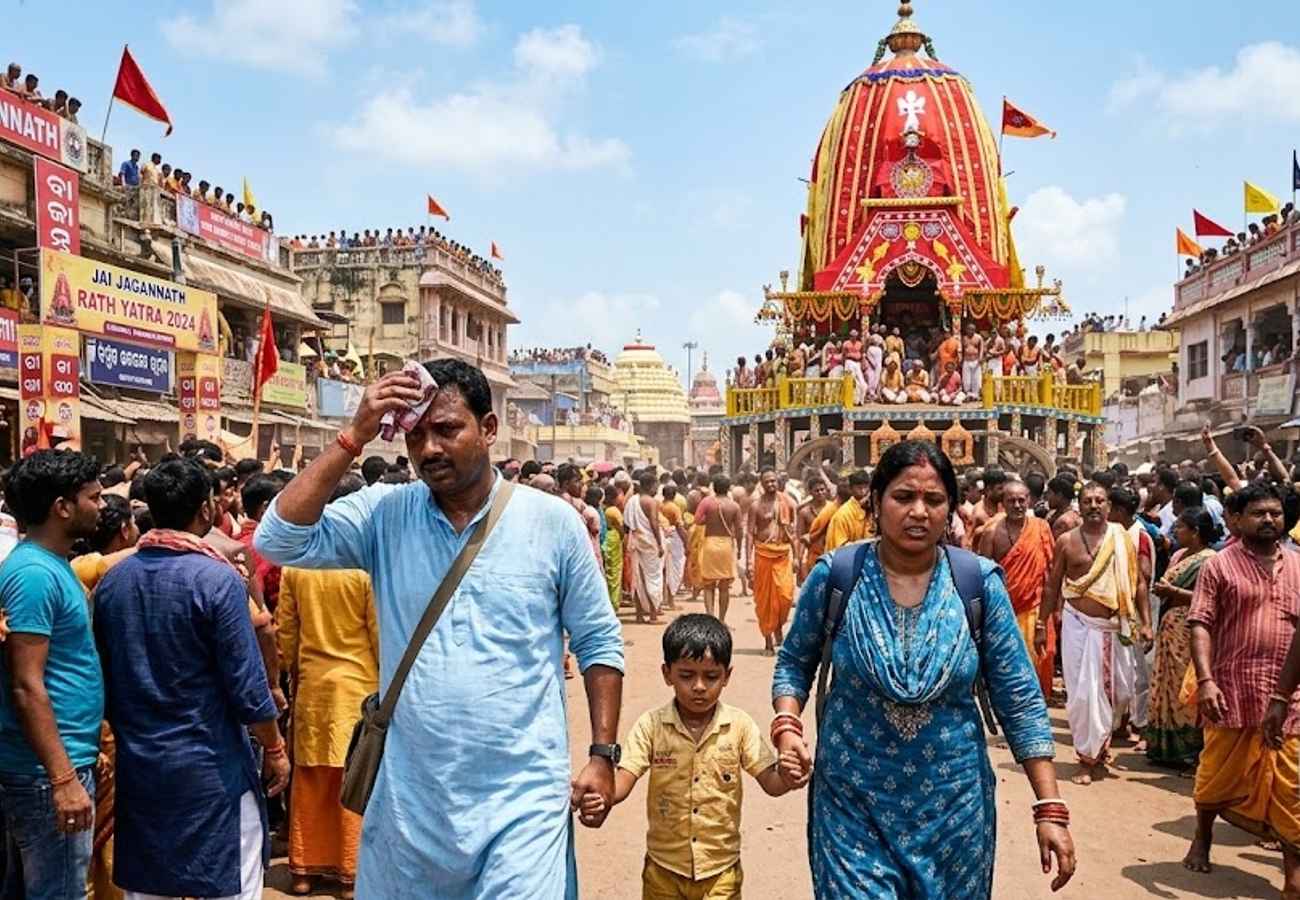
Image generated by AI
I arrived in Puri three days before the 2022 Rath Yatra. Even then, the city's backstreets around Gundicha Mandir Road were clogged. By July 16th—the official chariot-pulling day—I understood why the Odisha Tourism department treats this like a military operation. Over 2 million people converge on a coastal city designed for maybe 200,000 residents. It's one of India's most intense spiritual events, and if you're considering the 2026 edition (July 16–24), you need to understand the ground reality before booking.
The Three Chariots and What Actually Happens
The Jagannath Rath Yatra follows a specific annual calendar tied to the Hindu lunar month of Ashadha. Three massive wooden chariots—each the size of a small building—are pulled from the main Jagannath Temple roughly 3 kilometers south to the Gundicha Temple. The chariot of Lord Balabhadra goes first, followed by Devi Subhadra's, then the Nandighosh (Lord Jagannath's). The pulling itself is participatory; devotees grab thick rope and haul. This physical act is considered spiritually significant, though honestly, in July heat and humidity, it's also exhausting.
I watched foreigners—both Hindu and non-Hindu—participate in the rope-pulling alongside Indian pilgrims. The chariot procession itself is open to everyone. The main temple interior is not.
Non-Hindu Access and Temple Entry Restrictions
Let me be direct: if you're not Hindu, you cannot enter the inner sanctum of the Jagannath Temple. This isn't new negotiation space. The temple enforces this strictly, and the logic is straightforward—this is a living, functioning place of worship, not a museum.
What you can do: observe the external chariot procession, visit the temple's outer courtyard (where the chariots assemble), explore the surrounding pilgrim routes, and participate in the Rath Yatra pulling ceremony. The external experience is still phenomenal. The chariot-pulling itself happens on streets, not inside temple grounds.
If you're traveling with Hindu friends or family, they can enter the main temple and perform darshan (deity viewing). You'll wait outside or explore the adjacent streets.
Crowd Dynamics: What I Mean by "Millions"
In 2022, I tracked the foot traffic patterns by spending afternoons in different zones. The epicenter—the temple and Bada Danda (Grand Avenue) where the chariots proceed—reaches maximum density between 6 AM and 2 PM on pulling day. I'm talking shoulder-to-shoulder movement. Forward progress measured in meters per hour.
The Odisha Tourism and local police establish designated viewing zones along the processional route:
Main avenue stands (erected along Bada Danda and side streets) fill by 4 AM. Arrive earlier if you want an actual view rather than watching from 500 people deep.
Secondary viewing areas on Lion's Gate Road and around Gundicha Temple remain slightly less crowded but still dense by 9 AM.
The side streets (Chakratirtha Road, Maruti Mandir Lane) offer surprising breathing room if you're willing to miss the absolute front-row experience.
Traffic diversions begin July 15th and last through July 17th. Personal vehicles are banned from the core zone. Taxis, autos, and motorcycles have specific permitted corridors. If you arrive by car, park it 2 kilometers out and walk or use cycle-rickshaws.
Practical Accommodation Reality
Here's the hard truth: hotels within 1 kilometer of the temple (Bada Danda area, Chakra Tirtha) book out 4–6 months in advance. I'm talking fully booked by late January for the July festival. Mid-range properties like Hotel Nataraj, Krishna Inn, and Gandhara charge premium rates (₹8,000–15,000 per night instead of regular ₹2,500–5,000) and demand advance deposits.
Better options? Book in neighboring areas:
Konark (35 km north): Lesser crowds, reasonable hotels like Konark Sunrise or private homestays. 45-minute auto ride to Puri temple.
Bhubaneswar (60 km inland): Full hotel inventory remains available. This is where I stayed in 2022. The Biju Patnaik International Airport (airport code BBI) sits here. Trains and buses connect Bhubaneswar to Puri Railway Station in 1.5–2 hours.
Budget option: Dorm beds in Puri's backpacker hostels along Chakra Tirtha Road (Toshali Tourist Home, Shree Hari Lodge) offer ₹500–1,000 nightly rates and fill second. Still book by May.
Food, Water, and Physical Preparation
July in Puri is punishing: 35–38°C with 85%+ humidity. The festival period coincides with monsoon onset, so afternoon rain is common (though it provides temporary relief).
Clothing: Cotton is non-negotiable. Loose kurtas, lungis, and lightweight pants work better than Western casual wear—they're less conspicuous and more practical in crowds. Avoid leather belts and shoes (prohibited in temple zones). Slip-on sandals are ideal.
Hydration: This isn't casual advice. Heat exhaustion is common during Rath Yatra. Carry a 2-liter water bottle. Refill at hotels or authorized water stations. The city sets up free water distribution points, but quality varies.
Food: Mahaprasad (blessed temple food) is distributed during the festival—rice and vegetables typically. It's meaningful if you want the spiritual element, but don't rely on it as your only meal. Street vendors sell Dalma (lentil-vegetable stew), Bara Ghugni (spiced chickpea snack), and local sweets like Chhena Poda (cottage cheese dessert) and Khaja (brittle pastry). Stick to busy vendor stalls with visible turnover. Avoid raw salads and questionable water sources.
Real Traveler Perspective
I found this on Reddit's r/IndiaTravel before my 2022 visit: "Skip the main-avenue crush on July 16th. Go on July 15th evening when the chariots are being decorated and wheeled out. Way fewer people, better light for photos, and you see the actual mechanical assembly. Then on the 16th, hit the Gundicha Temple endpoint where people disperse after the pull. The return journey (Ulto Rath) on the 17th is even quieter—most people leave after the main day." — u/bengali_throw
I tested this. They were right. The decorative evening of July 15th is genuinely less crowded and visually rich. The return chariot procession on July 17th sees maybe 30% of main-day crowds.
Digital Nomad & Solo Traveler Considerations
If you're working remotely during this period, Puri's internet becomes congested. Co-working spaces are minimal. Bhubaneswar has better infrastructure (WeWork-style spaces, better WiFi). July monsoon also brings power fluctuations; bring a portable battery pack.
Safety: Petty theft increases during the festival due to crowds. Don't carry expensive cameras, laptops, or large cash amounts in public. Use hotel safes. Violent crime is extremely rare, but pickpocketing and bag-slashing happen. Keep backpacks in front when moving through dense areas.
Temple Access Rules (Documented)
According to temple authorities:
- Non-Hindus are barred from the Garbha Griha (inner sanctum). The outer courtyard is accessible.
- No leather goods (belts, shoes, wallets) inside temple precincts. Check bags are available at entry points.
- Photography is prohibited inside the temple structure but permitted in external courtyards and on processional streets.
- Phones and electronic devices are technically discouraged; leave them in hotel safes.
- Women of menstruating age face entry restrictions in some Hindu temples, including this one's inner sanctum. This is documented on the Jagannath Temple's official website.
- Alcohol and non-vegetarian food are prohibited in temple zones.
Transportation to Puri
By Air: Fly into Bhubaneswar (BBI). Major Indian carriers (IndiGo, SpiceJet, Air India) service it from Delhi, Mumbai, Kolkata, and Bangalore. From BBI airport, hire a cab (₹1,200–1,800) or take the Utkal Express train to Puri Railway Station (2-hour journey).
By Train: The Puri Railway Station sits 2 km from the temple. Overnight trains from Delhi, Mumbai, and Kolkata arrive here. The Jagannath Express (from Delhi) and South Coast Express (from Mumbai) are direct. Advance booking essential; these fill immediately during festival season.
By Bus: From Bhubaneswar or Kolkata (250 km away), state-run buses (Odisha State Road Transport Corporation) run frequent services. Private operators like FirstAuto offer air-conditioned coaches. Journey time: 5–6 hours from Kolkata.
Once in Puri, autos (three-wheelers) are your main transit during the festival. Negotiate fares beforehand; meters become unreliable during peak days.
Practical Visitor Guide
Best Time to Visit: July 15–17, 2026 for the core Rath Yatra. Arrive July 12–13 to acclimate and observe chariot preparation. Depart by July 18th if crowds overwhelm you.
Booking Timeline: Accommodation must be booked by May 2026. If you miss this, consider Bhubaneswar or Konark as alternatives.
Budget Expectations:
- Mid-range hotel (Puri): ₹10,000–15,000/night during festival (vs. ₹3,000 regular)
- Budget accommodation: ₹2,000–4,000/night (small guesthouses, homestays)
- Food: ₹300–800 per meal at local restaurants
- Festival participation: Free (viewing and chariot-pulling)
- Transport (local): ₹50–150 per auto ride
Weather Prep: Pack lightweight, quick-dry clothing. Waterproof bag for phone/documents. Umbrella or rain jacket for monsoon showers. Heavy-duty sunscreen (SPF 50+).
Safety Alerts: The city's water supply becomes strained during the festival. Hotels often have storage tanks, but quality drops. Drink bottled water only. Medical facilities get overwhelmed; carry basic first-aid supplies (electrolyte packets, anti-diarrheal medication). Contact your embassy or consulate in New Delhi before travel.
Local Guidance: The Odisha Tourism office (Tourist Information Bureau, Puri Railway Station) provides daily updates during the festival. Call ahead at +91-6752-222-220 to confirm crowd conditions and entry protocols for the current year.
If you can handle the heat, humidity, and density of 2 million pilgrims converging on one coastal town, the Jagannath Rath Yatra remains one of India's most authentic spiritual experiences—crowds and all.
Related Travel Guides
Disclaimer
This article is for informational and educational purposes only. It does not constitute legal, financial, or professional advice. While we strive to provide accurate and up-to-date information, travel policies, regulations, and conditions change rapidly. Always verify information with official sources before making travel decisions. Nomad Lawyer makes no representations about the accuracy, reliability, completeness, or suitability of the information provided. Readers should consult qualified professionals for advice specific to their circumstances. The views expressed in this article are those of the author and do not necessarily reflect the views of Nomad Lawyer.
Kunal K Choudhary
Co-Founder & Contributor
A passionate traveller and tech enthusiast. Kunal contributes to the vision and growth of Nomad Lawyer, bringing fresh perspectives and driving the community forward.
Learn more about our team →