
Isle of Portland Travel Guide 2026: Castles, Lighthouses, and Jurassic Coast Hikes

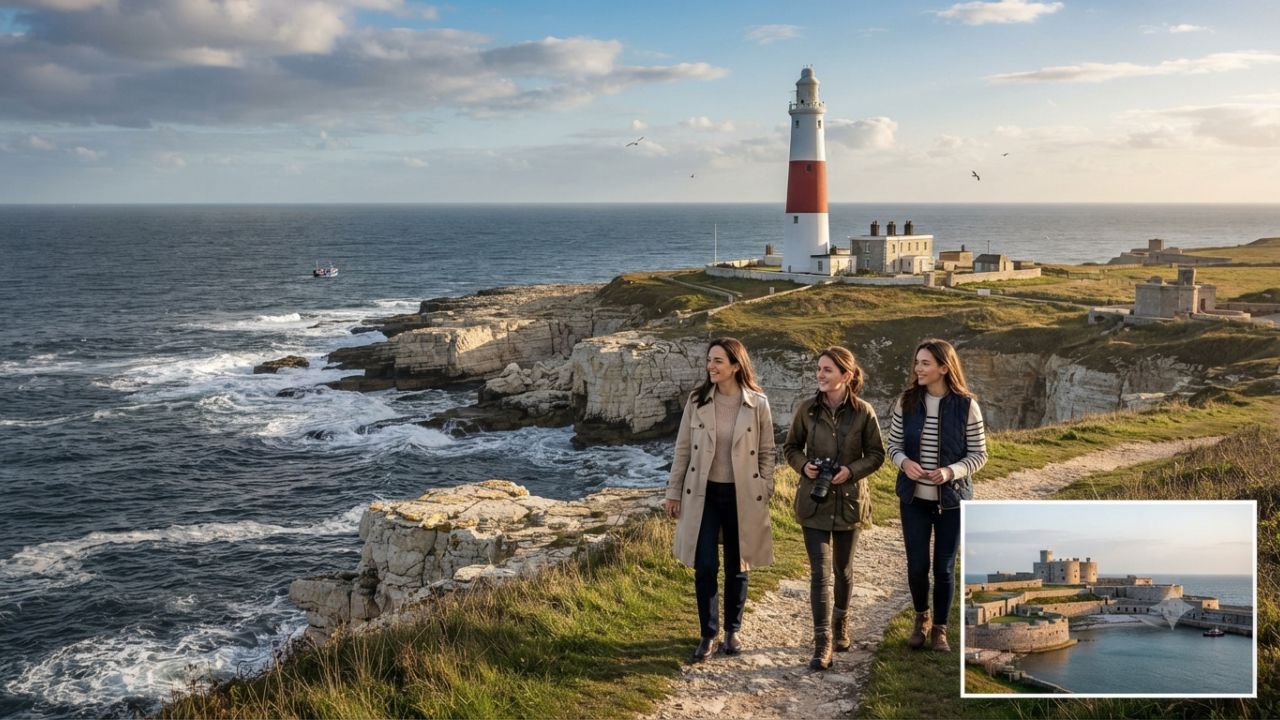
The Isle of Portland anchors the southern tip of Dorset's UNESCO-listed Jurassic Coast, combining Tudor military castles, historic lighthouses, and coastal wildlife reserves.
The Isle of Portland, situated along the southern extremity of Dorset's UNESCO-listed Jurassic Coast, provides one of the most distinctive coastal landscapes in the United Kingdom. Measuring four miles long by 1.5 miles wide, this "tied island"—connected to mainland England via the sweeping shingle causeway of Chesil Beach—packs 500 years of Tudor military history, three historic lighthouses, abandoned limestone quarries, and world-class coastal hiking trails into a compact geography.
Geographical Identity: A Tied Island on the Jurassic Coast
[WEYMOUTH, October 4, 2026] — Located at the edge of the English Channel, Portland's geological structure sets it apart from typical English seaside resort towns. Dominated by exposed white Portland limestone, dramatic sea cliffs, and historical quarries, the island marks a key anchor point of the 95-mile Jurassic Coast UNESCO World Heritage site.
Joined to Dorset by Chesil Beach—an 18-mile barrier beach of graded shingle—Portland commands strategic views across Portland Harbour and the English Channel. Its exposed location has historically shaped naval defense, maritime navigation, bird migration, and coastal quarrying.
| Heritage & Landscape Asset | Historical Period / Construction | Primary Architectural & Geographical Significance | Visitor Access & Activity Options |
|---|---|---|---|
| Portland Castle | Built 1539–1540 (Henry VIII) | Tudor coastal artillery fort guarding Portland Roads anchorage | English Heritage site with Tudor kitchen, gun decks & audio tours |
| Portland Bill Lighthouse | Erected 1906 (Trinity House) | Active 41m red-and-white tower guiding Channel shipping | Visitor center, interactive exhibits & tower climbs on selected dates |
| Old High Light & Low Light | Constructed 1869 | Predecessor twin lighthouses replacing earlier 1716 beacons | Low Light houses Portland Bird Observatory & field study center |
| Chesil Beach & Fleet Lagoon | Natural Formation | 18-mile barrier shingle beach connecting Portland to mainland | Coastal walking, sea angling & marine ecology observation |
| Tout Quarry Sculpture Park | Disused 18th/19th C. Quarry | Abandoned limestone quarry repurposed into open-air sculpture trail | Public walking paths featuring over 60 stone carvings amidst wild flora |
| Rufus Castle & Church Ope | 12th Century Ruins | Norman castle ruins overlooking Portland’s primary shingle cove | Coastal photography, swimming cove & historic churchyard access |
| High Angle Batteries | Constructed 1892 (Victorian) | Concealed Victorian heavy artillery battery built into hilltop quarry | Free public exploration of underground tunnels & gun emplacements |
| South West Coast Path Loop | Designated National Trail | 9.5-mile circular walking trail circling the island’s perimeter | 4-hour coastal hike showcasing cliffs, seabird colonies & sea views |
Portland Castle: Four Centuries of Coastal Defense
Constructed between 1539 and 1540 under the orders of King Henry VIII, Portland Castle remains one of the best-preserved Tudor fortresses in Britain. Built as part of a national coastal defense initiative against potential invasions from Catholic Europe, the castle overlooked the sheltered anchorage of Portland Roads.
The fortress played an active role during the First English Civil War, changing hands twice between Royalist and Parliamentary forces, before serving as an armory and garrison during the Napoleonic Wars and both World Wars.
Managed today by English Heritage, visitors can explore:
- The authentic Tudor kitchen and storerooms.
- The heavy gun platforms overlooking the harbor.
- The Governor's Garden, designed in a classical walled layout.
- Audio tours detailing the military history of the site.
The Three Lighthouses of Portland Bill
At Portland's southern tip, hazardous sea currents known as the "Portland Race" prompted early maritime navigation aids. Trinity House established twin lighthouses—the High Light and Low Light—in 1869, which operated until the current 41-meter Portland Bill Lighthouse was completed in 1906.
Today, all three structures remain visible:
- The 1906 Portland Bill Lighthouse: Continues active operations, featuring its distinctive red-and-white painted stripes. The visitor center provides educational displays on maritime safety, and guided tours allow visitors to climb the tower's 153 steps.
- The Old Low Light: Repurposed as the Portland Bird Observatory and Field Centre, supporting environmental research along major avian migration corridors.
- The Old High Light: Decommissioned tower structure preserved as a historic coastal landmark.
Coastal Hiking and Outdoor Recreation
The Isle of Portland is encircled by a 9.5-mile loop of the South West Coast Path, which takes approximately four hours to complete. The trail navigates past dramatic limestone sea stacks, disused quarries, and coastal wildlife reserves.
Key highlights along the coastal trail include:
- Tout Quarry Sculpture Park: An abandoned 50-acre quarry where stone carvers have sculpted artwork directly into limestone rock faces.
- Church Ope Cove: Portland's only secluded beach, sheltered beneath the ruins of 12th-century Rufus Castle.
- High Angle Batteries: A Victorian military battery built in 1892 to fire heavy shells at high angles over cliffs onto enemy warships.
For active sports enthusiasts, Portland offers world-class deep-water soloing, rock climbing, windsurfing, and sailing, centered around the Portland National Sailing Academy (host of the 2012 Olympic sailing events).
Avian Migration and Wildlife Observation
Due to its protruding location in the English Channel, Portland serves as a vital landfall for migratory birds traveling north during spring and returning south in autumn.
The cliffs around Portland Bill support nesting colonies of seabirds, including guillemots, razorbills, and fulmars. The Portland Bird Observatory records seasonal sightings of rare passage migrants, making spring and autumn optimal windows for nature photography and bird watching.
Practical Visitor Logistics and Accessibility
Planning a day trip or extended stay on Portland requires straightforward transit arrangements:
- By Car & Bus: Accessed via the A354 causeway road connecting Weymouth to Portland. Regular local bus services link Weymouth town center directly to Portland Bill.
- By Rail: The nearest major railway station is Weymouth (4.5 miles from Portland Castle), offering direct South Western Railway services from London Waterloo and Bristol Temple Meads.
- Parking & Accessibility: Ample car parking is available at Portland Bill, Portland Castle, and Chesil Beach. Flat, paved accessibility paths extend from the Portland Bill car park toward the main lighthouse visitor center.
- Travel Equipment: Sturdy hiking footwear and windproof outerwear are strongly recommended for navigating exposed cliff paths and uneven quarry tracks.
Why This Matters (Information Gain & Experience)
For travelers exploring southern England, the Isle of Portland offers a concentrated blend of geological heritage, Tudor military architecture, and maritime history within a four-mile radius. Combining visits to Portland Castle and Portland Bill Lighthouse with a hike along the South West Coast Path delivers a comprehensive Dorset coastal experience.
Whether visiting for autumn bird migration, coastal heritage tours, or Jurassic Coast geology, Portland stands as a distinctive destination along England's southern shore.
Related Travel Guides
European High-Speed Rail Network Expansion and Cross-Border Corridors 2026
Portugal easyJet Cabin Crew Strike Threatens Autumn Travel Across Lisbon, Porto, and Faro
Isle of Man Ferry Cuts Impact UK November 2026 Travel Amid Flagship Manxman Repairs
Disclaimer
This article is for informational and educational purposes only. It does not constitute legal, financial, or professional advice. While we strive to provide accurate and up-to-date information, travel policies, regulations, and conditions change rapidly. Always verify information with official sources before making travel decisions. Nomad Lawyer makes no representations about the accuracy, reliability, completeness, or suitability of the information provided. Readers should consult qualified professionals for advice specific to their circumstances. The views expressed in this article are those of the author and do not necessarily reflect the views of Nomad Lawyer.
Raushan Kumar
Founder & Lead Developer
Full-stack developer with 11+ years of experience and a passionate traveller. Raushan built Nomad Lawyer from the ground up with a vision to create the best travel and law experience on the web.
Learn more about our team →