
Clovelly North Devon Travel Guide 2026: Car-Free Cobbled Streets, Historic Harbour, and Coast Hikes

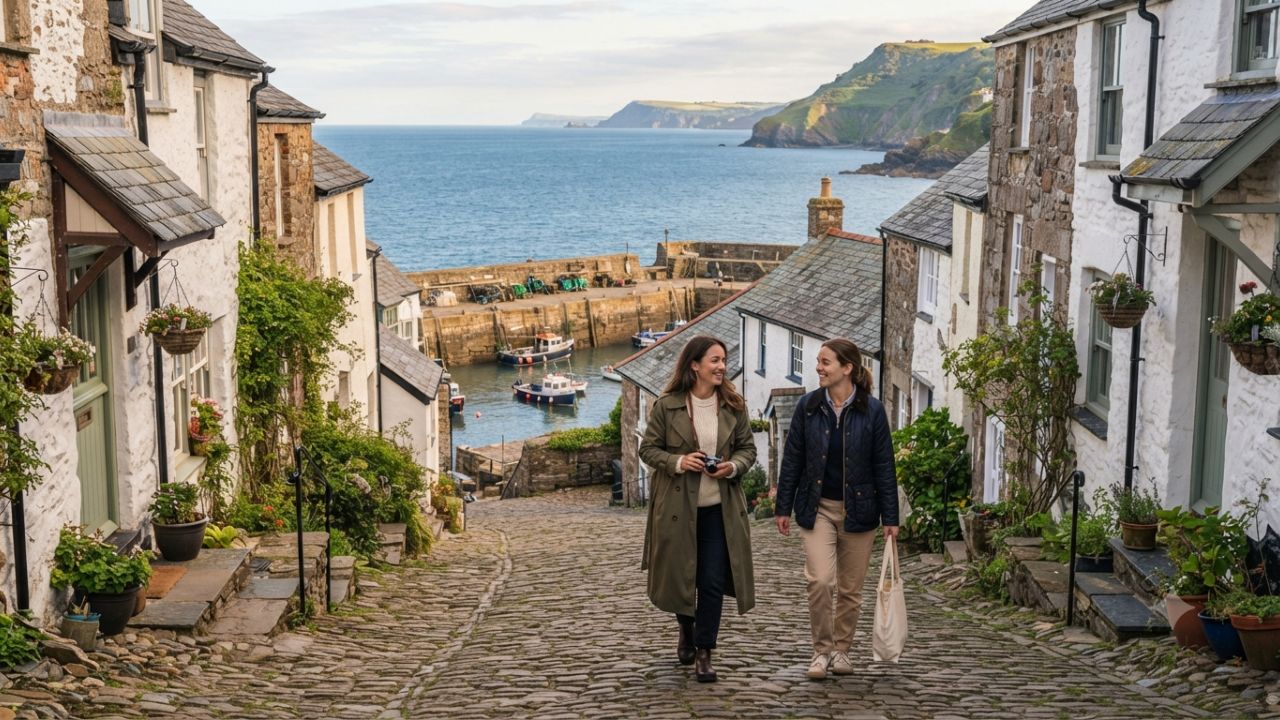
Clovelly in North Devon is a privately preserved 400-foot cliffside village where motorized vehicles are prohibited along its historic cobbled high street.
Clovelly, a privately owned historic fishing village in North Devon, presents one of Britain's most unusual coastal travel experiences. Built into a sheer 400-foot cliff overlooking Bideford Bay and the Bristol Channel, the village enforces a strict ban on motorized vehicles, preserving four centuries of maritime heritage, steep cobbled lanes, and traditional transport methods.
Geographical Identity: A Car-Free Cliffside Community
[BIDEFORD, October 4, 2026] — Located within the North Devon National Landscape (formerly Area of Outstanding Natural Beauty), Clovelly's physical layout sets it apart from conventional UK seaside towns. Because the steep, cobbled main street descends at a steep gradient through a forested ravine to a 14th-century quay, normal vehicle traffic is physically impossible.
Visitors leave their cars at the Visitor Centre located at the top of the cliff before descending into the historic settlement on foot. Without traffic noise or parked cars, the village maintains an authentic atmosphere of flower-draped 16th-century cottages, narrow side passageways, and traditional wooden sledges used by residents to transport supplies downhill.
| Heritage Feature / Service | 2026 Specification & Pricing | Architectural & Operational Highlight |
|---|---|---|
| Adult Admission | £10.90 per adult | Includes Visitor Centre parking, village access, museums & gardens |
| Child Admission (Ages 7–16) | £6.25 per child (Under 7 Free) | Family ticket available at £27.00 (2 Adults + 2 Children) |
| Village Topography | 400-foot cliff drop | Steep cobbled main street descending to 14th-century stone quay |
| Vehicle Exclusion Zone | 100% car-free high street | Goods moved by wooden sledges; resident donkeys preserved for heritage |
| Heritage Museums | Included with ticket | Kingsley Museum & Fisherman’s Cottage historic living exhibits |
| Botanical Attraction | Clovelly Court Gardens | Restored Victorian glasshouses, herbaceous borders & kitchen gardens |
| Land Rover Passenger Shuttle | Operates Easter to October | Paid return shuttle connecting harbour to upper Visitor Centre |
| South West Coast Path Route | Hartland Quay to Clovelly | Strenuous 10-mile coastal cliff hike along Atlantic headlands |
Four Centuries of Fishing Heritage and Architecture
Clovelly developed historically as a thriving herring fishing port and coastal trading hub. While commercial fishing operations have scaled down over the centuries, local fishermen continue to land lobster, crab, and seasonal catches at the stone pier.
Unlike outdoor open-air museums, Clovelly remains a living community preserved under private estate stewardship. The estate charges a daily admission fee—reinvested directly into maintaining the village's historic lime-rendered cottages, stone cobbles, sea defense walls, and public facilities.
Heritage attractions included with entry:
- The Kingsley Museum: Dedicated to Victorian author Charles Kingsley (author of The Water-Babies), who lived in Clovelly during his youth.
- The Fisherman’s Cottage: Restored to reflect how a 19th-century fishing family lived, complete with period furniture, fishing tackle, and maritime artifacts.
- Clovelly Court Gardens: Located near the top of the village, featuring restored Victorian glasshouses, espaliered fruit trees, and kitchen gardens overlooking the Bristol Channel.
South West Coast Path Hikes: The Hartland Quay Corridor
For outdoor enthusiasts, Clovelly serves as a key waypoint on the South West Coast Path National Trail. The section connecting Hartland Quay to Clovelly is recognized as one of the most rugged coastal hikes in England.
Hiking details for the Hartland Quay to Clovelly section:
- Distance & Terrain: Approximately 10 miles featuring steep ascents, rocky headlands, and deep coastal valleys.
- Key Landmarks: Navigates past Blackchurch Rock, Mouthmill Cove, and dense coastal oak woodlands.
- Preparation: Hikers must wear supportive waterproof boots, carry storm-proof layers, and monitor rapid Atlantic weather changes.
Essential Visitor Advice and Accessibility Guidance
Navigating Clovelly requires specific preparation due to its steep terrain and cobble stones:
- Footwear Selection: Flat, sturdy walking shoes or boots with deep traction soles are mandatory. Polished cobbles can become slick during damp maritime weather.
- Uphill Return Planning: The walk downhill from the Visitor Centre to the harbour takes 15–20 minutes. The return climb uphill requires moderate physical effort.
- Land Rover Shuttle Service: Between Easter and October, a fare-paying Land Rover service operates via a back estate road, carrying passengers from the harbour back to the top Visitor Centre for a small fee.
- Mobility Restrictions: The steep cobbled main street is unsuitable for manual wheelchairs, mobility scooters, or double pushchairs. Accessible parking and toilet facilities are available at the top Visitor Centre.
- Pet Policy: Well-behaved dogs are welcome in the village on short leads.
Transit Connections and Regional Location
Clovelly is located off the A39 highway, approximately 10 miles west of Bideford and 20 miles from Barnstaple in North Devon:
- By Car: Follow the A39 to the Clovelly turnoff. Ample parking is provided at the main Visitor Centre.
- By Public Transport: The nearest main railway station is Barnstaple. Stagecoach bus routes connect Barnstaple railway station and Bideford town center directly to the Clovelly Visitor Centre entrance.
- Regional Base: Clovelly pairs easily with nearby North Devon destinations, including the surfing beaches of Westward Ho! and Woolacombe, or the wild headlands of Hartland Point.
Why This Matters (Information Gain & Experience)
For travelers seeking a quiet British coastal break, Clovelly delivers an unhurried, traffic-free environment anchored in maritime history. By controlling vehicle access and preserving traditional transport methods, the village allows visitors to experience a 16th-century Devon fishing community at a natural walking pace.
Whether combining a village visit with a South West Coast Path cliff hike or exploring Victorian kitchen gardens, Clovelly remains one of the UK's most distinctive coastal conservation achievements.
Related Travel Guides
Isle of Portland Travel Guide 2026: Castles, Lighthouses, and Jurassic Coast Hikes
European High-Speed Rail Network Expansion and Cross-Border Corridors 2026
Portugal easyJet Cabin Crew Strike Threatens Autumn Travel Across Lisbon, Porto, and Faro
Disclaimer
This article is for informational and educational purposes only. It does not constitute legal, financial, or professional advice. While we strive to provide accurate and up-to-date information, travel policies, regulations, and conditions change rapidly. Always verify information with official sources before making travel decisions. Nomad Lawyer makes no representations about the accuracy, reliability, completeness, or suitability of the information provided. Readers should consult qualified professionals for advice specific to their circumstances. The views expressed in this article are those of the author and do not necessarily reflect the views of Nomad Lawyer.
Raushan Kumar
Founder & Lead Developer
Full-stack developer with 11+ years of experience and a passionate traveller. Raushan built Nomad Lawyer from the ground up with a vision to create the best travel and law experience on the web.
Learn more about our team →