
Stingray City Safety Guide 2026: Risk Assessment and Logistics for Grand Cayman Visitors
A comprehensive safety analysis of Grand Cayman's Stingray City, detailing animal behavior, water depths for non-swimmers, and essential logistics for families visiting in 2026.

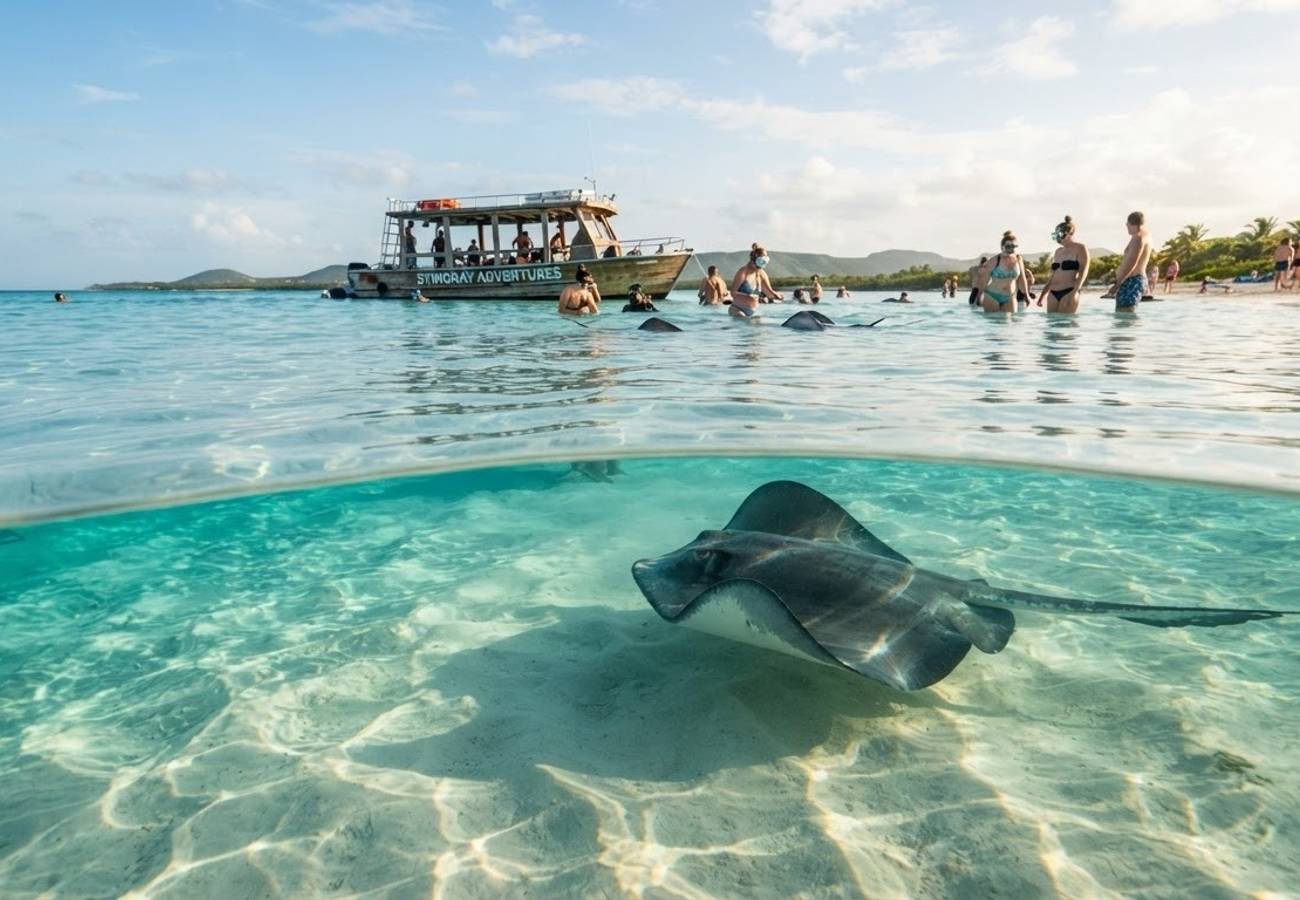
Image generated by AI
Grand Cayman’s most famous attraction remains a primary draw for hundreds of thousands of annual visitors, yet the interaction with wild Southern stingrays prompts significant safety concerns for non-swimmers and families.
Marine Interaction and Risk Analysis
Stingray City is not a controlled enclosure but a series of natural sandbars located within the North Sound of Grand Cayman. The concentration of Southern stingrays is a result of long-term conditioning by tour operators and fishermen who provide consistent food sources.
From a biological perspective, the primary risk associated with these animals is the serrated barb located on the upper side of the tail. According to the Cayman Islands Department of Environment and local dive professionals, this barb is a defensive mechanism, not an offensive weapon. Stings are statistically rare and almost exclusively occur when a ray is startled by direct pressure—such as being stepped on or pinned—rather than through unprovoked aggression.
In the context of the sandbar, the rays exhibit high confidence around humans, associating boat engines with food. While this proximity can be jarring for first-time visitors, the animals generally approach from the front or side. Common minor incidents are limited to "suction hickeys" or light scrapes from the rays' mouths during feeding.
Site Specifications and Water Depth
Visitors typically encounter two different types of sites under the "Stingray City" umbrella. The primary destination for cruise passengers and families is the sandbar, which offers shallow depths suitable for wading.
Site Comparison Table
| Parameter | Stingray Sandbar (Family/Cruise) | Deep Stingray Sites (Dive/Snorkel) |
|---|---|---|
| Average Depth | 3 to 4 feet (waist to chest height) | 10 to 12 feet |
| Primary Activity | Wading and hand-feeding | Scuba diving and snorkeling |
| Visibility | High (sandy bottom) | High (open water) |
| Accessibility | High (via swim platforms/ladders) | Moderate (requires swim gear) |
| Ideal Visitor | Non-swimmers, children, seniors | Certified divers, confident swimmers |
Traveler Logistics Guide
From a ground-level perspective, the best way to navigate this experience—especially for those with anxiety or limited swimming ability—is to prioritize equipment and timing.
Managing Water Anxiety For non-swimmers, the psychological barrier is often greater than the physical risk. Most reputable operators provide flotation vests or pool noodles. If you are uncomfortable standing in open water, you can remain on the boat's swim platform or ladder; the rays frequently glide close enough to the vessel for interaction without requiring you to fully submerge.
Family and Child Safety When traveling with children, be mindful that a 3-foot depth may reach the shoulder or head of a small child.
- Equipment: Do not rely solely on provided vests; bring a properly fitting life jacket from home for children under five.
- Interaction: Request that guides hold the ray for the child, allowing the child to touch the wing rather than standing independently in the water.
- Itinerary: Pair the sandbar visit with Starfish Point or Coral Gardens to provide a variety of shallow-water experiences that are less intense than the stingray encounter.
Booking and Operator Selection To ensure both human safety and animal welfare, avoid operators that promote "staged" photography, such as lifting rays out of the water or placing them on guests' backs. These practices cause animal stress and increase the likelihood of a defensive reaction. Prioritize companies that emphasize gentle, in-water rotations.
Infrastructure and Regional Impact
The sustained popularity of Stingray City has cemented it as the single most visited attraction in the Cayman Islands. This high volume of traffic necessitates strict adherence to wildlife interaction guidelines to prevent habitat degradation and animal desensitization. The integration of these tours with George Town and Seven Mile Beach hubs ensures a streamlined transit flow for cruise ship passengers, though the North Sound's vulnerability to weather means that winter winds can frequently lead to cancellations or diversions to more sheltered mangrove tours.
Navigating the wild requires a balance of curiosity and caution.
Related Travel Guides
Disclaimer
This article is for informational and educational purposes only. It does not constitute legal, financial, or professional advice. While we strive to provide accurate and up-to-date information, travel policies, regulations, and conditions change rapidly. Always verify information with official sources before making travel decisions. Nomad Lawyer makes no representations about the accuracy, reliability, completeness, or suitability of the information provided. Readers should consult qualified professionals for advice specific to their circumstances. The views expressed in this article are those of the author and do not necessarily reflect the views of Nomad Lawyer.
Kunal K Choudhary
Co-Founder & Contributor
A passionate traveller and tech enthusiast. Kunal contributes to the vision and growth of Nomad Lawyer, bringing fresh perspectives and driving the community forward.
Learn more about our team →