
Iran Revolutionary Guard Missile Strike on US Bases in Jordan Sparks Middle East Crisis as Iraq, Saudi Arabia Respond in 2026
Iran's Revolutionary Guard launched ballistic missiles at US-linked facilities in Jordan, including Muwaffaq Salti Air Base and CENTCOM headquarters, escalating regional conflict and disrupting transit corridors.

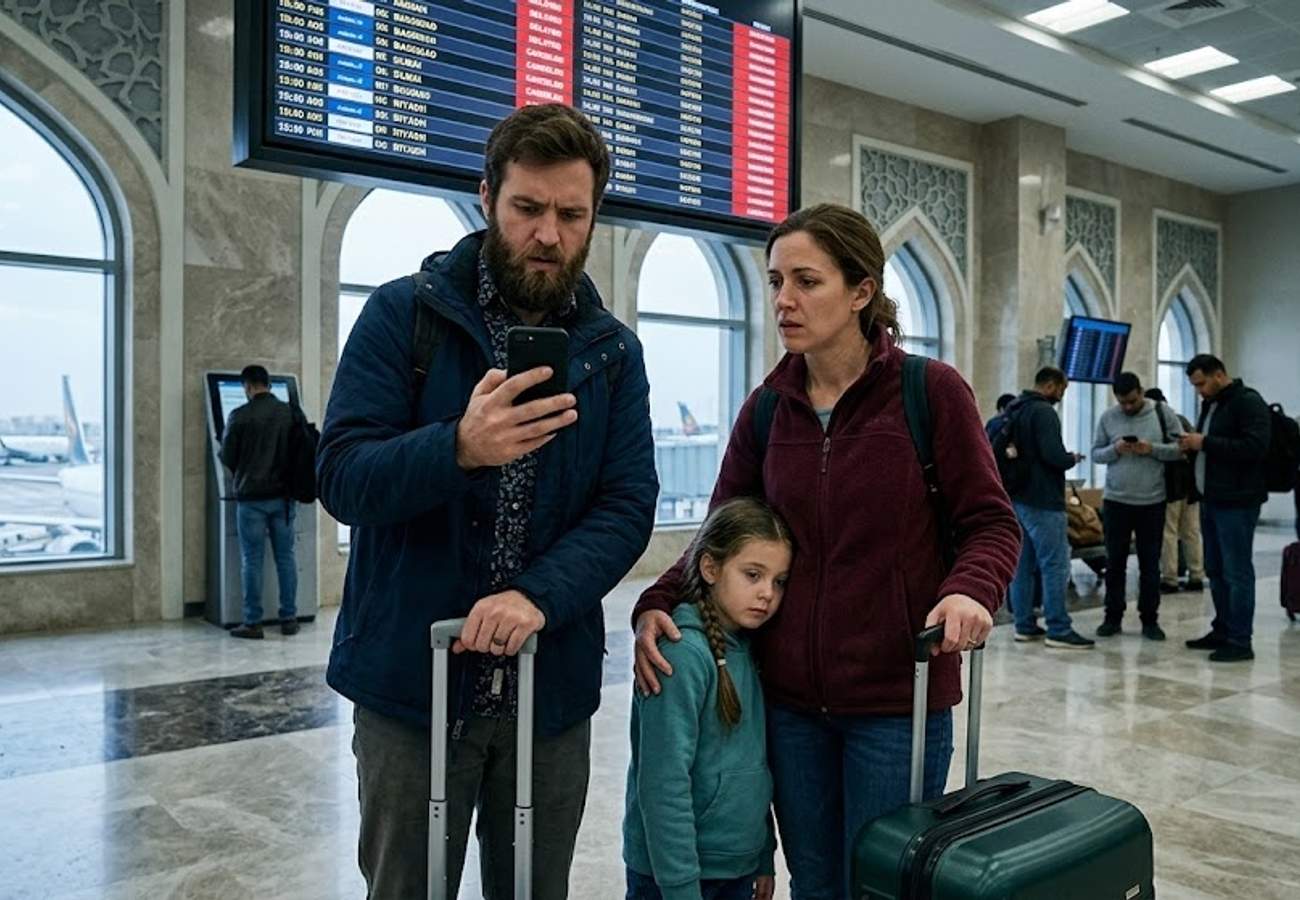
Image generated by AI
The latest missile exchange between Iran and the United States has ended a fragile calm across the Middle East, placing Jordan at the epicentre of a rapidly escalating regional confrontation. Iran's Revolutionary Guard confirmed ballistic missile strikes on US-linked military facilities inside Jordan, while American and Saudi forces conducted retaliatory operations against Iran-backed militia positions in Iraq, triggering emergency security meetings in Baghdad and renewed fears for the Strait of Hormuz.
The Core Transit Update
Iran's state-run IRNA news agency reported that the Aerospace Force of the Islamic Revolutionary Guard Corps executed a ballistic missile operation targeting US-connected military locations in Jordan. The confirmed targets included the Muwaffaq Salti Air Base and the headquarters of the US military's Central Command. This represents one of the most direct Iranian military actions against American-linked infrastructure in the region to date.
Prior to Iran's announcement, the United States Central Command confirmed that American forces conducted coordinated strikes alongside Saudi Arabia against sites in Iraq used by Tehran-supported armed groups. Washington stated these locations had been involved in attacks against US personnel and Saudi energy infrastructure. The US issued a formal warning that continued threats would result in additional military action.
The Iraqi government responded by convening an emergency meeting of the National Security Council, reflecting deep concern over foreign military operations on Iraqi soil and the risk of the country becoming a battleground for competing regional powers.
Transit Schedule and Route Risk Assessment
| Transit Corridor | Status | Risk Level | Impact |
|---|---|---|---|
| Jordanian airspace (Amman, Aqaba) | Heightened alert | High | Potential rerouting of commercial flights |
| Iraqi airspace (Baghdad, Erbil, Basra) | Restricted monitoring | High | Airlines reviewing overflight permissions |
| Strait of Hormuz | Elevated concern | High | Shipping insurance premiums rising |
| Saudi airspace (Riyadh, Jeddah, Dammam) | Operational with vigilance | Medium-High | Energy infrastructure protection active |
| Gulf carrier transit routes | Under review | Medium | Connection timing may shift |
Traveler Logistics Guide
From a ground-level perspective, the best way to navigate this rapidly evolving situation is through proactive monitoring and flexible booking strategies.
Airspace and Flight Planning: Several Middle Eastern carriers operating through Jordanian and Iraqi airspace are actively reviewing overflight routes. Travelers holding confirmed tickets on airlines transiting Amman, Baghdad, or Gulf corridors should check flight status notifications at least 72 hours before departure. Carriers may reroute flights over Egypt, Turkey, or Saudi Arabia to avoid restricted zones, which can add 30 to 90 minutes to total journey time.
Connection Times: For travelers routing through Gulf hubs such as Dubai, Doha, or Riyadh, optimal layover times should be extended to a minimum of three hours for international connections. The current security environment increases the probability of delayed departures and rerouted arrivals. Booking connections tighter than 150 minutes carries elevated risk of missed transfers.
Insurance Requirements: Standard travel insurance policies may now exclude coverage for incidents related to military conflict in affected regions. Travelers should verify whether their policies include "political evacuation" and "military action" clauses. Business travelers and digital nomads maintaining residency in Jordan, Iraq, or Gulf states should review their evacuation coverage limits.
Digital Transit Policies: Travelers entering Jordan should ensure the Jordan Pass or visa-on-arrival documentation is current. Those transiting through Saudi Arabia should verify that the Saudi eVisa platform reflects the latest entry requirements, as border policies can shift rapidly during security escalations. Travelers using biometric transit systems at Gulf airports should pre-register where available to reduce processing delays during heightened security screenings.
Maritime and Cruise Routes: Cruise operators transiting the Strait of Hormuz and Gulf of Oman are reassessing itineraries. Travelers booked on Gulf-region cruises should maintain direct communication with operators regarding port substitutions or schedule adjustments.
Infrastructure Impact Assessment
The missile strikes on Muwaffaq Salti Air Base highlight the vulnerability of military installations that sit along critical civilian aviation corridors. Jordan's position as a bridge between Europe, the Levant, and the Arabian Peninsula makes its airspace indispensable for commercial carriers. Any sustained disruption to Jordanian flight paths forces airlines into longer alternative routes, increasing fuel costs and ticket prices.
Iraq faces the most complex infrastructure challenge. The country hosts US forces while maintaining political and security connections with Iran-linked organisations. The emergency National Security Council meeting underscores Baghdad's struggle to maintain sovereign control over its airspace and territory while avoiding entanglement in a proxy war.
The Strait of Hormuz remains the single most consequential transit chokepoint in this crisis. The waterway carries a significant portion of global oil shipments. Previous periods of tension around the Gulf have directly affected oil prices, shipping confidence, and freight costs. A prolonged confrontation could trigger cascading effects across aviation fuel pricing, which in turn pressures airline operating costs and passenger fares globally.
Saudi Arabia's focus on protecting critical energy infrastructure adds another layer of complexity. Facilities in the Eastern Province and along the Gulf coast are critical nodes in the global energy supply chain. Any disruption to these facilities affects not only oil markets but also the commercial aviation and logistics sectors that depend on stable fuel supplies.
Regional Connectivity Consequences
The aviation and tourism sectors remain tightly coupled to regional security developments. Airlines operating near conflict zones monitor government advisories, airspace conditions, and operational risk assessments continuously. Several carriers have already begun adjusting crew layover patterns, reducing overnight stops in Amman and Baghdad where possible.
For international travelers, this instability influences flight planning, insurance requirements, and destination choices. Business travel to Jordan, Iraq, and parts of Saudi Arabia may see reduced volumes as corporate security departments reassess risk thresholds. Tourism to Jordan's heritage sites in Petra and Wadi Rum could experience short-term declines if the security environment remains volatile.
The broader consequence is that a single military incident has demonstrated how quickly regional transit networks can be destabilized. The competing interests of Iran, the United States, and their regional partners continue to create conditions where escalation can spread across borders and disrupt civilian infrastructure that millions of travelers and businesses depend on daily.
The Middle East transit map is being redrawn by missile trajectories — and every traveler with a ticket through Gulf airspace needs to watch the next move carefully.
Related Travel Guides
Disclaimer
This article is for informational and educational purposes only. It does not constitute legal, financial, or professional advice. While we strive to provide accurate and up-to-date information, travel policies, regulations, and conditions change rapidly. Always verify information with official sources before making travel decisions. Nomad Lawyer makes no representations about the accuracy, reliability, completeness, or suitability of the information provided. Readers should consult qualified professionals for advice specific to their circumstances. The views expressed in this article are those of the author and do not necessarily reflect the views of Nomad Lawyer.
Preeti Gunjan
Contributor & Community Manager
A passionate traveller and community builder. Preeti helps grow the Nomad Lawyer community, fostering engagement and bringing the reader experience to life.
Learn more about our team →