
Delta Air Lines Commits $1 Billion to Premium Cabin Overhaul as A350-1000 Suites Reshape Long-Haul Competition
Breaking airline news and aviation industry updates for 2026.

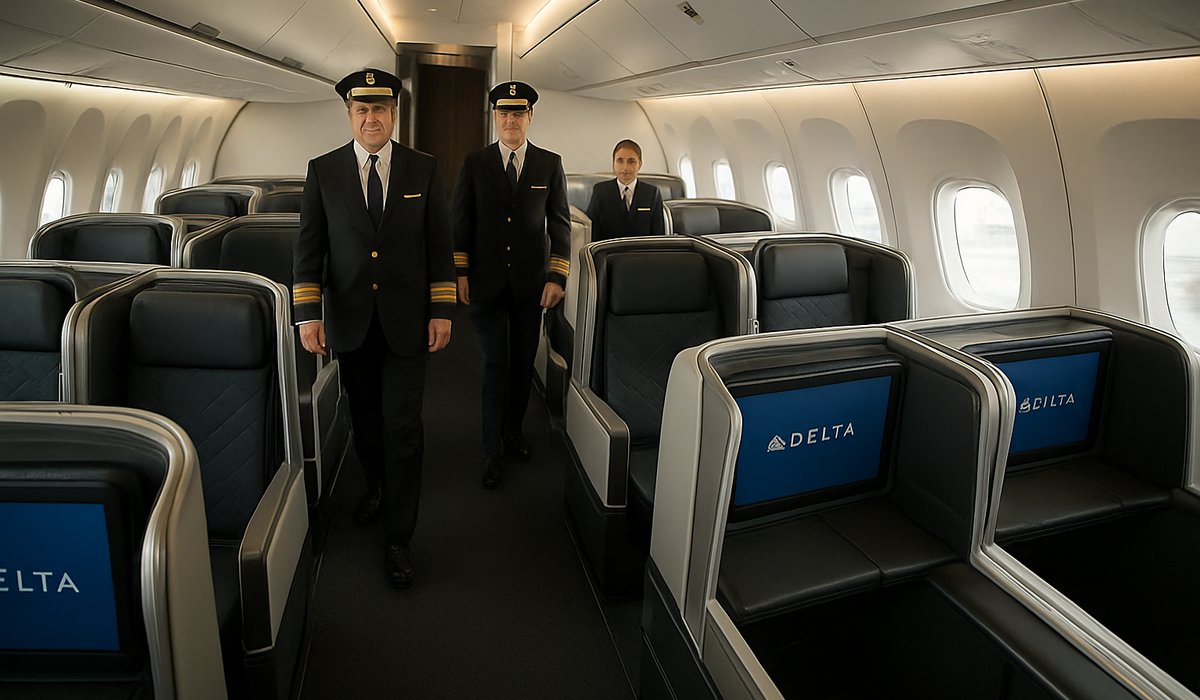
Image generated by AI
Delta Air Lines Commits $1 Billion to Premium Cabin Overhaul as A350-1000 Suites Reshape Long-Haul Competition
The carrier's ambitious retrofit initiative signals intensifying pressure in the ultra-competitive business-class market, as airlines race to justify premium fares amid shifting travel patterns
Delta's Strategic Gambit: The A350-1000 Enters Service
Delta Air Lines has made its boldest move yet in the premium aviation sector, officially introducing the Delta One suites cabin on its newly delivered Airbus A350-1000 aircraft. The announcement marks a critical turning point for the Atlanta-based carrier, signaling a fundamental shift away from experimental luxury concepts toward an industry-wide standardization of high-end travel experiences.
The A350-1000 represents Delta's most modern wide-body platform, and the carrier has leveraged this opportunity to showcase its evolved approach to business-class hospitality. Rather than relying on novelty, the new suites emphasize consistency, comfort, and operational efficiency—positioning Delta to compete directly with rival carriers including Singapore Airlines, Emirates, and British Airways in the crowded premium long-haul segment.
A $1 Billion Transformation: Retrofitting the Existing Fleet
Perhaps more significantly, Delta has committed approximately $1 billion to retrofitting its existing wide-body aircraft with comparable premium cabin configurations. This massive capital investment underscores the airline's determination to eliminate disparity across its fleet and provide passengers with unified luxury experiences regardless of which aircraft they board.
The retrofit program will modernize cabins across Delta's Boeing 777 and 767 fleets, bringing older aircraft into alignment with contemporary premium expectations. Industry analysts view this commitment as both a competitive necessity and a revenue-protection strategy—ensuring Delta can maintain pricing power in business-class markets while matching the product quality offered by global competitors.
The Broader Context: Pressure Points in Premium Aviation
Delta's aggressive investment arrives amid mounting pressure within the aviation industry. Rising jet fuel costs, driven by geopolitical tensions and supply chain disruptions, have squeezed airline margins, prompting carriers to enhance premium offerings as a revenue-generation tool. Airlines increasingly rely on business-class and first-class fares to offset volatility in economy segments and fuel surcharges.
The carrier's strategy reflects a wider industry trend: as traditional baggage fees and ancillary revenue streams face regulatory scrutiny, premium cabin enhancements have become essential profit drivers. Delta's $1 billion commitment demonstrates confidence in premium travel demand recovery and signals the airline's intention to recapture market share from Middle Eastern and Asian carriers.
Competitive Implications
The move raises stakes across the industry. Rivals including American Airlines and United Airlines now face pressure to accelerate their own premium cabin upgrades. For travelers, Delta's investment promises enhanced amenities, upgraded dining experiences, and technological innovations—though these improvements will likely be reflected in higher business-class fares.
FAQ: Delta's Premium Cabin Investment and Aviation Industry Impact
What exactly are Delta One suites, and how do they differ from standard business class? Delta One suites are fully-enclosed private compartments featuring direct-aisle access, lie-flat bedding, and premium amenities. They distinguish Delta's offering from traditional open business-class cabins, providing enhanced privacy and personalized service.
Why is Delta spending $1 billion to retrofit older aircraft? Standardizing premium cabin configurations across the fleet allows Delta to maintain consistent product quality, justify premium pricing, and compete effectively with international carriers offering comparable luxury experiences.
How do rising jet fuel prices impact airline premium cabin strategies? Elevated fuel costs compress margins on economy fares, making premium cabin revenue increasingly critical to airline profitability. Enhanced business-class offerings justify higher fares and offset fuel surcharges.
Which competitors are most threatened by Delta's A350-1000 suites investment? American Airlines, United Airlines, and international carriers including Singapore Airlines and Emirates face competitive pressure to accelerate their own premium product enhancements.
Will Delta's $1 billion investment lead to higher business-class ticket prices? Most likely, yes. The capital investment and enhanced amenities will be reflected in premium cabin fares, though demand for luxury travel experiences typically supports price increases.
Related Travel Guides
Flight Delay Compensation Guide 2026
Understanding Airline Route Changes
Airport Security Process Updated (2026)
External Resources
Disclaimer
This article is for informational and educational purposes only. It does not constitute legal, financial, or professional advice. While we strive to provide accurate and up-to-date information, travel policies, regulations, and conditions change rapidly. Always verify information with official sources before making travel decisions. Nomad Lawyer makes no representations about the accuracy, reliability, completeness, or suitability of the information provided. Readers should consult qualified professionals for advice specific to their circumstances. The views expressed in this article are those of the author and do not necessarily reflect the views of Nomad Lawyer.
Raushan Kumar
Founder & Lead Developer
Full-stack developer with 11+ years of experience and a passionate traveller. Raushan built Nomad Lawyer from the ground up with a vision to create the best travel and law experience on the web.
Learn more about our team →