
Indonesia Aviation Surges as Super Air Jet Connects Bandung With Bali Medan Makassar and More in Six-Route Expansion
Indonesia Aviation Surges as Super Air Jet Connects Bandung With Bali Medan Makassar and More in Six-Route Expansion

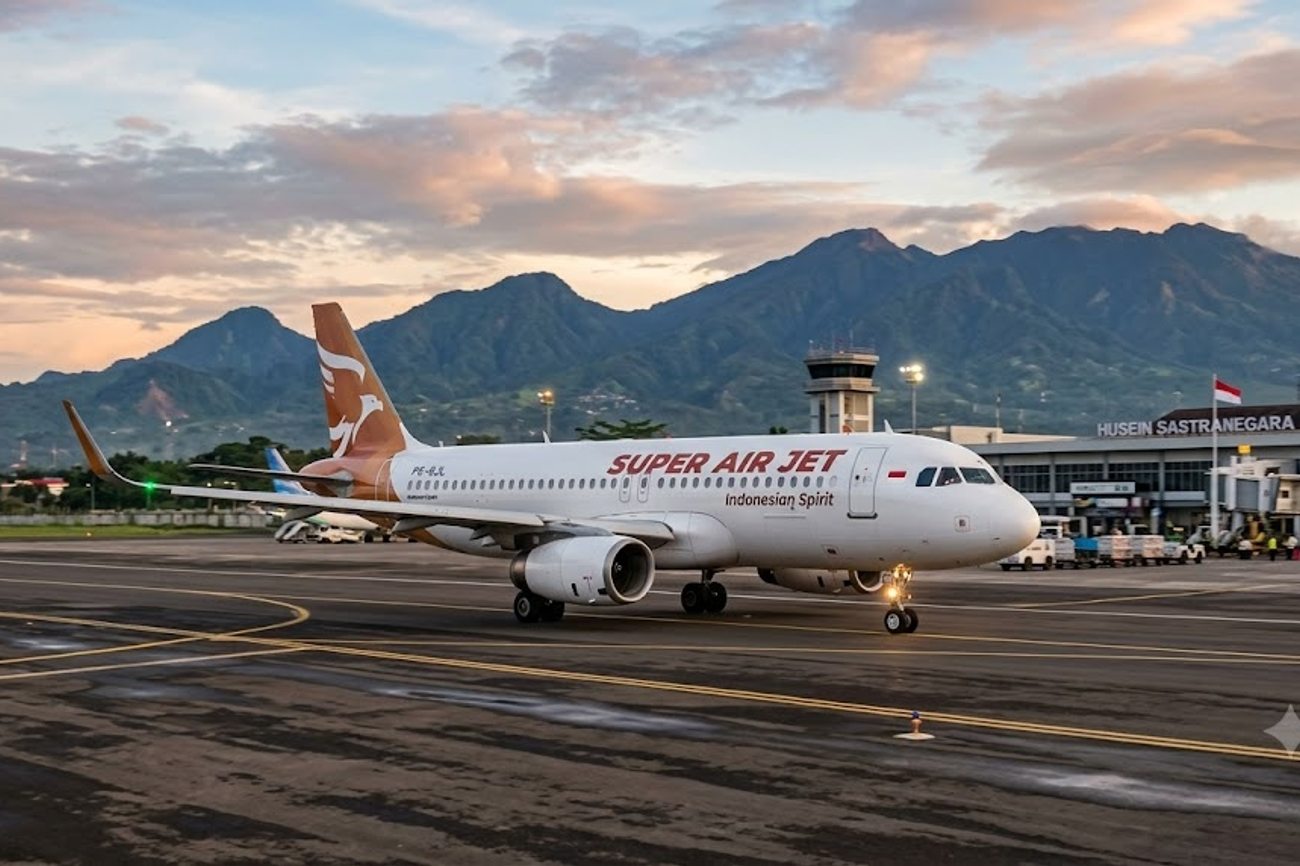
Image generated by AI
[Bandung, September 2026] — Super Air Jet has launched a strategic expansion of direct flight operations from Husein Sastranegara International Airport, restoring critical domestic connectivity for West Java’s capital. The airline is deploying a phased rollout of six new routes connecting Bandung to major economic and tourism hubs across the Indonesian archipelago, effectively shifting traffic back to the city center from the more distant Kertajati Airport.
The initiative, backed by the West Java Provincial Government, aims to stimulate regional economic growth by linking Bandung directly to Sumatra, Bali, Sulawesi, and Kalimantan. By bypassing the need for passengers to route through larger hubs or undertake lengthy surface transfers to peripheral airports, the government expects an immediate uptick in business travel, educational exchanges, and domestic tourism.
The Catalyst for Connectivity
The sudden shift in flight availability is a direct response to the logistical challenges faced by residents and businesses in Bandung. For a period, the majority of air traffic was diverted to Kertajati Airport, which increased travel times and complicated transit for those based in the urban core of West Java.
The West Java government identified a critical need to reintegrate Husein Sastranegara International Airport into the national aviation grid to support micro, small, and medium-sized enterprises (MSMEs). By restoring these direct links, the administration is attempting to lower the barrier for inter-island commerce and tourism. The strategy aligns with broader national goals overseen by the Ministry of Tourism and Creative Economy, which seeks to distribute tourism wealth more evenly across the provinces.
Impacted Routes and Rollout Schedule
The expansion is being executed in stages throughout September 2026. While initial government projections in July suggested a wider eight-destination plan—which included Padang and Batam—the current operational phase focuses on six primary markets.
The following table outlines the specific rollout dates for the new services:
| Destination | Rollout Date (September 2026) | Regional Significance |
|---|---|---|
| Medan (Kualanamu) | September 18 | Gateway to North Sumatra / Lake Toba |
| Bali (Denpasar) | September 18 | Primary international tourism hub |
| Pekanbaru | September 18 | Major Sumatra economic center |
| Makassar | September 19 | Principal transport node for Eastern Indonesia |
| Pontianak | September 19 | Direct access to West Kalimantan |
| Balikpapan | September 22 | Key connection to East Kalimantan |
The immediate demand for these services was evidenced on September 18, when the inaugural Medan-Bandung flight arrived with 170 passengers. Data from the West Java Tourism and Culture Office confirms that 140 of these travelers disembarked in Bandung, while the remainder continued toward Bali, illustrating the potential for multi-city transit corridors.
Practical Traveler Advisory and Strategic Insights
For the average passenger, this expansion removes a significant "last-mile" friction point. Previously, travelers often had to navigate long road trips to reach alternative airports or endure layovers in Jakarta.
Direct Access: Passengers can now fly directly into the heart of Bandung, drastically reducing total travel time for those visiting for business or family. Itinerary Flexibility: The link between Bandung and Bali is particularly transformative. Travelers can now combine the domestic-heavy tourism market of West Java with the international appeal of Bali without relying on surface transport between Java-region airports. Expanded Reach: The inclusion of Makassar and Balikpapan opens up faster access to the eastern regions and Kalimantan, making it viable for short-term business trips that were previously too time-consuming. Booking Options: With Super Air Jet increasing frequency, passengers have more competitive pricing and scheduling options, reducing the reliance on a single carrier or hub.
Tourism and Economic Indicators
This aviation surge coincides with a period of aggressive growth in Indonesian domestic travel. According to Statistics Indonesia (BPS), West Java has emerged as a powerhouse in the domestic market. In July 2026, the province recorded 18,859,209 domestic tourist trips, a 6.15% increase year-on-year, making it the top destination province in the country, surpassing both Central and East Java.
On a national scale, the data is equally robust:
- Domestic Trips: July 2026 saw 107.44 million domestic trips, up 7.23% from July 2025.
- International Arrivals: 1.53 million arrivals in July 2026, a 2.95% increase.
- Year-to-Date Growth: Between January and July 2026, international arrivals reached 8.98 million, a 5.23% increase over the previous year.
The Bali market continues to show strength, with 697,809 direct international arrivals in July 2026—a 15.34% jump from June. Star-rated hotels in Bali maintained a 67.29% occupancy rate during the same period. By linking these high-occupancy international zones directly to the high-volume domestic market of West Java, the government is attempting to create a seamless loop for both foreign and local tourists.
Future Outlook and Sector Growth
The Indonesian government is targeting between 16 million and 17.6 million international arrivals for the full year of 2026. The focus has shifted toward "sustainable and safe" tourism that provides direct economic benefits to local communities.
Super Air Jet is significantly expanding its network from Bandung, introducing six new routes to key hubs including Bali, Medan, and Makassar. Passengers can manage bookings and view updated flight schedules directly through the Super Air Jet official portal.
For the aviation sector, the success of the Bandung rollout will likely determine if the remaining two planned routes (Padang and Batam) are activated. If passenger loads remain high, further capacity increases at Husein Sastranegara International Airport are expected.
Local businesses in Bandung—including hotels, tour operators, and restaurants—are now repositioning their offerings. Instead of marketing Bandung as a side-trip from Jakarta, they are packaging it as a primary destination accessible from across the archipelago. This shift is expected to boost the local economy, particularly for small-scale vendors and boutique hospitality providers who benefit from the increased flow of regional travelers.
FAQ: Bandung Air Connectivity 2026
Which airport in Bandung is being used for these new flights? Flights are operating out of Husein Sastranegara International Airport, returning direct services to the city center rather than routing passengers through Kertajati Airport.
When do the new routes to Makassar and Pontianak begin? Both the Makassar and Pontianak routes were scheduled to begin operations on September 19, 2026.
How does this affect travel to Bali? Travelers can now fly directly between Bandung and Denpasar, eliminating the need for surface transfers to other airports in the Jakarta or West Java region.
Are there other routes planned beyond the initial six? Yes, the West Java government previously mentioned an eight-route plan that included Padang and Batam, though only six were part of the immediate September rollout.
Bandung is officially back on the domestic map, cutting the distance between Java's creative hub and the rest of the archipelago.
Related Travel Guides
- Greece Aligns With Italy And More As Quiet Coastal Escapes Attract Travellers Beyond Crowded Resorts
- Brazil Connects with Colombia, Chile and 14 More Latin American Destinations as Direct Europe Air Links Expand Amid Tourism Surge
- ICAO Advances Global Air Passenger Rights Reform as 193 Countries Face Major Changes
Disclaimer
This article is for informational and educational purposes only. It does not constitute legal, financial, or professional advice. While we strive to provide accurate and up-to-date information, travel policies, regulations, and conditions change rapidly. Always verify information with official sources before making travel decisions. Nomad Lawyer makes no representations about the accuracy, reliability, completeness, or suitability of the information provided. Readers should consult qualified professionals for advice specific to their circumstances. The views expressed in this article are those of the author and do not necessarily reflect the views of Nomad Lawyer.
Raushan Kumar
Founder & Lead Developer
Full-stack developer with 11+ years of experience and a passionate traveller. Raushan built Nomad Lawyer from the ground up with a vision to create the best travel and law experience on the web.
Learn more about our team →