
India Supreme Court Threatens to Ground Airlines Over Fare Violations and Opaque Pricing in 2026
The Supreme Court of India has demanded strict enforcement of new aviation fare rules, suggesting that non-compliant carriers could be grounded to prevent volatile pricing and hidden charges.

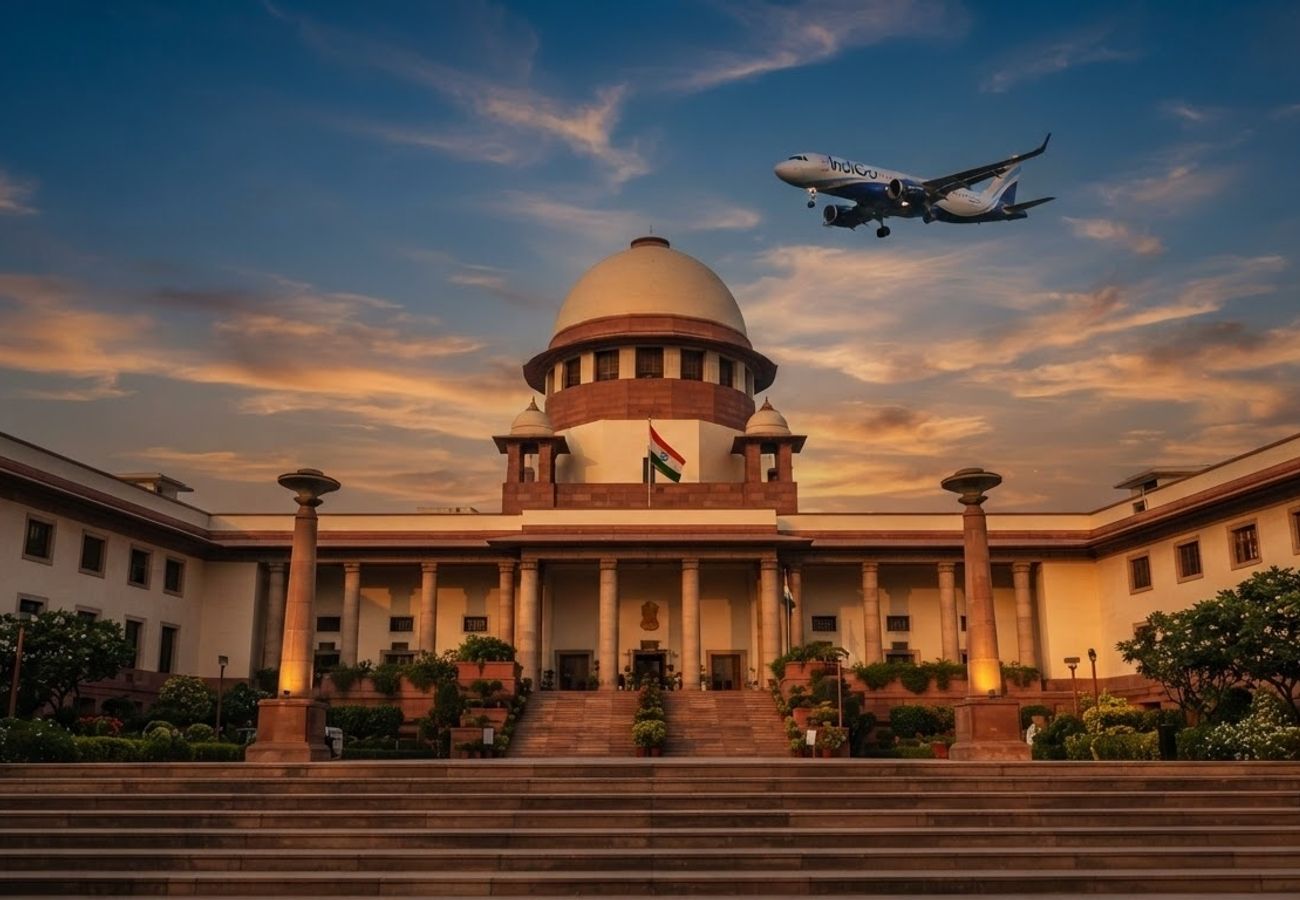
Image generated by AI
The Supreme Court of India has signaled a zero-tolerance approach to airline pricing volatility, indicating that carriers failing to adhere to new fare regulations may face grounding. This judicial intervention follows the submission of government draft rules designed to eliminate opaque charges and extreme price swings for domestic passengers.
Judicial Intervention in Aviation Pricing
The Supreme Court of India is currently reviewing a public-interest matter centered on steep tariff fluctuations, undisclosed optional fees, and systemic gaps in passenger protection. During recent proceedings, the bench pressed the Union government to ensure that proposed civil aviation fare rules are not merely guidelines but are backed by rigorous enforcement mechanisms.
The court's most significant directive is the suggestion that the government utilize the grounding of non-compliant airlines as a primary deterrent. This indicates that judicial oversight will now focus on the actual implementation of pricing transparency rather than the mere existence of regulatory text.
While the Indian aviation market has traditionally operated on a market-driven model, the court noted that unrestrained dynamic pricing and hidden add-ons are eroding consumer trust, particularly on high-demand routes during peak travel windows.
Analysis of Proposed Fare Regulations
The Union government's draft rules aim to stabilize the cost of domestic air travel through several key mechanisms:
- Fare Band Implementation: The framework seeks to formalize maximum and minimum fare corridors on specified routes. This prevents extreme spikes while allowing airlines to utilize dynamic pricing within an approved range.
- Price Transparency: Rules require that the final price displayed at the initial booking stage be clear and aligned with declared fare bands, preventing "sticker shock" at checkout.
- Ancillary Charge Oversight: The draft targets "hidden" costs, including seat selection, baggage fees, and date change penalties, which often appear late in the booking process.
- Standardized Disclosures: New mandates would require a prominent breakdown of all charges to facilitate easier price comparisons across different carriers.
Passenger Rights & Advisory: Navigating the Transition
For the affected passenger, these developments suggest a shift toward a more predictable pricing environment. Our analysis of the proposed framework indicates the following practical implications for travelers:
For the Domestic Flyer: If you encounter a fare spike that exceeds the proposed "fare bands" once they are formalized, you may have stronger grounds for a formal complaint through the Directorate General of Civil Aviation (DGCA) or consumer courts. We advise passengers to screenshot the initial quoted price and the final payment page to document any unauthorized ancillary additions.
For the International Visitor: Travelers booking multi-city itineraries within India should expect a transition toward "all-in" pricing. If a carrier fails to disclose baggage or convenience fees until the final payment screen, this may soon constitute a regulatory violation.
Actionable Steps for Travelers:
- Audit Your Receipts: Retain all booking confirmations and payment summaries. Under the new scrutiny, these documents are essential for claiming refunds or reporting fare violations.
- Compare Like-for-Like: Until the rules are finalized, continue to compare the "final" price including taxes and fees, rather than the "base" fare.
- Monitor Official Notifications: Watch for the final government notification which will include implementation timelines for airlines to update their booking interfaces.
Industry Analyst View: The Stability vs. Viability Trade-off
The threat of grounding airlines introduces a high-stakes variable into a market already characterized by thin margins and high fuel costs. India’s aviation sector is currently in a phase of aggressive fleet expansion and connectivity pushes into Tier-2 and Tier-3 cities.
Industry analysts suggest that while extreme controls could squeeze revenue, a uniform and transparent framework actually benefits the industry by reducing litigation and consumer disputes. The grounding threat is likely a strategic deterrent intended to force rapid compliance rather than a tool for mass suspensions.
The long-term outlook suggests a move toward a standardized presentation of "fare families," where the distinction between budget and premium options is clearly defined and devoid of hidden costs.
The era of unchecked dynamic pricing in Indian airspace is facing its most significant legal challenge to date.
Related Travel Guides
Disclaimer
This article is for informational and educational purposes only. It does not constitute legal, financial, or professional advice. While we strive to provide accurate and up-to-date information, travel policies, regulations, and conditions change rapidly. Always verify information with official sources before making travel decisions. Nomad Lawyer makes no representations about the accuracy, reliability, completeness, or suitability of the information provided. Readers should consult qualified professionals for advice specific to their circumstances. The views expressed in this article are those of the author and do not necessarily reflect the views of Nomad Lawyer.
Raushan Kumar
Founder & Lead Developer
Full-stack developer with 11+ years of experience and a passionate traveller. Raushan built Nomad Lawyer from the ground up with a vision to create the best travel and law experience on the web.
Learn more about our team →