
Indian Railways Deploys Special Coaches at Patna Junction to Rescue 106 Flood-Stranded Nepal Tourists
Indian Railways attached additional 3AC coaches at Patna Junction to transport 106 tourists stranded by devastating flash floods along the Nepal border to safety in Nagpur.

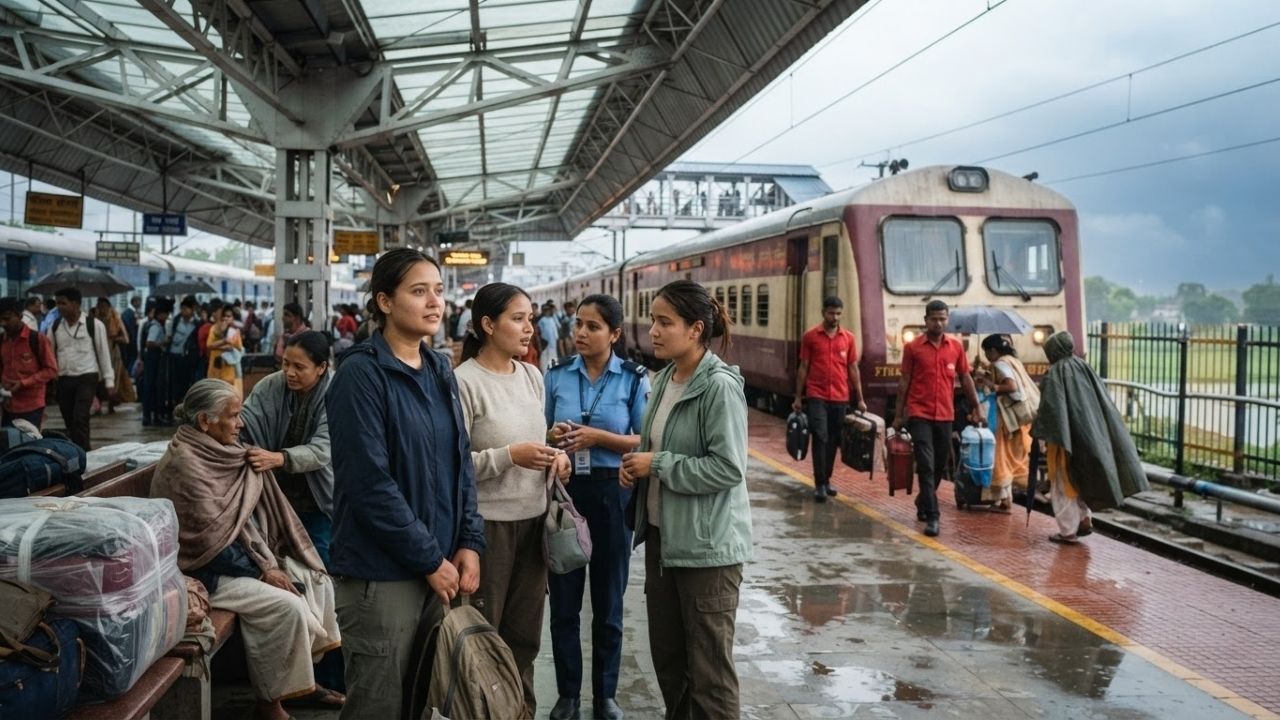
Image generated by AI
Indian Railways has mobilized emergency rolling stock at Patna Junction to evacuate 106 tourists trapped by devastating flash floods in Nepal. Transport authorities attached two additional third-tier air-conditioned (3AC) coaches to the Patna–Purna Express, providing confirmed berths and medical assistance for displaced passengers returning home to Nagpur.
Indian Railways Mobilizes Emergency Coaches for Nepal Flood Evacuees
[PATNA, Bihar] — Transport authorities in Bihar have executed an emergency railway operation to assist 106 passengers stranded by catastrophic weather conditions along the Himalayan border in Nepal. Incessant downpours and sudden flash floods severely disrupted mountain transport infrastructure, rendering primary roadways impassable and trapping domestic and foreign travelers in hazardous border terrain. The group—which included a significant proportion of vulnerable travelers, elderly individuals, and families—faced acute exhaustion after physical access across border checkpoints was completely cut off.
Recognizing the severity of the crisis, state administrative agencies initiated a multi-modal rescue effort. The Bihar state government deployed dedicated fleet buses to transport the stranded evacuees from border checkpoints in Sitamarhi directly to the capital transit hub at Patna. Upon their arrival at Patna Junction, railway officials executed rapid protocol adjustments to facilitate their onward long-distance repatriation toward Nagpur.
Central railway headquarters authorized immediate emergency quotas and dynamically modified scheduled train compositions. By integrating two additional 3AC coaches into the Patna–Purna Express, officials guaranteed that every displaced passenger secured a confirmed sleeping berth, successfully transitioning the group from displacement to structured transit security.
Multi-Agency Coordination Eases Travel Impact on Vulnerable Passengers
The severe weather disruption left travelers in a state of heightened anxiety and physical fatigue. Navigating flooded border terrain without reliable communications or transport links created severe stress, particularly for elderly passengers requiring continuous medical care and physical assistance.
The immediate intervention by transport authorities provided crucial logistical support at a critical moment. At Patna Junction, dedicated support frameworks alleviated transit hardships:
- Rapid registration and ticketing services through specialized reservation counters
- Guaranteed 3AC sleeping berths for all 106 displaced passengers
- On-site medical evaluation teams offering health checks and medication
- Railway Protection Force (RPF) personnel ensuring platform crowd control and security
- Station porter assistance managing heavy luggage and assisting passengers with reduced mobility
This structured assistance enabled exhausted travelers to transition smoothly onto long-distance rail transit, relieving psychological stress and providing a secure environment for their return journey.
Operational Benchmarks of the Nepal Flood Evacuation Operation
The table below summarizes the core operational metrics, multi-agency resources, and railway infrastructure deployed during the emergency evacuation process:
| Operational Metric / Support Domain | Response Detail | Operational Context |
|---|---|---|
| Affected Passenger Volume | 106 stranded individuals | Predominantly tourists, including elderly and female passengers |
| Initial Evacuation Route | Sitamarhi border zone to Patna | Executed via Bihar state government fleet buses |
| Central Rail Transit Hub | Patna Junction (Bihar) | Primary inter-state transfer terminal |
| Long-Distance Final Destination | Nagpur (Maharashtra) | End destination for repatriation transit |
| Train Composition Modification | Patna–Purna Express | Augmented with two additional 3AC coaches |
| Special Administration Measures | Emergency quota authorization | Released directly from central headquarters |
| On-Site Station Support | Medical teams, RPF, and porters | Deployed at Patna Junction for crowd flow and health aid |
Modern Disaster Management Overcomes Traditional Public Rail Constraints
Public transportation networks normally operate within strict schedule frameworks and automated booking quotas. However, sudden natural disasters require flexible operational management to handle sudden surges in emergency passenger demand.
The rapid adaptation observed at Patna Junction highlights the growing agility of national railway management during humanitarian emergencies. By releasing central emergency quotas on short notice and modifying active train compositions without disrupting existing passenger schedules, railway managers demonstrated how high-capacity rail networks can absorb regional crisis demand.
Industry analysts emphasize that successful crisis response depends on inter-agency alignment. Moving evacuees smoothly from state-operated road transport to high-capacity passenger rail required close coordination between municipal authorities, state transport departments, and railway administration. Deploying commercial managers, ticket inspectors, and security forces simultaneously eliminated booking bottlenecks, establishing an efficient model for public sector emergency response.
Evolution of Disaster Response Protocols in Public Transit
Historically, emergency response within public transit systems relied on rigid reservation structures, leaving stranded passengers vulnerable to prolonged delays during natural disasters. In past incidents, displaced travelers were forced to join standard waiting lists, enduring extended stays at crowded station terminals without dedicated administrative support.
Recent policy updates reflect a shift toward proactive, humanitarian-focused infrastructure management. Giving priority to emergency relief over rigid booking rules marks a departure from traditional administrative delays.
By institutionalizing rapid-response quotas, providing specialized ticketing windows, and expanding rolling stock on short notice, national transportation networks now deliver compassionate and effective relief during regional emergencies.
Why This Matters for Travellers
For travelers navigating international border regions, this coordinated response demonstrates the growing resilience of transport networks during severe weather events. When extreme weather disrupts primary road and air routes, integrated emergency protocols between local road fleets and national rail systems provide a vital safety net. Passengers traveling through flood-prone border corridors benefit from knowing that transport authorities can deploy emergency rolling stock, dedicated medical care, and priority ticketing to ensure safe repatriation when local infrastructure fails.
Frequently Asked Questions
How were the 106 stranded tourists evacuated from the Nepal border to Patna?
The Bihar state government deployed dedicated fleet buses to collect the stranded tourists from flood-affected border zones near Sitamarhi and transport them securely to Patna Junction for long-distance rail connections.
What specific measures did Indian Railways take at Patna Junction?
Indian Railways released central emergency quotas, opened special ticketing counters, and attached two extra 3AC (third-tier air-conditioned) coaches to the Patna–Purna Express to ensure all 106 passengers secured confirmed sleeping berths for their journey to Nagpur.
What medical and station support was provided to the flood evacuees?
At Patna Junction, medical intervention teams conducted health evaluations, Railway Protection Force (RPF) personnel managed platform security, and station porters assisted elderly and fatigued travelers with their luggage.
Related Travel Guides
Central Railway Upgrades Special Train Routes Across Maharashtra and Karnataka
Indian Railways Expands Regional Express Routes to Support Seasonal Passenger Growth
10 Best Himalayan Border Train Routes and Pilgrim Express Trails, According to Reddit
Disclaimer
This article is for informational and educational purposes only. It does not constitute legal, financial, or professional advice. While we strive to provide accurate and up-to-date information, travel policies, regulations, and conditions change rapidly. Always verify information with official sources before making travel decisions. Nomad Lawyer makes no representations about the accuracy, reliability, completeness, or suitability of the information provided. Readers should consult qualified professionals for advice specific to their circumstances. The views expressed in this article are those of the author and do not necessarily reflect the views of Nomad Lawyer.
Raushan Kumar
Founder & Lead Developer
Full-stack developer with 11+ years of experience and a passionate traveller. Raushan built Nomad Lawyer from the ground up with a vision to create the best travel and law experience on the web.
Learn more about our team →