
Indian Railways Launches Indigenous Hydrogen Fuel Cell Train on Jind-Sonipat Route in June 2026
India's first indigenous hydrogen-powered train begins pilot operations on the Jind–Sonipat corridor in Haryana, marking a transformative shift toward zero-emission rail transport and sustainable mobility infrastructure.

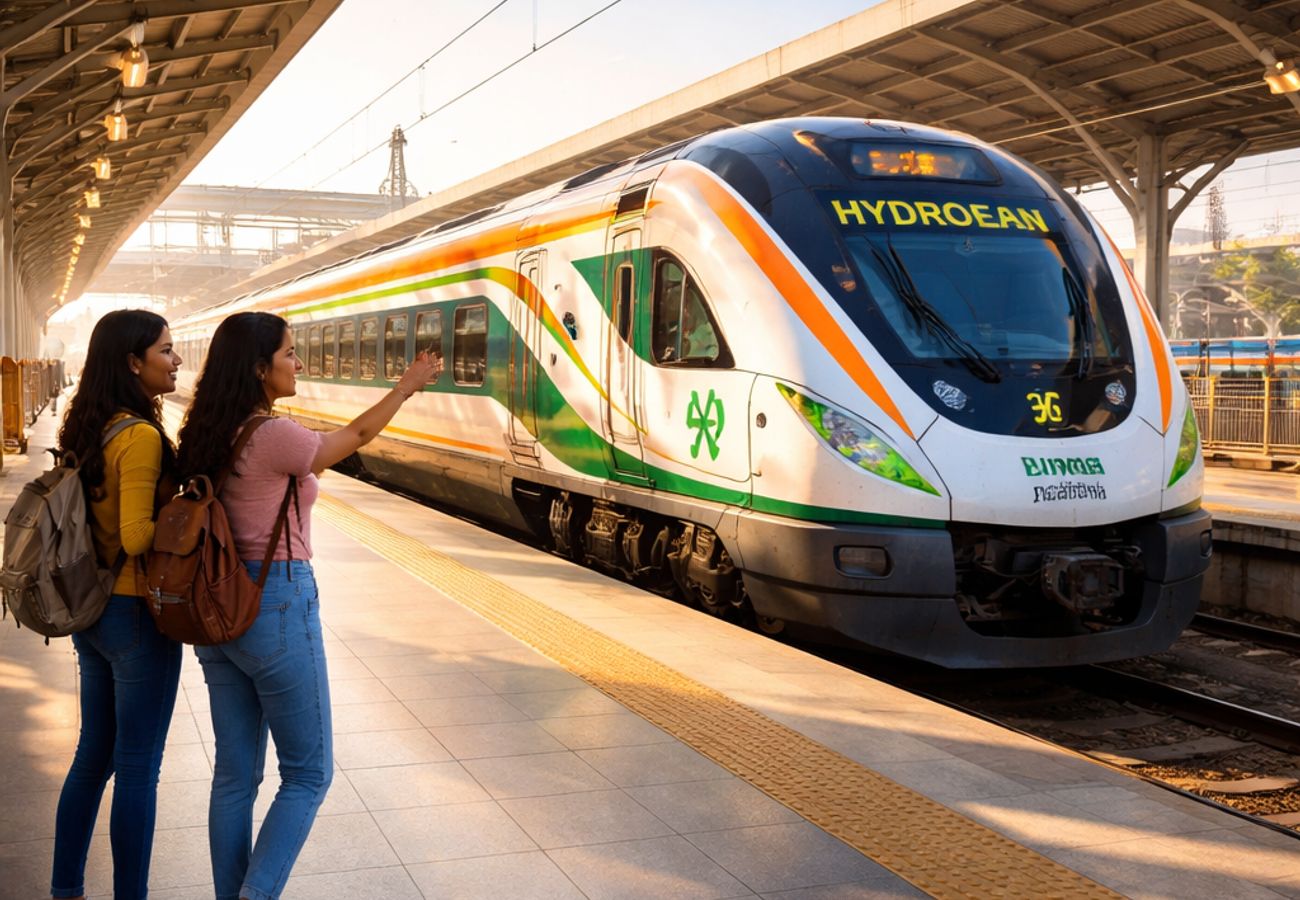
Image generated by AI
India's Railways Go Green: The Hydrogen Revolution Begins
Indian Railways has officially entered the hydrogen era. The country's first indigenous hydrogen fuel cell train has received approval for pilot operations on the Jind–Sonipat rail corridor in Haryana, a watershed moment for the subcontinent's transport infrastructure and global climate commitments.
This isn't just another test project. A powerful 10-coach broad-gauge trainset—engineered with a total propulsion capacity of 2,400 kilowatts—will soon run clean electricity through its motors, emitting nothing but water vapour into the air. It's the kind of technological leap that quietly reshapes how millions move.
How Hydrogen Powers the Future of Rail
Unlike diesel locomotives that burn fossil fuels, this train harnesses a fundamentally different chemistry. Hydrogen fuel cells generate electricity through a direct reaction between hydrogen and oxygen, converting chemical energy into propulsive power without combustion. No flames. No exhaust. No carbon dioxide.
Reddit: "Finally, someone's actually building this instead of just talking about it. India moving faster than half of Europe on green rail tech." — r/transit
The environmental payoff is massive. Traditional diesel trains pump out carbon dioxide, nitrogen oxides, and particulate matter into the atmosphere. This hydrogen-powered system produces only water vapour as a byproduct—a fundamental reimagining of how heavy-duty transport works.
India's climatic challenges—extreme temperatures, dust exposure, variable operating conditions—make this test particularly rigorous and valuable. If the train performs under these conditions, the data will inform deployment strategies across the entire Indian Railways network, which serves over 1.3 billion passengers annually.
Building the Infrastructure: Hydrogen on Demand
Technology alone doesn't transform transport. You need fuel infrastructure that can reliably feed the machine.
Indian Railways has constructed dedicated hydrogen facilities in Jind to support the pilot programme. The centerpiece is a green hydrogen production plant that uses electrolysis—splitting water into hydrogen and oxygen using electricity. When powered by renewable energy sources, this method produces hydrogen with virtually zero environmental footprint, creating a closed-loop sustainability story.
This integrated approach matters. The train, the fuel production, the storage systems, and the safety protocols form a cohesive ecosystem rather than a fragmented experiment. Hydrogen is stored and supplied locally, eliminating transportation emissions that would otherwise undermine the entire project's climate credentials.
Safety First: Engineering Against Risk
Running hydrogen through a moving train carrying hundreds of passengers demands engineering that anticipates every failure mode.
The trainset incorporates advanced monitoring equipment that continuously tracks hydrogen storage conditions and fuel cell performance. Leak detection systems operate 24/7. Fire protection mechanisms are distributed throughout the train. Automated safety controls enforce stringent compliance protocols at every operational level.
According to industry standards for hydrogen transport, these multi-layered safety systems reflect lessons learned from hydrogen programmes across Europe, Japan, and South Korea. Indian Railways didn't reinvent safety—it integrated proven standards into an indigenous design.
The Trial Phase: Data-Driven Decisions
The upcoming pilot operations will generate critical performance metrics: operational efficiency under load, energy consumption across varying speeds and gradients, maintenance requirements, and real-world reliability.
Haryana's climate presents authentic test conditions. Summer temperatures exceed 45°C. Dust storms occur seasonally. Railway corridors experience heavy traffic patterns that stress any propulsion system. The Jind–Sonipat route will expose the train to genuine operational stressors rather than controlled laboratory conditions.
This data collection phase typically lasts 12-18 months. Railway authorities will methodically document every performance parameter, failure point, and efficiency metric. Only after this rigorous evaluation will expansion decisions move forward.
What This Means for India's Transport Future
Indian Railways operates the world's fourth-largest railway network by route length, transporting over 1.1 billion passengers annually. Replacing even a fraction of diesel locomotives with hydrogen-powered alternatives could eliminate millions of tonnes of carbon emissions yearly.
This project signals India's strategic pivot toward green technology manufacturing. Rather than importing hydrogen trains, the country is building domestic expertise, creating intellectual property, and establishing supply chains for components and hydrogen infrastructure. That's economic development aligned with climate responsibility.
The hydrogen train isn't a novelty—it's a proof point. If successful, it becomes a template for retrofitting aging diesel routes across the network. Railway corridors in densely populated regions like the Delhi-Agra corridor, the Mumbai-Pune sector, and the Bengal-Assam routes could eventually transition to hydrogen-powered operations.
Global Context: Where Does India Stand?
Germany, Japan, and South Korea already operate hydrogen trains in commercial service. France is expanding hydrogen rail programmes. But those nations benefit from decades of automotive and industrial hydrogen development.
India is compressing that learning curve by designing an indigenous system from ground up. The trainset was engineered specifically for Indian broad-gauge specifications, not adapted from foreign designs. The hydrogen infrastructure was built in Haryana, not imported. This demonstrates genuine technological sovereignty in clean transport.
The International Energy Agency projects hydrogen could power 10% of global transport by 2050. India's railways are positioning themselves ahead of that curve.
The Broader Sustainability Picture
This project exists within Indian Railways' larger decarbonization strategy. The network has simultaneously been electrifying conventional lines, deploying renewable energy at rail facilities, and reducing water consumption in operations. Hydrogen represents the next frontier—particularly for routes where electrification proves technically challenging or economically difficult.
The 2,400 kW propulsion system generates enough power to maintain schedules and performance standards expected by passengers. This isn't a compromise solution—it's engineered to match diesel-era capabilities while eliminating emissions. That's the distinction that transforms transport sectors.
When Does the Trial Begin?
The approval has been granted. Hydrogen facilities are operational in Jind. The 10-coach trainset has completed manufacturing and safety certifications. Pilot operations are positioned to commence within the second half of 2026, with preliminary performance data expected by mid-2027.
The Jind–Sonipat corridor was selected strategically. It's a 90-kilometre secondary route with moderate traffic—sufficient to gather diverse operational data without placing critical primary routes at risk during the testing phase. Success here opens pathways to trunk routes serving major metropolitan areas.
Why This Moment Matters
Climate change isn't waiting for perfect hydrogen infrastructure or fully mature supply chains. Indian Railways is choosing to act now, learning in real time, and building capabilities that future generations will expand upon. The hydrogen era in Indian rail transport doesn't start with a finished product—it starts with engineers, technicians, and passengers willing to pilot something genuinely new.
When that 10-coach trainset begins running on the Jind–Sonipat route, it won't just be moving passengers. It will be moving India's transport sector toward a cleaner, more energy-independent future.
The tracks have been laid. The hydrogen is ready. Now comes the proof.
Related Travel Guides
Delta Expands Travel Benefits on Amex Cards While Holding Fees Steady
Spanish Tourism Boom Reaches 97 Million as Middle East Tensions Reshape Global Travel
Disclaimer
This article is for informational and educational purposes only. It does not constitute legal, financial, or professional advice. While we strive to provide accurate and up-to-date information, travel policies, regulations, and conditions change rapidly. Always verify information with official sources before making travel decisions. Nomad Lawyer makes no representations about the accuracy, reliability, completeness, or suitability of the information provided. Readers should consult qualified professionals for advice specific to their circumstances. The views expressed in this article are those of the author and do not necessarily reflect the views of Nomad Lawyer.
Preeti Gunjan
Contributor & Community Manager
A passionate traveller and community builder. Preeti helps grow the Nomad Lawyer community, fostering engagement and bringing the reader experience to life.
Learn more about our team →