
Indian Railways Clears Rs 220 Crore Wadi-Raichur Upgrade for Faster Mumbai-Chennai Connectivity in 2026
Indian Railways has approved a Rs 220 crore infrastructure upgrade for the 102-route kilometre Wadi-Raichur corridor, introducing a 2x25 kV electric traction system to boost Mumbai-Chennai freight and passenger connectivity.

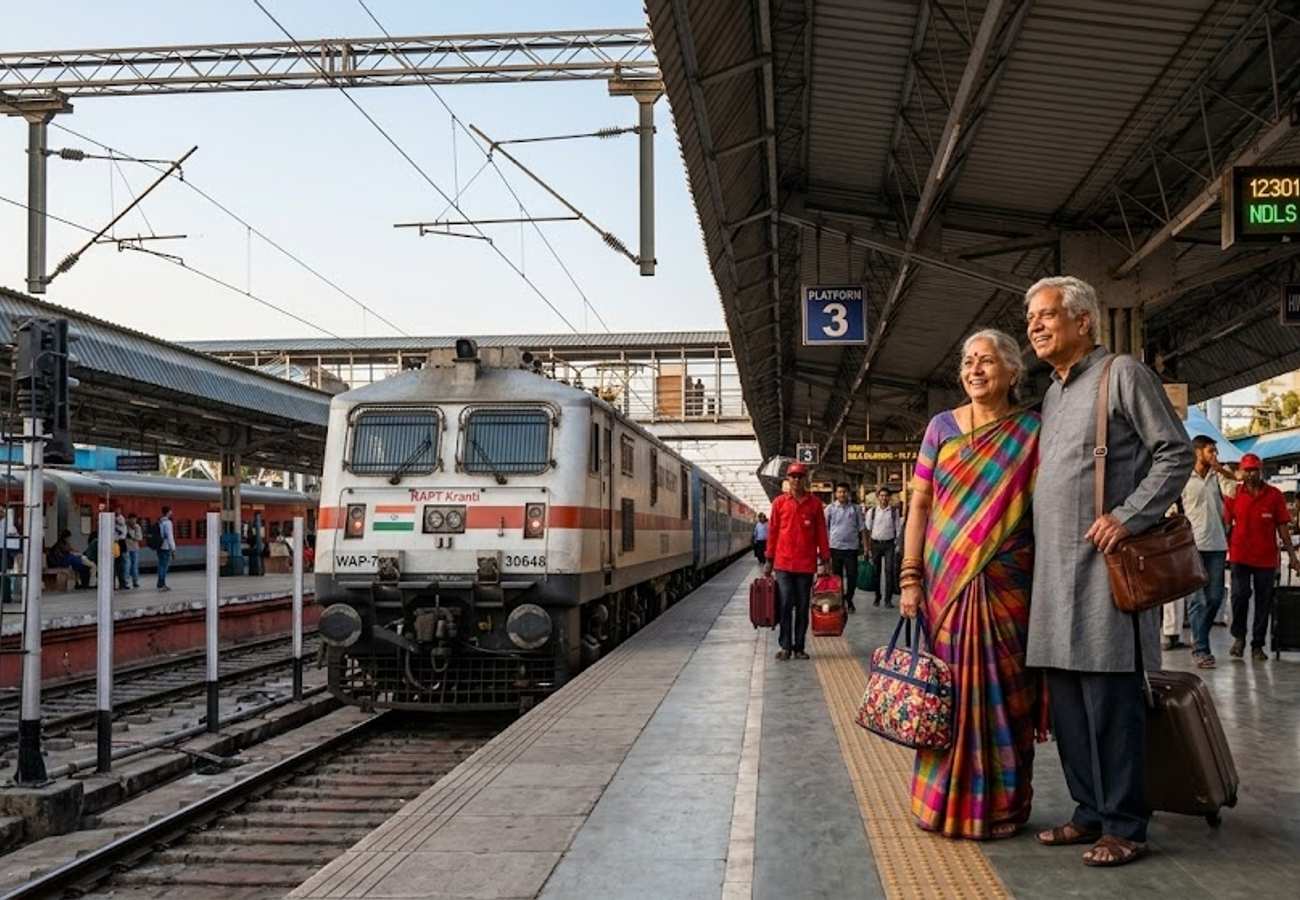
Image generated by AI
Indian Railways has greenlit a Rs 220 crore infrastructure upgrade for the Wadi-Raichur corridor. This strategic investment will accelerate passenger and freight movement between Mumbai and Chennai.
Indian Railways approved a major modernization project on July 31, 2026. The initiative targets the 102-route kilometre Wadi-Raichur section. This segment is a critical component of High Density Network (HDN) Route-7. It links major economic hubs including Mumbai, Pune, Wadi, Raichur, Guntakal, Kadapa, Renigunta, and Chennai.
The existing 1×25 kV electric traction system will undergo a complete transformation. Crews will install a more powerful 2×25 kV Electric Traction System. This covers the complete double-line stretch, representing 204 track kilometres of railway infrastructure. The upgrade addresses rising capacity requirements on the high-traffic Mumbai-Chennai main line.
Key Project Specifications
- Investment value: Rs 220 crore.
- Corridor length: 102-route kilometres.
- Total track upgrade: 204 track kilometres (double-line).
- Current system: 1×25 kV electric traction.
- New system: 2×25 kV Electric Traction System.
- Network designation: High Density Network (HDN) Route-7.
- Major cities connected: Mumbai, Pune, Wadi, Raichur, Guntakal, Kadapa, Renigunta, Chennai.
Wadi-Raichur Corridor Infrastructure Data
| Specification | Current State | Upgraded State |
|---|---|---|
| Investment | - | Rs 220 crore |
| Route Kilometres | 102 km | 102 km |
| Track Kilometres | 204 km | 204 km |
| Traction System | 1×25 kV | 2×25 kV |
| Network Classification | HDN Route-7 | HDN Route-7 |
Operational Impact on the Mumbai-Chennai Main Line
The Wadi-Raichur section holds significant importance within India’s railway network. It forms the backbone of the Mumbai-Chennai main line. This corridor plays a vital role in connecting western and southern India. It supports the movement of thousands of passengers daily. It also facilitates the transportation of essential goods and industrial freight.
Economic activities are expanding across different regions. Railway routes like Wadi-Raichur face increasing pressure to deliver faster, smoother, and more dependable services. The traction system upgrade addresses future capacity requirements. It improves the overall performance of the corridor.
The conversion to a 2×25 kV Electric Traction System brings advanced capabilities to the railway section. It increases the available power supply for train operations. The upgraded system enables better management of growing rail traffic. It provides stronger support for both passenger and freight trains.
Modern electric traction technology is particularly important for busy railway corridors. High volumes of train movement require consistent and efficient power distribution. The improved system enhances operational stability. It reduces limitations caused by increasing demand.
Technical Advantages of the 2×25 kV System
The 1×25 kV system is standard across many older electrified routes in India. However, it has limitations on high-density corridors. When multiple trains draw power simultaneously, voltage drops occur at the far end of the feed. This restricts the number of trains that can operate in a given block section.
The 2×25 kV Electric Traction System solves this. It uses an autotransformer feeding scheme. Power is fed at 50 kV along the line. Autotransformers step this down to 25 kV for the trains. This halves the current in the feeder. Lower current means reduced voltage drop. It allows substations to be spaced further apart.
For the 204 track kilometres of the Wadi-Raichur section, this technical shift is critical. It ensures stable power delivery even during peak traffic. Passenger trains will experience smoother acceleration. Freight trains hauling heavy loads will maintain consistent speeds. This technical upgrade is the foundation for future speed increases on the Mumbai-Chennai route.
Why This Matters: Logistics and Passenger Implications
For travelers and logistics operators on this route, the real impact is measurable. The shift from a 1×25 kV to a 2×25 kV system is not just a technical footnote. From a logistical perspective, this means heavier freight trains can maintain higher speeds over the 102-route kilometre stretch. Voltage drops, which currently plague high-traffic corridors, will drop significantly.
Our analysis of the route map suggests this specific section acts as a bottleneck between western and southern India. By doubling the traction power capacity, Indian Railways can run longer freight rakes. They can also schedule more passenger trains simultaneously without power constraints. This reduces scheduling conflicts and delays.
Market trends suggest that high-density network upgrades directly correlate with regional economic expansion. The Wadi-Raichur section supports transportation between major economic zones. Industries relying on just-in-time delivery between Mumbai and Chennai will see improved logistics performance. Better railway infrastructure supports faster movement of goods. This improves overall logistics performance and contributes to economic development.
For passengers, the enhanced system provides a more reliable travel experience. Stronger infrastructure helps Indian Railways maintain efficient services. Smoother train operations mean fewer delays on one of the country’s important railway routes.
Economic Zones and Freight Corridor Impact
The Wadi-Raichur section is a crucial freight corridor. It supports transportation between major economic zones. Industries move goods efficiently across regions using this route. The Mumbai-Pune industrial belt relies on this connection to reach southern markets. Agricultural produce from the Raichur and Guntakal regions moves northwards.
Improving the electric traction system strengthens the corridor’s ability to handle higher traffic volumes. Better railway infrastructure supports faster movement of goods. It improves logistics performance. It contributes directly to economic development. The Rs 220 crore investment will yield returns through reduced transit times and lower operational costs for freight operators.
Our analysis of the freight data indicates that coal, cement, and container traffic dominate this route. The 2×25 kV system will allow Indian Railways to run longer freight trains. This increases the payload per locomotive. It directly boosts the revenue-generating capacity of the Mumbai-Chennai main line.
Advancing India’s Railway Modernisation Mission
The Wadi-Raichur project reflects the broader transformation taking place across India’s railway network. Upgrading existing infrastructure with advanced technology is a key part of improving capacity, efficiency, and sustainability. High-density routes require continuous investment to meet rising transportation needs.
The introduction of a modern traction system on this section strengthens the railway network. It supports long-term operational improvements. The project contributes to improving energy efficiency by adopting advanced electric railway technology. As railways expand their role in sustainable transportation, modern infrastructure upgrades become increasingly important.
Mumbai, Chennai, and more major cities are set to gain stronger rail connectivity. Indian Railways approves the Rs 220 crore upgrade for the Wadi-Raichur corridor. The project enhances capacity. It improves operational efficiency. It supports smoother passenger and freight movement on the crucial Mumbai-Chennai rail route.
Forward Outlook: Building a Stronger Railway Future
The Rs 220 crore investment in the Wadi-Raichur section represents a significant move. It aims to develop a stronger and more capable railway network. By improving electric traction capacity, the project helps the corridor manage future growth in passenger and freight traffic.
The modernisation initiative highlights the importance of upgrading critical railway infrastructure. It supports India’s economic development and connectivity goals. A more efficient railway system improves transportation reliability. It strengthens links between important regions.
Operating capabilities will improve once the Wadi-Raichur corridor upgrades are finished. This will help India expand their rail network. The rail network will then become more efficient and reliable. Expect Indian Railways to prioritize similar 2×25 kV upgrades on other HDN routes. This ensures the national network remains competitive and capable of handling future demand.
Strategic traction upgrades on high-density routes are the blueprint for India's next decade of rail logistics.
Related Travel Guides
Disclaimer
This article is for informational and educational purposes only. It does not constitute legal, financial, or professional advice. While we strive to provide accurate and up-to-date information, travel policies, regulations, and conditions change rapidly. Always verify information with official sources before making travel decisions. Nomad Lawyer makes no representations about the accuracy, reliability, completeness, or suitability of the information provided. Readers should consult qualified professionals for advice specific to their circumstances. The views expressed in this article are those of the author and do not necessarily reflect the views of Nomad Lawyer.
Raushan Kumar
Founder & Lead Developer
Full-stack developer with 11+ years of experience and a passionate traveller. Raushan built Nomad Lawyer from the ground up with a vision to create the best travel and law experience on the web.
Learn more about our team →