
Cambridge South Station Passenger Numbers Surge as New £250 Million Rail Gateway Strengthens UK Links in 2026
Cambridge South station recorded over 110,000 journeys in its first month after a £250 million investment, providing faster links to the Biomedical Campus and major UK cities.

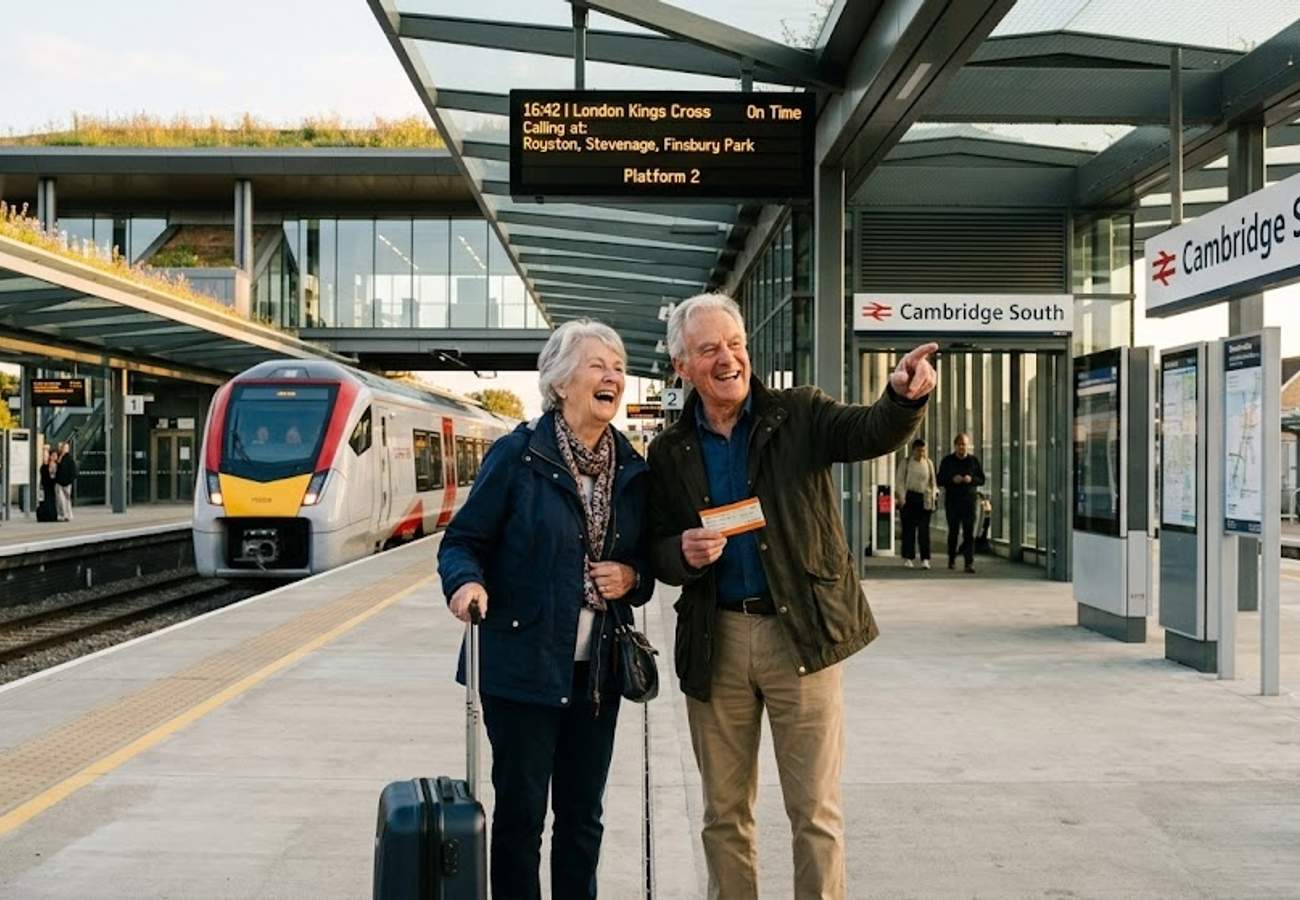
Image generated by AI
Cambridge South station recorded over 110,000 journeys in its first month of operation. The £250 million rail gateway slashes travel times to the Biomedical Campus and connects passengers directly to London, Birmingham, and Stansted Airport.
Core Transit Update
Official ticket gate data confirms that the newly opened Cambridge South station surpassed 110,000 journeys during its inaugural month of public service. The station, which officially opened on 28 June 2026, represents a £250 million infrastructure investment designed to serve one of the United Kingdom's most prominent healthcare and innovation districts.
This launch marks a structural shift in regional transit operations. Cambridge South is the first station to carry the Great British Railways branding, operating under a unified national rail framework that brings together infrastructure management and passenger operations. Rail services at the new gateway are operated by Greater Anglia, Great Northern, Thameslink, and CrossCountry. This multi-operator approach provides passengers with improved regional and national network access, eliminating the need for multiple transfers when traveling to the Biomedical Campus.
Transit Schedule & Route Specifications
The station operates on a high-frequency timetable, designed to handle projected long-term passenger growth. Once demand reaches full capacity, the station is expected to process approximately 1.8 million passengers annually.
| Route Destination | Operating Rail Companies | Service Frequency | Average Journey Time |
|---|---|---|---|
| Central Cambridge | Greater Anglia, Great Northern, Thameslink | Up to 9 trains per hour | 5-10 minutes |
| London King’s Cross | Great Northern | Up to 20 services during peak periods | ~45 minutes |
| Birmingham New Street | CrossCountry | Multiple daily direct services | ~2 hours 15 minutes |
| Stansted Airport | Greater Anglia | Frequent daily connections | ~45 minutes |
| London St Pancras International | Thameslink | High-frequency daily service | ~50 minutes |
Traveler Logistics Guide
From a ground-level perspective, the best way to navigate this new transit hub is to plan your connections around the direct rail access it provides to the Biomedical Campus. Previously, passengers traveling from London King’s Cross to the campus had to rely on a combination of train, bus, and walking connections. The new direct rail service reduces this journey to approximately 45 minutes.
For international arrivals or those needing European rail connections, Thameslink provides direct access to London St Pancras International. When booking tickets via the National Rail portal, travelers should specify "Cambridge South" rather than "Cambridge" to ensure the routing directs you to the correct gateway adjacent to the medical campus.
The station integrates several sustainable transit options. Passengers can utilize 1,000 dedicated cycle spaces, connect directly to the local guided busway, or use Blue Badge parking facilities. If you are arriving via Stansted Airport, taking the Greater Anglia service directly to Cambridge South bypasses the need to navigate central Cambridge entirely, saving significant time for visitors heading directly to the hospitals or research facilities.
Infrastructure Impact Assessment
The primary objective of Cambridge South is to provide direct transport access to the rapidly expanding Biomedical Campus. The facility currently employs more than 20,000 people and welcomes around 40,000 visitors each day, including patients, medical professionals, researchers, and support staff. Before the station opened, this massive daily influx of people faced additional transfers and extended journey times. Cambridge South now offers a dedicated arrival point immediately adjacent to the site.
The infrastructure design prioritizes environmental sustainability alongside passenger capacity. The station features a green roof designed to support wildflowers and biodiversity, alongside a rainwater collection system. Construction and design improvements successfully reduced the project’s environmental impact, cutting the station’s carbon footprint by more than 22%.
The immediate passenger response during the first month demonstrates how new transport infrastructure can rapidly alter regional travel patterns. By providing faster connections for passengers traveling from across the UK, Cambridge South supports business growth, research partnerships, and future investment in the Cambridge region. The station strengthens Cambridge’s position as a global destination for innovation by physically linking research institutions, hospitals, and surrounding communities.
With frequent services, direct national connections, and sustainable travel facilities, Cambridge South is positioned to become an essential component of the regional transport network, capable of accommodating the projected 1.8 million annual passengers as demand stabilizes.
Strategic rail investment fundamentally reshapes regional connectivity, proving that dedicated infrastructure directly accelerates access to centers of global innovation.
Related Travel Guides
Disclaimer
This article is for informational and educational purposes only. It does not constitute legal, financial, or professional advice. While we strive to provide accurate and up-to-date information, travel policies, regulations, and conditions change rapidly. Always verify information with official sources before making travel decisions. Nomad Lawyer makes no representations about the accuracy, reliability, completeness, or suitability of the information provided. Readers should consult qualified professionals for advice specific to their circumstances. The views expressed in this article are those of the author and do not necessarily reflect the views of Nomad Lawyer.
Raushan Kumar
Founder & Lead Developer
Full-stack developer with 11+ years of experience and a passionate traveller. Raushan built Nomad Lawyer from the ground up with a vision to create the best travel and law experience on the web.
Learn more about our team →