
Immersive Marine Tourism in Greece 2026: VR and AR Redefining Underwater Exploration
Greece is setting a global trend in immersive tourism, using Virtual Reality and Augmented Reality to provide accessible and sustainable underwater experiences in the Aegean and Ionian seas.

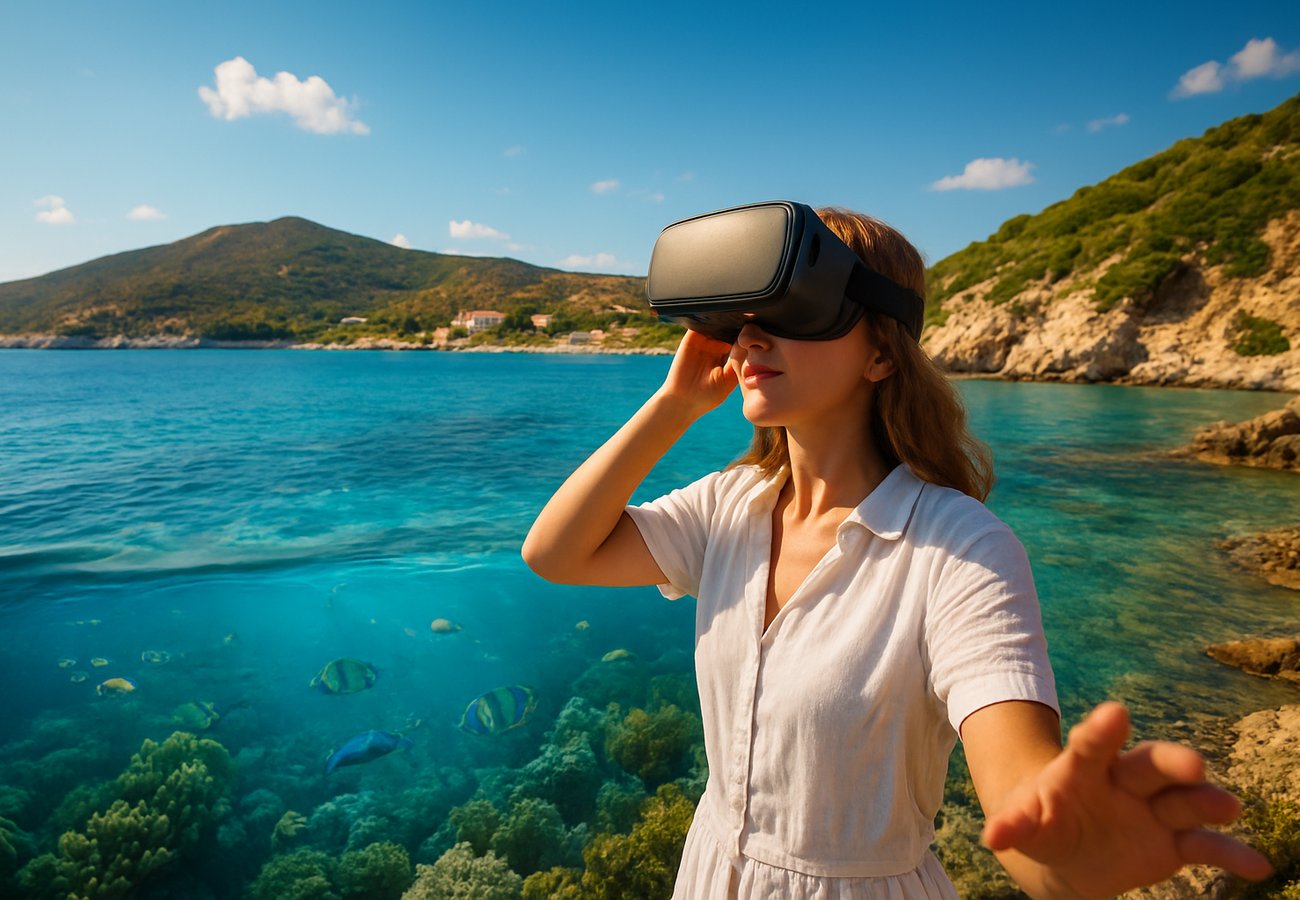
Image generated by AI
Quick Summary
- Technological Shift: Greece is utilizing Virtual Reality (VR) and Augmented Reality (AR) to provide tourists with immersive access to its underwater shipwrecks and coral reefs.
- Zero-Impact Exploration: These digital tools allow for the exploration of delicate marine ecosystems without leaving a physical footprint, promoting sustainable maritime tourism.
- Accessible Adventure: Immersive technology removes barriers for travelers with limited mobility, elderly visitors, and non-divers, fostering a new era of inclusive tourism.
- Biodiversity Focus: Travelers can encounter rare species, including dolphins and sea turtles, through guided interactive digital tours that emphasize conservation.
- Economic Driver: The expansion of this sector is significantly boosting the coastal economies of the Aegean and Ionian regions by diversifying tourism offerings.
Greece is successfully redefining its maritime identity in 2026 by positioning itself as the global leader in immersive underwater tourism. By integrating cutting-edge VR and AR technologies, the Ministry of Tourism is offering a "unique and respectful connection" with the marine environment that transcends traditional scuba diving. This innovative approach allows guests of all abilities to explore historically significant shipwrecks and exotic biodiversity from the safety of a boat or a guided coastal station. Beyond the thrill of adventure, the program is deeply rooted in sustainability, providing an educational platform that transforms travelers into stewards of the sea. By making the depths of the Greek sea accessible to a wider demographic—including those who were previously excluded due to physical limitations—Greece is not only fostering inclusive growth but also ensuring that its precious marine resources remain protected for future generations. This high-tech, eco-conscious model is setting the benchmark for the future of responsible global travel.
Immersive Marine Tourism in Greece 2026: Key Features and Technological Integration
The following table summarizes the technological tools and strategic goals of Greece’s immersive maritime sector.
| Feature | Technological Tool | Strategic Goal |
|---|---|---|
| Virtual Diving | High-Definition VR Headsets | Accessible exploration for all physical abilities |
| Augmented shipwrecks | AR Tablets & Digital Overlays | Historical education without site disturbance |
| Real-time Bio-tracking | Interactive Digital Guides | Identification of rare fish & mammal species |
| Eco-Stewardship | Gamified Conservation Tools | Raising awareness on pollution & climate change |
| Inclusive Access | Innovative Dive Suits & Remote Simulators | Opening the sea to elderly & mobility-impaired |
| Sustainable Growth | Zero-Impact Virtual Tours | Protecting delicate coral & marine habitats |
| Regional Impact | Coastal Hub Integration | Economic empowerment for Ionian/Aegean islands |
Virtual Access: Exploring Ancient Shipwrecks and Coral Reefs with Zero Impact
The integration of VR allows tourists to reach the unreachable:
- Heritage Exploration: Tourists can "swim" through historically significant shipwrecks that are too deep or delicate for standard human entry.
- Preservation: By using digital tools, Greece eliminates the risk of physical contact or damage to ancient artifacts and coral structures.
- Safety First: Travelers can experience the majesty of the deep sea without the risks associated with decompression or underwater equipment failure.
Redefining Inclusivity: Accessible Diving for People of All Abilities
Immersive technology is a catalyst for inclusive tourism growth:
- Universal Design: Whether an experienced diver or someone with limited mobility, the VR experiences adapt to meet the needs of every traveler.
- Inclusive Redefinition: Greece is ensuring that adventure tourism is no longer restricted to those with specific physical capabilities.
- Multi-Generational Appeal: Grandparents and grandchildren can now share the same "underwater" experience simultaneously via synchronized VR headsets.
Sustainable Stewardship: Protecting Marine Ecosystems through Education
Education is seamlessly embedded into the immersive experience:
- Awareness: Travelers learn about the ecological significance of the species they encounter, from dolphins to rare octopuses.
- Threat Identification: The digital guides highlight the impact of overfishing, plastic pollution, and climate change on the Greek sea.
- Advocacy: By fostering a deep emotional connection through VR, the program empowers travelers to act as advocates for marine biodiversity in their home countries.
Economic Growth: Empowering Coastal Communities via Innovative Tourism
The rise of immersive maritime travel is providing a vital economic boost:
- Coastal Income: Small islands and coastal villages that rely on the sea are seeing increased revenue from high-tech tourism stations.
- Year-Round Demand: Unlike traditional swimming-focused tourism, VR exploration can be promoted during the cooler shoulder seasons.
- Diversification: Greece’s reputation as a leading destination for responsible and inclusive tourism is attracting a more diverse and high-spending traveler demographic.
Unveiling the Deep: Encountering Greece’s Unique Biodiversity
The Aegean and Ionian seas are home to astonishing variety:
- Dolphins & Turtles: Immersive tours provide insights into the nesting habits of sea turtles and the migration paths of local dolphin pods.
- Exotic Habitats: Interactive digital tools allow for the identification of rare Mediterranean fish species exclusive to the region.
- Conservation Insight: Guests gain real-time data on habitat destruction and the success of local marine conservation efforts.
FAQ: Immersive Marine Tourism in Greece 2026
Can I experience immersive tourism if I don’t know how to swim? Yes. Immersive VR experiences are designed to be enjoyed from the safety of a boat or a coastal center, requiring no swimming skills or physical immersion.
Is this technology available on all Greek islands? The program is currently being rolled out across major maritime hubs in the Aegean and Ionian islands, with plans for a nationwide expansion by late 2027.
How does VR diving help the environment? It allows thousands of tourists to enjoy underwater beauty without the risk of coral trampling, wildlife disturbance, or the accidental damage of historical sites.
Related Travel Guides
Disclaimer
This article is for informational and educational purposes only. It does not constitute legal, financial, or professional advice. While we strive to provide accurate and up-to-date information, travel policies, regulations, and conditions change rapidly. Always verify information with official sources before making travel decisions. Nomad Lawyer makes no representations about the accuracy, reliability, completeness, or suitability of the information provided. Readers should consult qualified professionals for advice specific to their circumstances. The views expressed in this article are those of the author and do not necessarily reflect the views of Nomad Lawyer.
Kunal K Choudhary
Co-Founder & Contributor
A passionate traveller and tech enthusiast. Kunal contributes to the vision and growth of Nomad Lawyer, bringing fresh perspectives and driving the community forward.
Learn more about our team →