
Icomera to Launch Passenger-Centric Rail Wi-Fi Testing Across Europe and North America in 2026
Icomera is shifting the rail connectivity paradigm by deploying passenger-perspective measurement tools across European and North American networks to eliminate the gap between technical network reports and actual user experience.

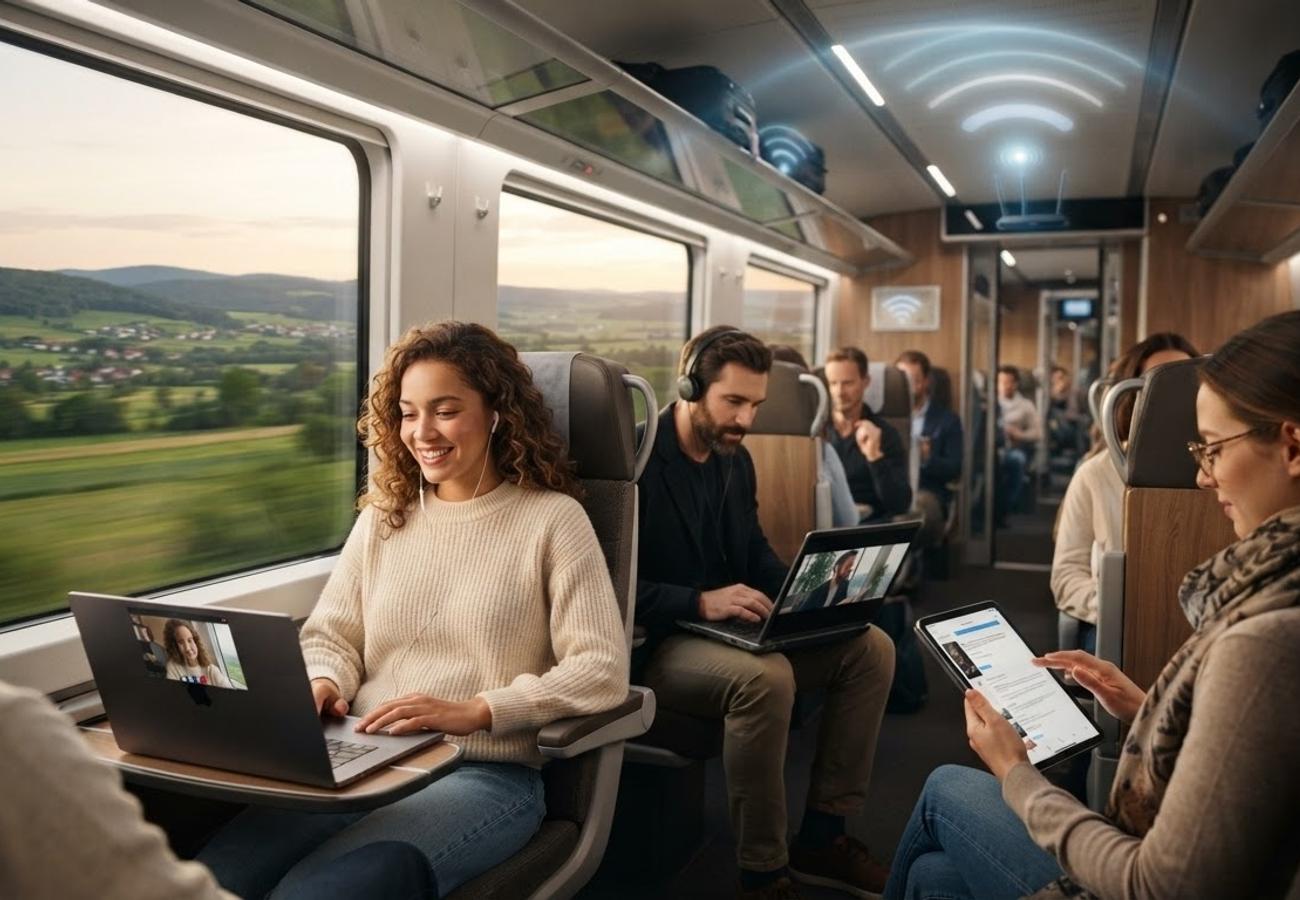
Image generated by AI
Rail operators in Europe and North America are pivoting from technical network monitoring to passenger-centric connectivity testing. Starting in 2026, Icomera will deploy measurement units to ensure onboard Wi-Fi mirrors home broadband reliability, transforming digital access from a luxury into a fundamental passenger right.
The Shift to Passenger-Perspective Connectivity
For decades, rail connectivity was measured via engineering dashboards—technical indicators focusing on equipment status, signal availability, and system uptime. However, a systemic gap has emerged: a network can appear "healthy" on a technician's screen while a passenger experiences frozen video calls, failing travel apps, and intermittent outages between stations.
To resolve this, Icomera is implementing a new measurement framework. By installing specialized measurement units directly on passenger rail, the company is collecting real-world data from the viewpoint of the traveler. This shift acknowledges that passenger satisfaction is no longer driven by the mere existence of Wi-Fi, but by its perceived reliability during a live journey.
This initiative, redeveloped and automated by Solution Engineer Ioannis Plytas and supported by Icomera’s internship program, allows engineering teams to pinpoint "dead zones" and performance dips that traditional monitoring tools frequently overlook.
Evolution of Onboard Digital Expectations
The demand for rail connectivity has evolved from a niche business requirement to a universal necessity. In 2003, Icomera pioneered the first onboard passenger Wi-Fi deployments when basic internet access was considered an innovation. By 2026, the benchmark has shifted toward high-performance streaming and seamless digital integration.
Comparative Analysis: Rail Wi-Fi Standards (2003 vs. 2026)
| Feature | Previous Rail Wi-Fi Expectations | New Passenger Expectations (2026) |
|---|---|---|
| Primary Goal | Basic internet access | Reliable high-performance connectivity |
| Usage Patterns | Email and simple browsing | Streaming, video calls, and social media |
| Value Prop | Occasional passenger benefit | Essential part of the journey experience |
| Metric of Success | Technical performance focus | Real passenger satisfaction focus |
| Accessibility | Limited usage/Business class | Continuous digital travel support for all |
Traveler Logistics Guide: Navigating Connected Rail
From a ground-level perspective, the integration of high-performance Wi-Fi changes how passengers should plan their transit. As rail becomes a "mobile workplace" and "planning environment," the following logistics strategies are recommended:
1. Digital Transit Documentation With the rollout of more reliable connectivity, travelers should transition to fully digital workflows. In Europe, ensure your digital boarding passes and identity documents (such as those required for ETIAS or national rail IDs) are synced to the cloud. Reliable onboard Wi-Fi allows for real-time updates to these documents without needing to find a station kiosk.
2. Optimizing Layovers and Connections Use the improved connectivity to manage "last-mile" logistics. Instead of waiting until arrival at a destination, use the onboard window to finalize hotel check-ins, book local ride-shares, or adjust navigation settings. This reduces station congestion and minimizes transit friction.
3. Data Redundancy While Icomera’s testing aims for "home-like" broadband, rail transit involves crossing borders and varying national infrastructure. Always maintain a secondary eSIM or local data plan for critical navigation and payment services to avoid disruption during rare network handovers between different national providers.
Infrastructure Impact and Tourism Connectivity
The push for seamless connectivity is a strategic move to position rail as a viable, sustainable alternative to short-haul aviation. For international tourists in Germany, France, Sweden, and the United Kingdom, the train is no longer just a vehicle; it is a critical infrastructure element for:
- Real-time translation services.
- Digital payment processing.
- Live travel updates and navigation.
- Social media sharing and experience documentation.
By improving the "invisible" factor of connectivity, rail operators are removing a significant psychological barrier for remote workers and digital nomads who previously favored flights due to more consistent airport and in-flight connectivity.
Engineering the Future via Real-World Data
The value of this passenger-focused testing extends beyond immediate fixes. By utilizing interns to collect data across customer fleets in Europe and North America, Icomera is bridging the gap between academic engineering and operational reality.
This data-driven approach allows operators to:
- Target Investments: Prioritize hardware upgrades based on actual failure points rather than theoretical models.
- Proactive Maintenance: Identify connectivity weaknesses before they trigger widespread passenger complaints.
- Competitive Positioning: Offer a productivity-grade environment that competes directly with the comfort and utility of aviation.
The battle for rail supremacy is moving beyond tracks and speed; it is now a race for the most reliable digital experience.
Related Travel Guides
Disclaimer
This article is for informational and educational purposes only. It does not constitute legal, financial, or professional advice. While we strive to provide accurate and up-to-date information, travel policies, regulations, and conditions change rapidly. Always verify information with official sources before making travel decisions. Nomad Lawyer makes no representations about the accuracy, reliability, completeness, or suitability of the information provided. Readers should consult qualified professionals for advice specific to their circumstances. The views expressed in this article are those of the author and do not necessarily reflect the views of Nomad Lawyer.
Kunal K Choudhary
Co-Founder & Contributor
A passionate traveller and tech enthusiast. Kunal contributes to the vision and growth of Nomad Lawyer, bringing fresh perspectives and driving the community forward.
Learn more about our team →