
France, Germany, Spain Face Aviation Crisis as IATA Warns New EU Passenger Rights Law Will Trigger Mass Flight Cancellations and Hub Chaos in 2026
IATA issues urgent warning: proposed EU passenger rights law threatens to destabilize aviation across France, Germany, and Spain with cascading flight cancellations, airport congestion, and operational disruptions at major European hubs.

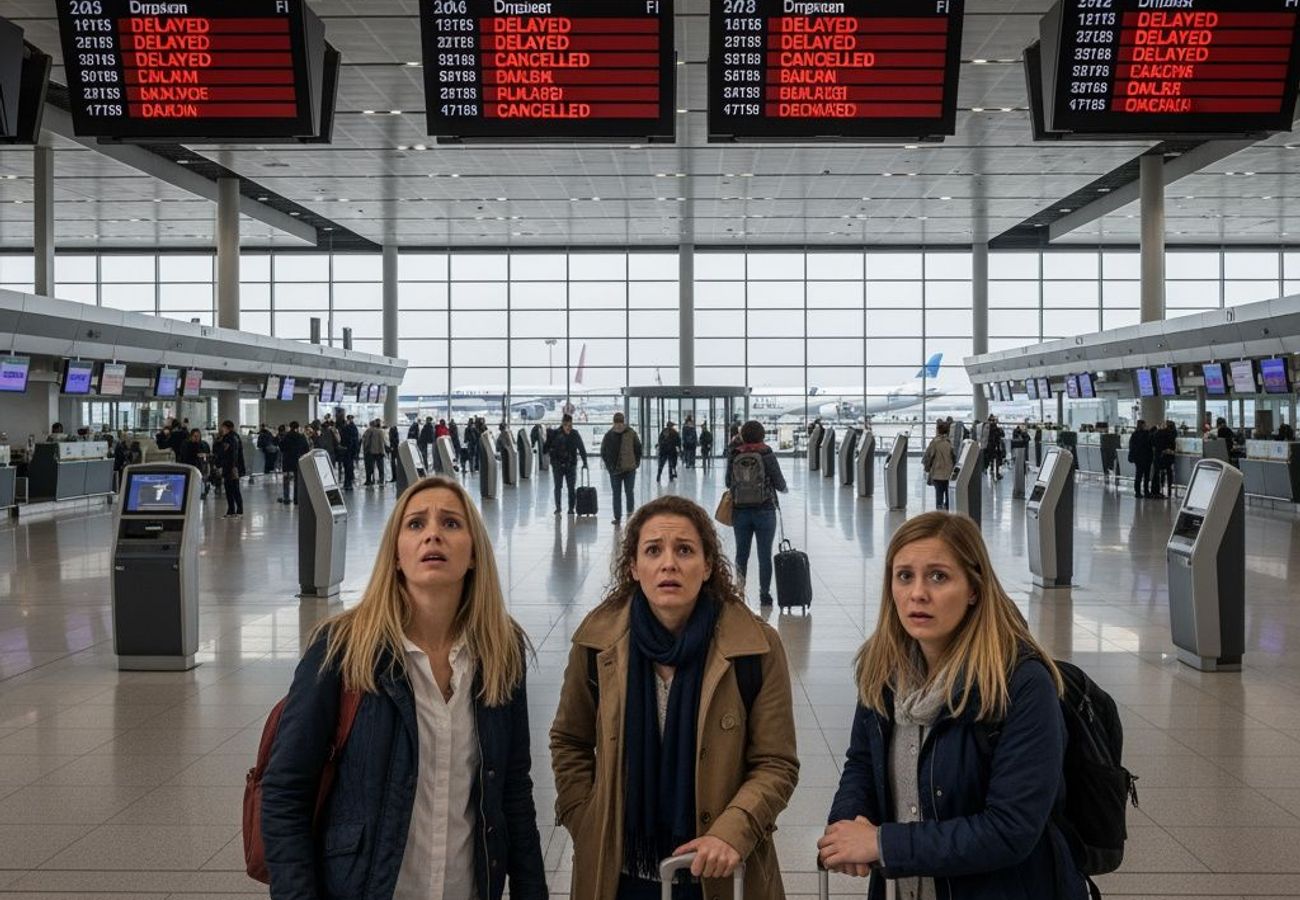
Image generated by AI
Europe's Aviation System Under Siege
The International Air Transport Association (IATA) just issued a stark warning that could reshape European travel this summer: a new EU passenger rights law threatens to unleash widespread flight cancellations, airport chaos, and cascading delays across the continent's busiest hubs.
France, Germany, and Spain are ground zero. And if you're planning to fly through Paris Charles de Gaulle, Frankfurt am Main, or Madrid Barajas in the coming months, you need to read this.
The proposed EU regulatory framework tightens passenger compensation rules. Sounds straightforward. But here's the problem: it forces airlines to slash scheduling flexibility, operate with razor-thin turnaround margins, and shoulder massive financial liability exposure—creating a perfect storm of operational instability.
Reddit: "IATA warnings usually mean something real is about to hit the fan. European airports were already a nightmare in summer 2025." — r/travel
The Regulatory Pressure Cooker
The new EU passenger rights law isn't just another compliance checkbox. It's a fundamental restructuring of how airlines operate across Europe's most congested airspace.
Under the stricter compensation thresholds, airlines face escalating financial penalties for delays. This creates a perverse incentive: conservative scheduling. Instead of optimizing capacity, carriers are padding schedules, reducing overall system efficiency. When you reduce efficiency in an already-congested system, you invite disruption.
The European Commission is overseeing the legislative overhaul, but IATA is sounding the alarm: this framework may inadvertently trigger the exact chaos it aims to prevent. Higher compensation costs don't improve reliability—they encourage airlines to cancel flights proactively rather than risk financial exposure from delay-triggered payouts.
Three Airports, One Growing Crisis
Paris Charles de Gaulle, Frankfurt am Main, and Madrid Barajas don't just handle routine traffic. These are critical international hubs connecting Europe to the world. They're also operating at or near capacity during peak summer periods.
The operational strain is already visible:
- Flight cancellations are rising during peak travel windows
- Terminal congestion delays are increasing by measurable margins
- Air traffic control coordination across borders remains uneven
- Crew rotation and aircraft repositioning are becoming bottlenecks
Add the new regulatory burden, and these airports face compounding pressure. A minor delay in Frankfurt can cascade through Amsterdam, Brussels, and beyond. One cancellation at Charles de Gaulle disrupts connecting passengers across the Mediterranean.
The IATA warning specifically highlights how restricted slot availability during summer travel cycles will intensify this risk profile.
How Airlines Are Responding (And Why It Makes Things Worse)
Here's where disruption mechanics become dangerous. Airlines don't operate in isolation. When one carrier reduces frequency on a dense route to minimize compensation liability, connecting passengers scramble for alternatives. Slots get reallocated. Crew schedules become fragmented. Aircraft sit idle waiting for repositioning windows.
These cascading effects are predictable but difficult to manage. A single canceled flight can trigger:
- Missed connections on downstream routes
- Crew fatigue violations requiring schedule padding
- Aircraft repositioning delays
- Passenger rebooked onto oversold flights
- Network-wide instability spreading across multiple airports
Regulatory pressure incentivizes individual carriers to protect their bottom lines. But it does nothing to protect system-wide reliability. The result: more cancellations, more delays, more chaos.
According to IATA's official guidance on European aviation regulatory frameworks, the financial exposure mechanisms embedded in the new law create misaligned incentives between individual airline survival and collective system resilience.
The Airspace Coordination Crisis Nobody's Talking About
Beyond individual airport operations lies another critical failure point: airspace coordination across national borders.
European air traffic management remains fragmented. France, Germany, and Spain operate distinct air navigation systems. Cross-border coordination is improving, but slowly. The new passenger rights law adds procedural complexity to this already delicate balance—meaning delays in one country cascade into neighboring airspace.
Major airports in these countries already compete fiercely for slots. Add regulatory tightening, and you get:
- Longer ground delays before takeoff
- Reduced airspace utilization efficiency
- Increased conflicts in cross-border traffic flows
- More conservative routing decisions (which mean longer flight times)
The European Commission's harmonization efforts, while well-intentioned, may inadvertently introduce procedural bottlenecks during implementation phases. Regulatory compliance becomes operationally cumbersome.
What This Means for Travelers Right Now
If you're booking flights through France, Germany, or Spain this summer or fall, understand the risks:
Flight cancellation risk is rising. Airlines will cancel more flights proactively rather than operate on razor-thin margins and risk delay compensation exposure.
Delays are becoming cascading. One disruption ripples across multiple airports and multiple airlines.
Rebooking options are tightening. As overall capacity shrinks, getting rebooked on alternative flights becomes harder.
The IATA warning is not speculative. It's based on operational data and regulatory impact assessments. When IATA issues public warnings about specific regions, industry stakeholders take them seriously.
Consider building in extra connection time. Avoid tight turnarounds through major European hubs. Monitor airline schedules closely—changes are coming.
According to European aviation regulatory databases, the implementation timeline for the new passenger rights framework accelerates through Q3 and Q4 2026.
The Bottom Line
The European aviation system is entering a period of heightened disruption risk. The new EU passenger rights law, while protecting consumers in theory, creates operational incentives that may undermine reliability in practice.
France, Germany, and Spain—home to Europe's busiest hubs—will feel the impact first and hardest. Flight cancellations will rise. Airport congestion will worsen. Cascading delays will spread across interconnected routes.
IATA isn't wrong to worry. The math doesn't work: tighter compensation rules plus dense route networks plus near-capacity airports equals operational instability.
Travel smart. Book early. Build buffer time. Monitor schedules obsessively. The European skies are about to get a lot more turbulent.
Aviation regulators write laws; airlines and travelers pay the price.
Related Travel Guides
Disclaimer
This article is for informational and educational purposes only. It does not constitute legal, financial, or professional advice. While we strive to provide accurate and up-to-date information, travel policies, regulations, and conditions change rapidly. Always verify information with official sources before making travel decisions. Nomad Lawyer makes no representations about the accuracy, reliability, completeness, or suitability of the information provided. Readers should consult qualified professionals for advice specific to their circumstances. The views expressed in this article are those of the author and do not necessarily reflect the views of Nomad Lawyer.
Kunal K Choudhary
Co-Founder & Contributor
A passionate traveller and tech enthusiast. Kunal contributes to the vision and growth of Nomad Lawyer, bringing fresh perspectives and driving the community forward.
Learn more about our team →