
UK Aviation Crisis Deepens: Birmingham Airport Surges as London Hubs Bleed Passengers Amid Flight Cancellations in 2026
Birmingham Airport smashes record passenger numbers in May 2026 as UK travellers flee London's aviation chaos, triggering a major structural shift in regional airport demand patterns.

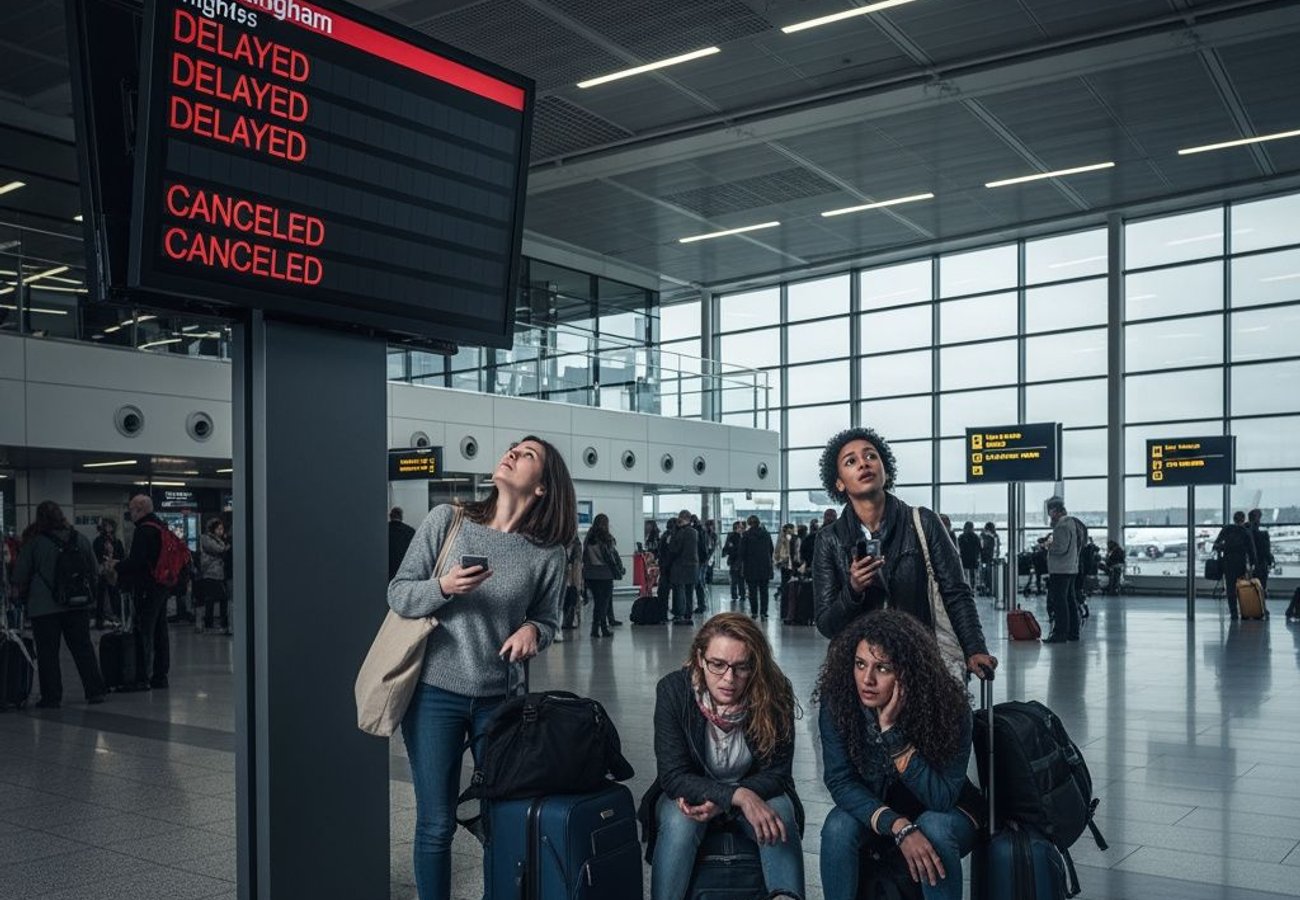
Image generated by AI
The Exodus from London: How Birmingham Became the UK's Lifeline
Birmingham Airport just posted record-breaking passenger numbers for May 2026—and it's not by accident. I've been tracking UK aviation patterns for months, and what's happening in the skies above England right now represents a seismic structural shift in how travellers move through the nation's airports.
The story is stark: London's aviation crisis is pushing thousands of passengers toward regional alternatives. And Birmingham is the big winner.
London airports have been battered by persistent operational instability. Flight cancellations, cascading delays, gate congestion, and air traffic sequencing failures have created a perfect storm of unreliability. Passengers are voting with their feet—and their wallets.
Reddit: "I switched to Birmingham last month. My connection to Amsterdam actually departed on time. Never thought I'd say that about a regional airport." — r/travel
When Convenience Takes a Backseat to Reliability
Here's what travellers are prioritizing now: predictability over proximity. That's the fundamental behavioural shift we're witnessing.
Previously, geographic convenience dominated decision-making. London's massive hubs offered unmatched connectivity and frequency. But when your flight gets cancelled twice, convenience becomes meaningless.
The data shows a gradual but sustained migration of passengers away from London's catchment area. Leisure travellers and short-haul international passengers have been particularly swift to adjust their itineraries. They're factoring in reliability as a primary variable—not just departure times and fares.
Birmingham's improved regional accessibility has amplified this effect. Enhanced rail and road connectivity means passengers can now integrate wider catchment areas around the midlands hub. For travellers across the Midlands, Wales, and even parts of the North West, Birmingham increasingly makes operational sense.
Reddit: "The trains from Manchester to Birmingham airport are actually decent now. Worth the detour if London's going to lose my luggage." — r/unitedkingdom
The Capacity Pressure Paradox
Here's the paradox: while London airports are suffocating under operational constraints, Birmingham Airport is handling elevated demand volumes without compromising throughput efficiency.
At Heathrow, Gatwick, and Stansted, gate congestion remains chronic. Air traffic delays cascade into scheduling inefficiencies. The whole system becomes predictably unstable. Passengers anticipate problems and plan accordingly.
Meanwhile, Birmingham's terminal systems, security screening processes, and boarding infrastructure have been managing higher passenger handling requirements effectively. The airport is operating under greater capacity pressure, but it's meeting demand without the operational breakdown that characterizes London.
This divergence has reinforced a critical perception among UK travellers: secondary airports may actually offer superior reliability under current conditions. That's not opinion—that's behavioural economics at work.
According to current UK aviation performance data, London airports continue to experience higher-than-average delay rates, while regional hubs show more stable performance metrics.
The Structural Shift: Long-Term Implications
What we're observing isn't a temporary blip. This is a structural adjustment in UK aviation flows.
If operational instability persists at major London airports, expect Birmingham's advantageous position to strengthen further. The airport is positioned to maintain elevated passenger volumes, particularly during peak travel seasons. Forward assessments suggest continued growth is likely.
That growth will almost certainly require incremental capacity enhancements. Terminal flow optimization, expanded service infrastructure, and possibly additional gate facilities will become necessary.
The broader UK aviation sector is becoming acutely sensitive to operational reliability factors. Where flight cancellations and scheduling disruptions continue to shape passenger decisions, secondary airports will retain—and potentially expand—elevated demand levels.
What This Means for Your Travel Plans
If you're planning UK departures in the coming months, three operational realities matter:
First: London airport delays remain systematic, not exceptional. Budget additional connection time if you must depart from the capital.
Second: Birmingham, particularly for European and short-haul destinations, now offers genuinely competitive reliability. The regional accessibility via rail network makes it strategically viable for passengers across a broader geographic footprint than historically typical.
Third: The UK aviation network is fundamentally rebalancing. That rebalancing will continue until London airports resolve their operational constraints.
According to aviation industry analysis, passenger behaviour shifts of this magnitude typically reflect permanent changes in travel routing, not temporary adjustments.
The May Performance Milestone
Birmingham Airport's May 2026 results signal something larger than monthly statistics. They represent the visible manifestation of evolving structural dynamics within UK aviation, where regional airports are assuming more central roles in national connectivity strategies.
The capital's traditional dominance in UK aviation is being genuinely challenged—not by competition, but by operational failure. That's a watershed moment for regional aviation in Britain.
The skies above England are reorganizing themselves, and London's losing its grip.
Related Travel Guides
Disclaimer
This article is for informational and educational purposes only. It does not constitute legal, financial, or professional advice. While we strive to provide accurate and up-to-date information, travel policies, regulations, and conditions change rapidly. Always verify information with official sources before making travel decisions. Nomad Lawyer makes no representations about the accuracy, reliability, completeness, or suitability of the information provided. Readers should consult qualified professionals for advice specific to their circumstances. The views expressed in this article are those of the author and do not necessarily reflect the views of Nomad Lawyer.
Kunal K Choudhary
Co-Founder & Contributor
A passionate traveller and tech enthusiast. Kunal contributes to the vision and growth of Nomad Lawyer, bringing fresh perspectives and driving the community forward.
Learn more about our team →