
Hundreds Stranded Flight Chaos Hits Australia, New Zealand on April 27
Over 300 flights cancelled or delayed across Australia and New Zealand on Sunday, 2026, stranded hundreds of passengers at major airports including Sydney, Melbourne, and Auckland during peak travel season.

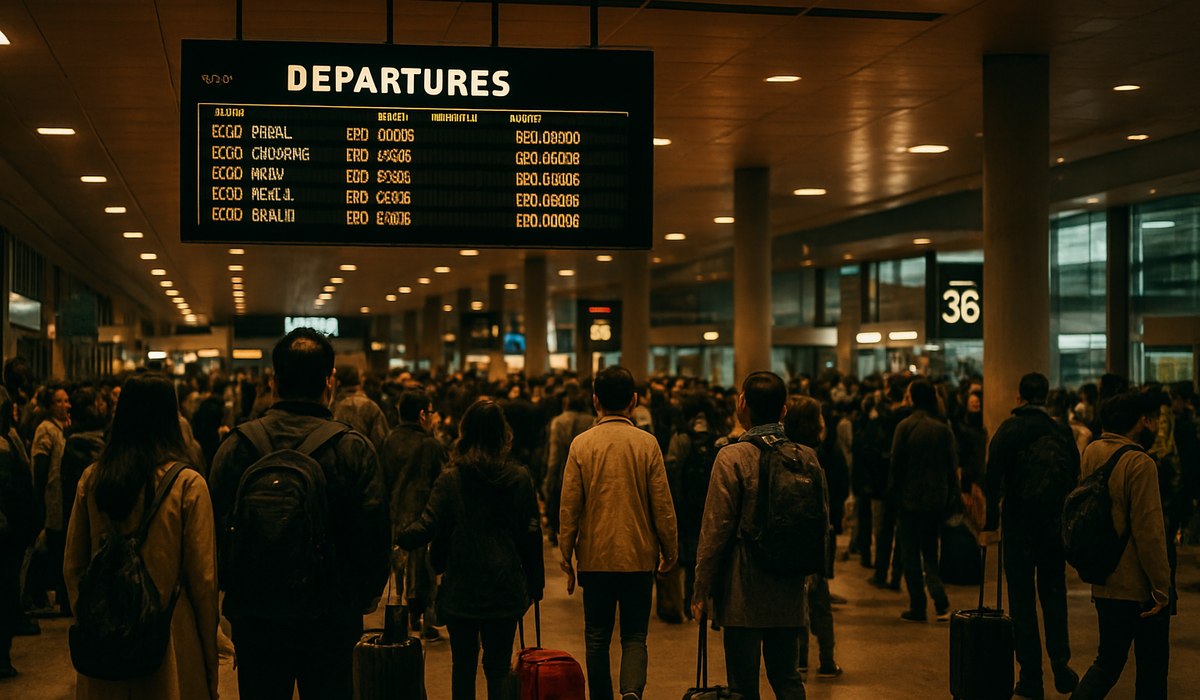
Image generated by AI
Massive Flight Disruption Strands Hundreds Across Trans-Tasman Network
Over 300 flights experienced cancellations or delays on Sunday across Australia and New Zealand, affecting passengers at Sydney Airport, Melbourne Airport, and Auckland International Airport during one of the busiest travel weekends of the year. The widespread hundreds stranded flight crisis saw 34 flights cancelled outright while 272 others faced significant delays, creating a cascading network failure that rippled throughout both countries' aviation systems. Major carriers including Qantas, Virgin Australia, and Jetstar all reported substantial operational disruptions on domestic and trans-Tasman routes.
Major Hubs Brought to a Standstill
Sydney, Melbourne, and Auckland airports became the epicenter of Sunday's chaos, with departure boards displaying long strings of red-flagged delays and cancellations throughout the peak travel period. The hundreds stranded flight situation overwhelmed airport infrastructure designed for normal operations, creating extended queues at airline counters and crowded terminal spaces as passengers sought alternative arrangements.
At these major gateways, the problem compounded as aircraft failed to reach their next scheduled destinations on time. A Melbourne-based aircraft, for instance, might miss its Auckland connection, creating a domino effect that delayed subsequent services throughout the afternoon and evening. Industry analysts note that modern airline scheduling leaves virtually no buffer for disruptions, meaning single delays cascade rapidly across entire networks.
The trans-Tasman routes connecting Australia's east coast to New Zealand's primary cities proved particularly vulnerable to this effect. These trunk routes typically operate at high frequency with tight turnarounds, making them susceptible to network-wide problems when operations experience even minor shocks.
Multiple Airlines Caught in the Disruption
The scope of the hundreds stranded flight crisis extended across every major carrier serving the Australia-New Zealand corridor. Shared airport infrastructure and code-sharing agreements meant that delays affecting one airline quickly impacted others, as passengers booked across partner carriers found themselves unable to reach onward connections.
When crew members became mispositioned due to earlier cancellations, recovery became increasingly difficult. A crew scheduled for a 3 PM departure from Sydney to Auckland might be stranded in Melbourne following a cancelled earlier service, necessitating that flight's cancellation or significant delay. This personnel disruption created bottlenecks that lasted hours into the evening.
The system-wide nature of the disruption, with 306 total affected flights across the network, indicated the problem wasn't isolated to a single carrier's operational issues. Rather, it reflected the fragility of interconnected aviation systems operating at near-maximum capacity during peak travel periods.
Cascade Effects Ripple Through Trans-Tasman Network
Modern commercial aviation operates on paper-thin margins, with aircraft often scheduled for five or six flight segments daily with 45-minute turnarounds. When delays exceed these brief connection windows, aircraft must be repositioned or flights cancelled, destroying the carefully choreographed daily schedule.
Sunday's pattern demonstrated how thoroughly integrated the Australia-New Zealand aviation market has become. A delayed arrival in Sydney cascaded to Melbourne, then to Auckland, affecting evening services on both domestic and international routes. Business travelers heading to evening meetings found themselves still waiting at gates at 10 PM.
This cascade effect proved particularly pronounced on high-frequency trunk routes like Sydney-Melbourne, where six or seven daily services exist. When morning and midday flights backed up, evening services inherited the accumulated delays plus now-stranded passengers seeking any available seat, forcing airlines to oversell later departures.
Passenger Rights and Rebooking Options
Travelers affected by the hundreds stranded flight situation held legal rights under Australian Consumer Law and New Zealand Consumer Guarantees Act. Airlines must provide accommodation and meals during extended delays, rebooking on alternative flights without additional charges, or compensation of up to $700 AUD in some circumstances.
Passengers should document all expenses incurred during the disruption, including accommodation, food, ground transportation, and missed appointments. These receipts support compensation claims filed with airlines or aviation authorities. Airlines typically require written claims submitted within strict timeframes, often 90 days following the disruption.
For trans-Tasman passengers, understanding which country's regulations apply matters significantly. Australian carriers operating flights between Australia and New Zealand fall under Australian consumer protection law. Conversely, New Zealand carriers are regulated by NZCA and subject to different compensation frameworks.
Affected travelers can track real-time flight information through FlightAware, which provides detailed delay reasons and updated departure times. For regulatory guidance on consumer rights, the US-based US DOT provides framework information applicable to international disputes, while the Australian and New Zealand aviation authorities maintain specific jurisdiction over regional carriers.
What This Means for Travelers: Action Checklist
-
Document everything immediately – Photograph boarding passes, receipts for accommodation, meals, transportation, and keep written records of delays and times spent at airports.
-
Request written confirmation – Ask airline staff for written statements detailing your flight cancellation or delay and the reasons provided.
-
File compensation claims within 90 days – Contact your airline directly with documentation and specify compensation amounts you're claiming under consumer protection laws.
-
Report to aviation authorities – File complaints with the ACCC (Australia) or Commerce Commission (New Zealand) if airlines deny valid claims or don't respond within 28 days.
-
Check alternative routing options – Use flight tracking apps to identify available seats on competing carriers that might reach your destination faster.
-
Claim out-of-pocket expenses – Request reimbursement for all additional costs including meals, accommodation, transportation, and phone calls made while stranded.
-
Book flexible tickets going forward – Choose airlines and fares allowing free rebooking or changes, particularly for connections involving multiple countries.
Key Data: Sunday's Disruption by the Numbers
| Metric | Figure | Impact Level |
|---|---|---|
| Total flights affected (cancelled + delayed) | 306 | Critical |
| Outright cancellations | 34 | Severe |
| Delayed services | 272 | Severe |
| Primary affected airports | 3 (SYD, MEL, AKL) | Critical |
| Affected airlines | 5+ major carriers | System-wide |
| Peak disruption period | 6 AM – 10 PM | 16 hours |
| Estimated stranded passengers | 300+ | Critical |
| Average delay duration | 2-4 hours | Significant |
| Trans-Tasman route disruptions | Majority of services | Critical |
FAQ: Common Questions About the Disruption
What caused hundreds stranded flight chaos on Sunday?
Modern airlines operate extremely tight schedules with minimal buffer time. When early-morning flights experienced delays or cancellations, cascading effects disrupted subsequent services throughout the day. Aircraft and crew became mispositioned at wrong airports, forcing additional cancellations. No single catastrophic event triggered the crisis; rather, the system's lack of flexibility amplified normal operational challenges.
Am I entitled to compensation for Sunday's disruptions?
Yes, under Australian Consumer Law and New Zealand Consumer Guarantees Act, passengers are entitled to compensation for cancellations and delays exceeding two hours on trans-Tasman routes. Airlines must provide meals, accommodation, and communication costs during delays. Compensation amounts reach $700 AUD for affected flights within Australia and similar sums for international services.
How do I track my flight status in real-time?
Use FlightAware for detailed, live flight tracking including gate information, delay codes, and estimated departure times. Most airlines also provide status updates through their mobile apps and websites. Subscribe to SMS or push notifications for automatic updates on your specific flights.
What should I do if my flight was cancelled on Sunday?
Contact your airline immediately requesting rebooking on the next available flight at no additional charge. If you incurred accommodation or meal expenses
Disclaimer
This article is for informational and educational purposes only. It does not constitute legal, financial, or professional advice. While we strive to provide accurate and up-to-date information, travel policies, regulations, and conditions change rapidly. Always verify information with official sources before making travel decisions. Nomad Lawyer makes no representations about the accuracy, reliability, completeness, or suitability of the information provided. Readers should consult qualified professionals for advice specific to their circumstances. The views expressed in this article are those of the author and do not necessarily reflect the views of Nomad Lawyer.
Preeti Gunjan
Contributor & Community Manager
A passionate traveller and community builder. Preeti helps grow the Nomad Lawyer community, fostering engagement and bringing the reader experience to life.
Learn more about our team →