
American Airlines' Radical Boeing 787-9P Redesign Signals Seismic Shift in Ultra-Long-Haul Economics
Breaking airline news and aviation industry updates for 2026.

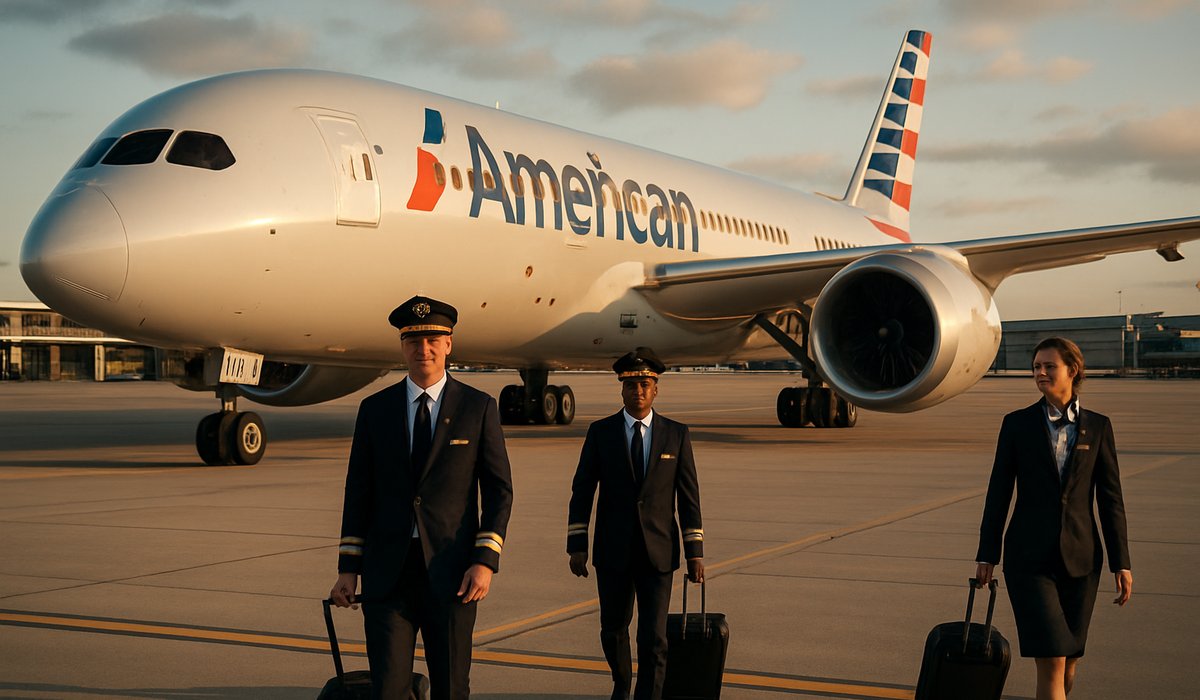
Image generated by AI
American Airlines' Radical Boeing 787-9P Redesign Signals Seismic Shift in Ultra-Long-Haul Economics
Carrier prioritizes premium capacity over volume as fuel costs and corporate travel demand reshape widebody strategy
New Aircraft Configuration Targets High-Margin Routes
American Airlines is fundamentally restructuring its approach to international long-haul travel with the introduction of a heavily premium-focused Boeing 787-9P configuration featuring 51 suites—a strategic move that signals how major carriers are recalibrating fleet economics amid volatile operating costs and evolving passenger demand patterns.
The redesigned aircraft represents a departure from the traditional widebody model that has long prioritized maximum economy seat density. Instead of pursuing high-volume operations, American Airlines is banking on a premium-heavy configuration that concentrates revenue generation in business and first-class offerings, reducing overall passenger count in exchange for substantially higher yield per seat.
Responding to Structural Market Changes
The shift reflects mounting pressures reshaping the aviation industry. Sustained elevated jet fuel prices—a persistent headwind since Russia's invasion of Ukraine disrupted global energy markets—have eroded profit margins on capacity-heavy routes. Simultaneously, corporate travel patterns have evolved, with many companies prioritizing premium cabin experiences for executive and frequent business travelers rather than maximizing seat volume across all classes.
"This configuration addresses what carriers have long sought: a profitable path forward that doesn't rely on filling every available seat with lower-yield economy passengers," industry analysts note. The 51-suite configuration effectively transforms the aircraft's revenue model, allowing American Airlines to generate comparable or superior profits on routes that would have required significantly higher load factors under traditional seating arrangements.
Broader Industry Implications
The move carries implications far beyond American Airlines' fleet strategy. As competitors including United Airlines, Delta Air Lines, and international carriers reassess their own widebody portfolios, similar premium-focused configurations may become increasingly common on profitable intercontinental routes—particularly those serving business-heavy markets across the Atlantic and Pacific regions.
Airlines have already adjusted baggage charges, ancillary fees, and premium cabin pricing to offset rising operational costs. The 787-9P configuration suggests carriers are now restructuring the fundamental product offering itself, rather than simply raising prices on existing seat inventory.
The Boeing 787 Dreamliner's superior fuel efficiency compared to older widebodies like the 777 or 767 makes the premium-heavy configuration viable, as the aircraft's advanced engines and aerodynamics reduce per-seat fuel consumption even when operating with fewer total passengers.
American Airlines' decision underscores a critical industry reality: in today's environment defined by expensive jet fuel and selective corporate demand, traditional high-capacity widebody operations may no longer represent the optimal economic model for ultra-long-haul routes.
Frequently Asked Questions
What is the Boeing 787-9P configuration? American Airlines' specialized version features 51 premium suites, significantly reducing economy capacity while maximizing business and first-class revenue potential on international routes.
Why are airlines reducing economy seats on long-haul flights? Rising jet fuel prices and shifting corporate travel demand make premium-focused configurations more profitable than traditional high-capacity seating models.
How does the 787-9 fuel efficiency impact this strategy? The Dreamliner's advanced engines and aerodynamic design reduce per-seat fuel consumption, making premium-heavy operations economically viable even with fewer total passengers.
Will other airlines adopt similar premium-focused configurations? Industry observers expect competitors to explore comparable strategies as elevated fuel costs and corporate travel patterns continue rewarding yield-focused operations.
How does this relate to airline baggage fees and ancillary charges? Carriers have pursued multiple strategies to offset costs—this configuration represents a fundamental restructuring of the product itself alongside existing ancillary pricing strategies.
Related Travel Guides
External Resources
Disclaimer
This article is for informational and educational purposes only. It does not constitute legal, financial, or professional advice. While we strive to provide accurate and up-to-date information, travel policies, regulations, and conditions change rapidly. Always verify information with official sources before making travel decisions. Nomad Lawyer makes no representations about the accuracy, reliability, completeness, or suitability of the information provided. Readers should consult qualified professionals for advice specific to their circumstances. The views expressed in this article are those of the author and do not necessarily reflect the views of Nomad Lawyer.
Kunal K Choudhary
Co-Founder & Contributor
A passionate traveller and tech enthusiast. Kunal contributes to the vision and growth of Nomad Lawyer, bringing fresh perspectives and driving the community forward.
Learn more about our team →