
Airbus A321XLR's Revolutionary Belly Tank Design Prioritizes Passenger Safety in Crash Scenarios
Breaking airline news and aviation industry updates for 2026.

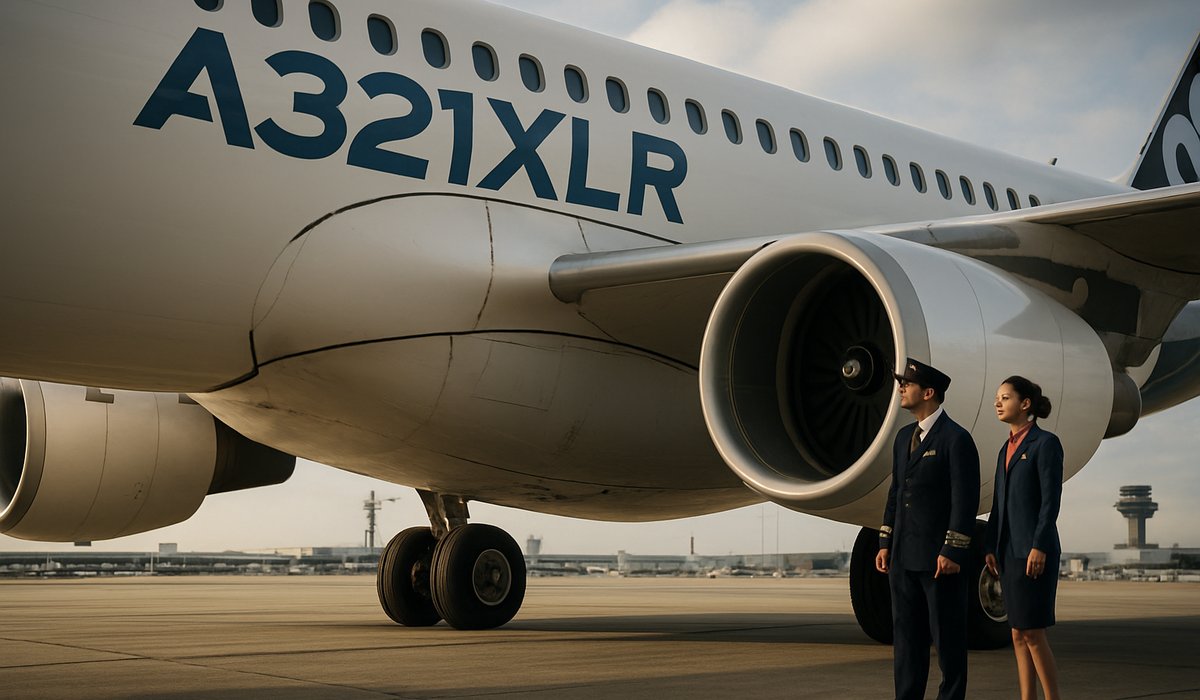
Image generated by AI
Airbus A321XLR's Revolutionary Belly Tank Design Prioritizes Passenger Safety in Crash Scenarios
Structural innovation enables longest-range narrowbody to withstand impact forces while carrying unprecedented fuel loads
Engineering Breakthrough Redefines Narrowbody Aviation
Airbus has engineered a groundbreaking fuel storage solution for its A321XLR that fundamentally changes how aircraft designers approach long-range narrowbody travel. The aircraft's integrated lower-fuselage fuel tank represents a radical departure from conventional aviation architecture, allowing the jet to traverse 4,700 nautical miles—a distance previously reserved for larger widebody aircraft—without requiring additional fueling stops.
The critical innovation lies not merely in the tank's location, but in its structural resilience. By embedding the fuel storage system directly into the aircraft's lower fuselage rather than relying on wing-mounted tanks or removable cargo-hold installations, Airbus engineers have created a design that maintains structural integrity even under extreme impact conditions. This architectural choice carries profound implications for passenger safety during emergency landing scenarios.
How the Integrated Fuel Tank System Works
The A321XLR's belly tank occupies space in the lower fuselage that would traditionally remain empty on shorter-range variants. This permanent installation transforms unused aircraft volume into operational fuel capacity, enabling the narrowbody to achieve unprecedented range capabilities without increasing overall dimensions or weight distribution issues that plague retrofitted solutions.
The tank's integration into the fuselage structure means impact forces during crash landings are distributed across the reinforced fuselage frame rather than concentrated on a removable or wing-mounted container. Airbus's structural analysis and safety testing protocols ensure the tank withstands crash-landing scenarios without rupturing—a critical requirement given the fuel load it carries during extended intercontinental flights.
Industry Impact on Route Economics
The A321XLR's technological advancement reshapes global aviation economics. Airlines can now deploy fuel-efficient narrowbody aircraft on routes spanning 4,700 nautical miles, reducing operational costs compared to larger widebody alternatives. This capability opens new point-to-point flight possibilities, particularly benefiting carriers operating transatlantic and transpacific routes with smaller passenger volumes.
The design's safety-first engineering approach reinforces Airbus's commitment to integrating passenger protection into foundational aircraft architecture rather than treating it as a secondary consideration.
Key Takeaways
- The A321XLR achieves 4,700-nautical-mile range through integrated fuselage fuel tank technology
- Structural design prioritizes crash-landing survivability without fuel tank rupture
- Integrated fuel storage eliminates wing-tank weight penalties and cargo-hold space sacrifices
- Aircraft enables airlines to deploy narrowbody economics on traditional widebody routes
Frequently Asked Questions
How does the A321XLR's fuel tank design differ from traditional aircraft? Rather than storing fuel exclusively in wings or deploying removable cargo-hold tanks, the A321XLR integrates a permanent fuel tank into the lower fuselage structure, creating additional capacity while maintaining structural integrity.
What makes the belly tank safer during emergency landings? The integrated design distributes crash-impact forces across the reinforced fuselage frame rather than concentrating stress on separate fuel containers, reducing rupture risk during emergency scenarios.
Which airlines operate the A321XLR, and what routes benefit most? Early operators include carriers focused on transatlantic and extended-range markets where fuel-efficient narrowbody economics create competitive advantages over larger widebody aircraft.
How does the A321XLR impact airline operating costs compared to widebody alternatives? The narrowbody's fuel efficiency and smaller crew requirements reduce per-seat operating costs on long-range routes, making previously uneconomical thin routes commercially viable.
When did the A321XLR enter commercial service? The aircraft began commercial operations in 2024, marking a significant milestone in narrowbody aircraft capability evolution.
Related Travel Guides
External Resources
Disclaimer
This article is for informational and educational purposes only. It does not constitute legal, financial, or professional advice. While we strive to provide accurate and up-to-date information, travel policies, regulations, and conditions change rapidly. Always verify information with official sources before making travel decisions. Nomad Lawyer makes no representations about the accuracy, reliability, completeness, or suitability of the information provided. Readers should consult qualified professionals for advice specific to their circumstances. The views expressed in this article are those of the author and do not necessarily reflect the views of Nomad Lawyer.
Preeti Gunjan
Contributor & Community Manager
A passionate traveller and community builder. Preeti helps grow the Nomad Lawyer community, fostering engagement and bringing the reader experience to life.
Learn more about our team →