
India Leads Asia in Rerouting Oil via Saudi and UAE Bypasses as Hormuz Blockade Bites
As the Strait of Hormuz faces a full end-to-end blockade, India, China, Japan, South Korea, Malaysia, Singapore, and Thailand are accelerating crude oil, LNG, and LPG imports via Saudi Arabia's 1,200km Petroline and the UAE's ADCOP Fujairah pipeline.

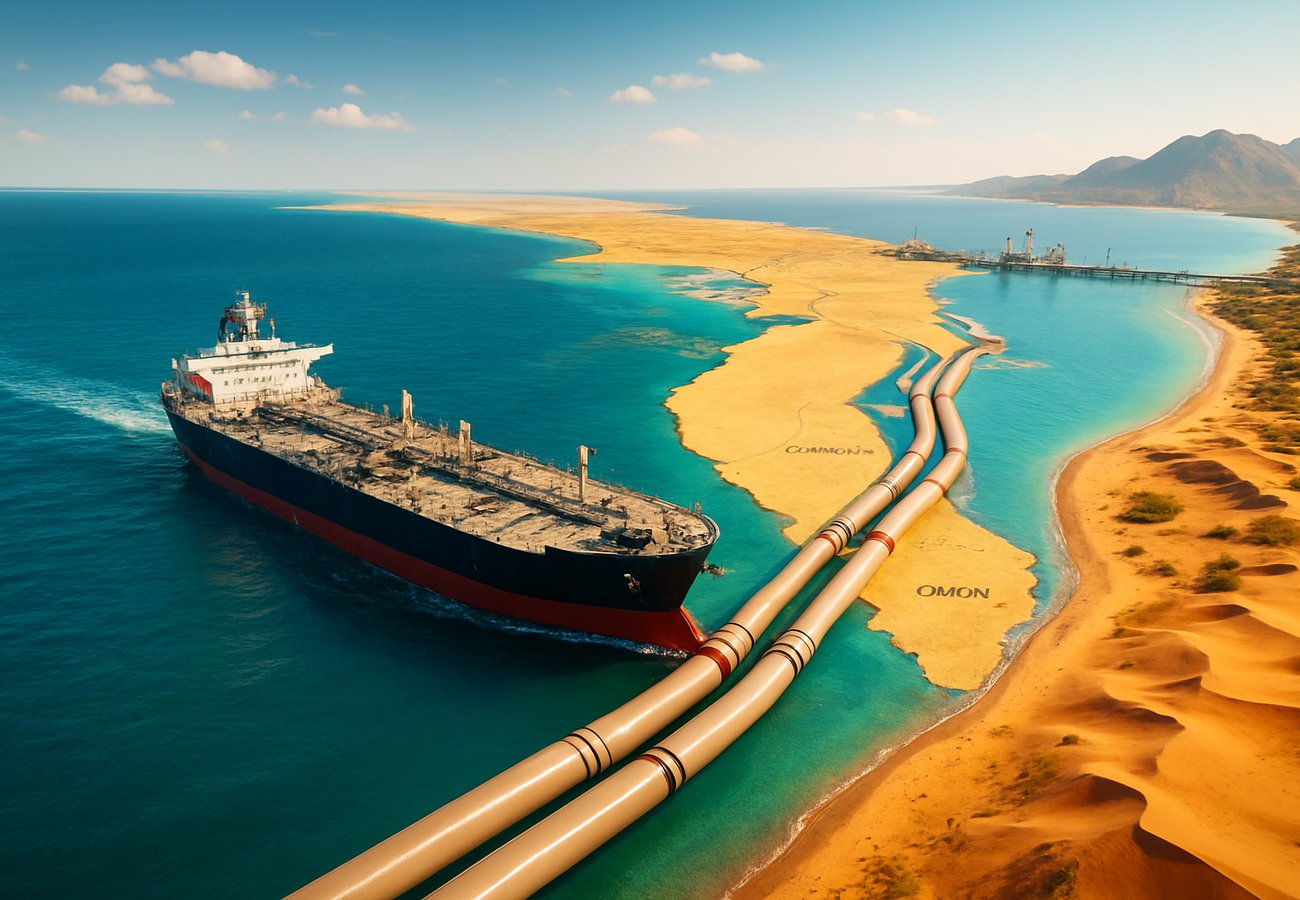
Image generated by AI
Quick Summary
- The full end-to-end blockade of the Strait of Hormuz — through which approximately one-quarter of all global oil shipments transit — has forced a rapid restructuring of global energy trade routes for India, China, Japan, South Korea, Malaysia, Singapore, and Thailand.
- Saudi Arabia's East-West Crude Oil Pipeline (Petroline) — a 1,200 km pipeline stretching from Abqaiq's eastern oil fields to the port of Yanbu on the Red Sea — is now a primary bypass artery for Asian energy imports, confirmed by Saudi Oil Minister Prince Abdulaziz bin Salman.
- The UAE's Habshan-Fujairah pipeline (ADCOP) — connecting UAE inland oil fields directly to the port of Fujairah on the Gulf of Oman — completely bypasses Hormuz and has seen sharply ramped-up volumes of crude exports to India, China, and Japan.
- India, with nearly 80% of its total oil requirements met through imports, has accelerated use of both pipelines and signed new energy agreements with Saudi Arabia and the UAE — including critical LNG and LPG import streams essential for industrial and domestic fuel supply.
The full blockade of the Strait of Hormuz has triggered the most significant restructuring of Asian energy supply chains in decades. For India, China, Japan, South Korea, Malaysia, Singapore, and Thailand — nations collectively responsible for the majority of global oil demand growth — the closure of the world's most critical maritime energy chokepoint is not an abstract geopolitical event: it is an immediate, operational crisis with daily consequences for refineries, power grids, and industrial supply chains.
The response has been equally immediate. Saudi Arabia and the UAE, the two largest Gulf oil exporters, have deployed their pre-built bypass pipeline infrastructure at scale — providing the alternative transit corridors that allow Asian energy importers to keep receiving crude oil, LNG, and LPG despite the Hormuz closure.
The Strait of Hormuz: Scale of the Disruption
The Strait of Hormuz is the only maritime route connecting the Persian Gulf to the Gulf of Oman and the open Indian Ocean. The scale of what is now blocked:
| Energy Product | Global Share Transiting Hormuz |
|---|---|
| Crude oil | ~25% of all global daily shipments |
| LNG | 40%+ of global supply |
| LPG | Significant share of Asian imports |
Asia is the world's largest oil-consuming region. Any sustained Hormuz blockade removes the default supply corridor and forces every major Asian importer to activate contingency infrastructure simultaneously.
The Two Bypass Pipelines Now Carrying Asia's Energy Supply
Saudi Arabia: East-West Crude Oil Pipeline (Petroline)
Route: Abqaiq, Eastern Saudi Arabia → Port of Yanbu, Red Sea Length: 1,200 km Capacity: Sufficient to carry significant crude volumes to Red Sea export terminals Destination: From Yanbu, crude oil can be shipped directly to Europe and Asia without any transit through the Strait of Hormuz
The Petroline — officially the East-West Crude Oil Pipeline — stretches from Saudi Arabia's primary eastern oil production heartland at Abqaiq across the Arabian Peninsula to the port of Yanbu on the Red Sea coast. This route completely sidesteps the Persian Gulf and the Strait of Hormuz.
Saudi Oil Minister Prince Abdulaziz bin Salman has formally confirmed that Saudi Arabia will continue and expand its use of the Yanbu route to maintain stable oil shipments to key Asian customers — including India, China, Japan, and others — for as long as the Hormuz disruption persists.
UAE: Habshan-Fujairah Pipeline (ADCOP)
Route: Habshan oil fields, inland UAE → Port of Fujairah, Gulf of Oman Key feature: Exits directly to the Gulf of Oman — entirely bypassing the Strait of Hormuz Strategic purpose: Built specifically as a Hormuz-bypass contingency infrastructure
The Abu Dhabi Crude Oil Pipeline (ADCOP) — commonly referred to as the Habshan-Fujairah pipeline — represents the UAE's purpose-built strategic response to exactly this scenario. Connecting the UAE's inland Habshan oil fields to the Port of Fujairah on the Gulf of Oman coastline, the pipeline's output reaches the open ocean without passing through Hormuz at any point.
The UAE has significantly ramped up crude export volumes through Fujairah, with India, China, and Japan all increasing their Fujairah-sourced import volumes as their Hormuz-dependent supply lines were severed.
Country-by-Country Bypass Activation
| Country | Import Dependency | Primary Bypass Used | Additional Actions |
|---|---|---|---|
| India | ~80% of oil via imports | ADCOP (Fujairah) + Petroline (Yanbu) | New Saudi/UAE energy agreements; LNG + LPG import acceleration |
| China | World's largest crude oil importer | Petroline (Yanbu) via Red Sea | Increased Saudi imports; alternative oil trade agreements |
| Japan | Major Asian refiner and importer | Yanbu + Fujairah routes | Refinery supply diversification; renewable energy acceleration |
| South Korea | Large Asian refiner | Yanbu + Fujairah routes | Refinery supply chain restructuring |
| Malaysia | Growing energy importer | Alternative offshore terminals | ASEAN energy partnership strengthening |
| Singapore | Regional trade and energy hub | Alternative offshore terminals | Regional connectivity maintenance |
| Thailand | Southeast Asia energy importer | Alternative pipelines and terminals | Domestic gas expansion + ASEAN partnerships |
India: 80% Import Dependency Drives Urgency
India carries the highest structural exposure of any nation in this crisis. With approximately 80% of its total oil requirements sourced through imports — and much of that historically routed through Hormuz-dependent Gulf shipping lanes — India's refineries faced an immediate supply threat when the blockade took effect.
India's emergency response has been multi-layered:
- ADCOP acceleration: India dramatically increased crude intake through the UAE's Habshan-Fujairah pipeline, with volumes arriving at Indian refinery ports via the Gulf of Oman route
- Petroline utilization: India also increased imports via Saudi Arabia's Yanbu terminal on the Red Sea, routed through the Indian Ocean without Hormuz transit
- New bilateral agreements: India has signed fresh energy supply agreements with both Saudi Arabia and the UAE to lock in consistent crude oil volumes for the duration of the blockade
- LNG imports from UAE: Liquefied natural gas from UAE facilities — routed through Fujairah — has become an increasingly critical component of India's power and industrial energy mix
- LPG continuity: LPG shipments — essential for India's domestic cooking fuel supply and industrial applications — are being maintained through the same bypass channels
China: World's Largest Crude Importer Redirects at Scale
China, as the world's largest importer of crude oil, has the most capacity — and the most need — to redirect its Gulf energy supply chains at scale. China has long relied on Saudi Arabia for oil, and the East-West Pipeline's Yanbu terminal now serves as the primary routing point for Chinese-bound crude that previously moved through Hormuz.
China has simultaneously:
- Intensified Saudi imports via the Red Sea, expanding tanker capacity on the Yanbu-to-Asia route
- Developed alternative oil trade agreements with producers outside the Gulf to further reduce Hormuz concentration risk
- Engaged in multilateral diplomatic efforts to de-escalate the regional conflict — combining energy market pragmatism with geopolitical intervention
Japan and South Korea: Refinery Security Through Yanbu and Fujairah
Japan and South Korea — two of Asia's largest refinery operators — are strategically positioned to benefit from the Yanbu and Fujairah bypass routes. Both nations process substantial crude oil volumes for domestic consumption and export-grade refined products, and any supply disruption carries direct consequences for their manufacturing and transportation sectors.
Both countries have restructured their crude import schedules to maximise volumes sourced from Yanbu and Fujairah-routed shipments. Japan is simultaneously accelerating its renewable energy portfolio to reduce long-term structural dependence on Gulf fossil fuel imports — treating the current crisis as strategic justification for energy transition investment.
Malaysia, Singapore, and Thailand: Southeast Asia Adapts
Southeast Asia's major energy importers — Malaysia, Singapore, and Thailand — have activated a combination of alternative offshore shipping terminal arrangements and ASEAN regional energy partnerships to maintain supply continuity.
Thailand has placed particular emphasis on expanding its domestic natural gas production and utilisation, reducing the import gap that would otherwise be directly exposed to the Hormuz blockade. Singapore, as the region's preeminent trade and energy hub, is maintaining regional connectivity by facilitating rerouted tanker logistics through its port infrastructure.
What This Means for Travelers in Asia and Beyond
The energy supply restructuring has cascading travel implications across all affected markets:
- Fuel cost inflation: Aviation jet fuel, land transport diesel, and domestic heating/cooling energy costs are all elevated as bypass logistics carry higher transport cost premiums than Hormuz-route shipping
- Airfare increases: Airlines operating from Mumbai, Delhi, Singapore, Bangkok, Tokyo, Seoul, and other regional hubs are absorbing higher fuel costs and passing them to passengers through surcharges
- Shipping delays: Rerouted maritime freight — now travelling longer distances via Red Sea or Gulf of Oman — is increasing delivery timelines and costs for consumer goods throughout Asia
- Tourism demand softening: Higher household energy costs across India, Thailand, Malaysia, and Southeast Asia are reducing discretionary spending available for travel
Travelers planning journeys within or through Asia during the Hormuz crisis period should anticipate continued airfare volatility and budget additional flexibility into their itineraries.
FAQ: Hormuz Blockade and Asia's Bypass Energy Routes
What is the East-West Crude Oil Pipeline (Petroline)? Saudi Arabia's Petroline is a 1,200 km pipeline running from the Abqaiq oil fields in eastern Saudi Arabia to the port of Yanbu on the Red Sea — allowing crude oil to be exported to Asia and Europe entirely without transiting the Strait of Hormuz.
What is the Habshan-Fujairah (ADCOP) pipeline? The UAE's Abu Dhabi Crude Oil Pipeline (ADCOP) connects inland UAE oil fields at Habshan to the port of Fujairah on the Gulf of Oman coast — bypassing the Strait of Hormuz entirely. It was specifically designed and built as a Hormuz contingency infrastructure.
How dependent is India on Gulf oil imports? India sources approximately 80% of its total oil requirements through imports, making it one of the world's most energy import-dependent major economies. The Hormuz blockade created an immediate refinery supply crisis, driving India's rapid acceleration of ADCOP and Petroline import volumes.
Related Travel Guides
Disclaimer
This article is for informational and educational purposes only. It does not constitute legal, financial, or professional advice. While we strive to provide accurate and up-to-date information, travel policies, regulations, and conditions change rapidly. Always verify information with official sources before making travel decisions. Nomad Lawyer makes no representations about the accuracy, reliability, completeness, or suitability of the information provided. Readers should consult qualified professionals for advice specific to their circumstances. The views expressed in this article are those of the author and do not necessarily reflect the views of Nomad Lawyer.
Kunal K Choudhary
Co-Founder & Contributor
A passionate traveller and tech enthusiast. Kunal contributes to the vision and growth of Nomad Lawyer, bringing fresh perspectives and driving the community forward.
Learn more about our team →