
Kuwait Halts All Oil Exports for First Time in 30 Years — Europe Responds
Kuwait exported zero barrels of crude oil in April 2026 — the first complete halt in over 30 years — triggering a full-scale European energy crisis and emergency cross-border collaboration.

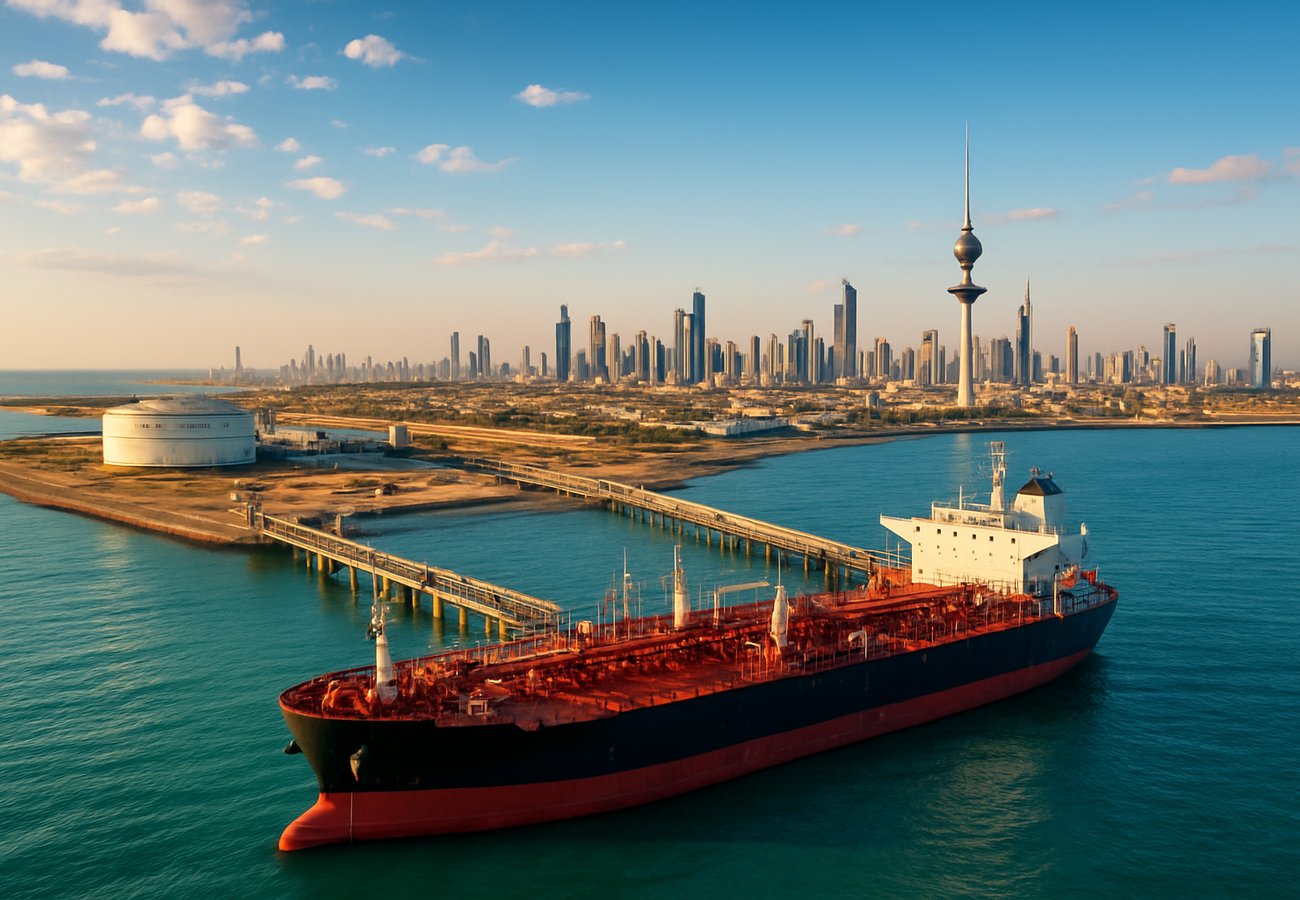
Image generated by AI
Quick Summary
- Kuwait exported zero barrels of crude oil in April 2026 — the first complete halt in over three decades — sending immediate shockwaves through global energy markets and European supply chains.
- Italy, Switzerland, UK, Hungary, France, Romania, Germany, Spain, Austria, Slovenia, and Portugal have entered urgent collaborative talks to secure alternative energy supplies and stabilize rising fuel prices.
- The crisis is compounded by geopolitical tensions and the closure of the Strait of Hormuz, cutting off a critical global oil transit corridor and accelerating supply disruptions.
- European governments are fast-tracking energy diversification strategies — including wind, solar, hydrogen, and alternative oil suppliers outside the Middle East — to reduce long-term structural vulnerability.
Kuwait has exported zero barrels of crude oil throughout April 2026, marking the first complete cessation of oil exports from the Gulf nation in over 30 years. The announcement has triggered immediate shockwaves across global energy markets, with crude prices hitting record highs and European nations scrambling to secure alternative supply chains. The crisis is further intensified by geopolitical tensions in the region and the closure of the Strait of Hormuz — a strategic waterway through which a significant share of the world's oil transits — creating compounding supply risks for energy-dependent economies worldwide.
Kuwait's Historic Export Halt: What Happened
Kuwait's decision to export no crude oil in April 2026 is without precedent in modern energy history. The Gulf state, a major OPEC member and historically one of the world's most reliable oil exporters, has never fully suspended exports in the post-Gulf War era.
The halt was driven by a combination of internal operational disruptions and the broader regional instability that has simultaneously sealed off the Strait of Hormuz — the narrow maritime chokepoint through which roughly 20% of the world's daily oil supply passes. With both Kuwait's production and Hormuz transit disrupted simultaneously, European import-dependent economies were immediately exposed to acute supply risk.
Global crude benchmarks responded sharply, with prices surging to levels not seen since the 2008 energy crisis. The speed and severity of the price movement caught many European governments without adequate emergency buffer capacity.
Country-by-Country Impact Across Europe
| Country | Primary Vulnerability | Immediate Impact |
|---|---|---|
| Italy | Heavy crude oil import dependency | Fuel and heating costs surge; manufacturing costs spike |
| Switzerland | High energy import reliance | Chemical and pharmaceutical sector delays; fuel price inflation |
| United Kingdom | Global gas market exposure | Wholesale gas and electricity bills spike; manufacturing stress |
| Hungary | Natural gas-dependent electricity grid | Electricity prices surge; heavy industry faces cost pressure |
| France | Oil and gas for transport/heating | Fuel costs rise despite nuclear base; transport sector squeezed |
| Romania | Crude oil and gas import dependency | Fuel price surge; consumer inflation worsens |
| Germany | Industrial energy demand | Economic slowdown; small business and household cost pressure |
| Spain | Middle East oil import reliance | Agricultural sector fuel costs spike; supply shortages |
| Austria | Gas and oil imports | Energy price inflation; supply chain disruption |
| Slovenia | Imported oil and gas | Rising prices; inflation pressure |
| Portugal | Oil imports for fuel and electricity | Higher fuel and electricity costs; economic strain |
Italy: Europe's Most Exposed Economy
As one of Europe's most energy-dependent major economies, Italy has absorbed the sharpest initial impact from Kuwait's export halt. The country imports a substantial share of its total crude oil requirements, and the sudden supply disruption has driven petrol and home heating costs to levels not seen in years.
Italy's manufacturing sector — a cornerstone of the national economy — is facing sharply higher input costs, directly threatening productivity and export competitiveness. The knock-on inflationary pressure is making everyday goods and services more expensive for Italian households at a time when consumer confidence was already fragile.
The Italian government has activated emergency energy talks with EU counterparts, prioritizing rapid identification of alternative crude suppliers and accelerated rollout of domestic renewable energy capacity.
Germany and the UK: Industrial Pressure at Scale
Germany, as Europe's largest economy, is experiencing the crisis at industrial scale. High energy prices are squeezing manufacturing output across the country's vast industrial base, with higher electricity and fuel costs hitting both large exporters and small businesses simultaneously. The government is accelerating its renewable energy transition, but the short-term economic damage — to consumer spending, industrial margins, and GDP growth projections — is significant.
In the United Kingdom, wholesale gas prices have spiked sharply as global LNG markets tighten in response to the Hormuz closure. Despite modest domestic production from the North Sea, the UK remains deeply integrated with global energy markets, and the price surge is flowing directly into consumer electricity and gas bills. The UK government has joined European counterparts in seeking alternative supply agreements, while also exploring emergency measures to accelerate domestic energy production.
What This Means for Travelers in Europe
The energy crisis has direct, tangible consequences for anyone traveling across Europe right now:
- Higher transport costs: Fuel price surges are flowing directly into flight surcharges, train fares, car rental costs, and intercity bus prices across Italy, Germany, France, Spain, and the UK
- Accommodation price inflation: Hotels and hospitality businesses facing higher heating, cooling, and lighting costs are passing increases onto guests through higher nightly rates
- Agricultural and food cost pressure: Countries like Spain, where farming is highly energy-dependent, are seeing food price inflation that is affecting restaurant and supermarket costs for tourists
- Industrial disruption risks: Supply chain slowdowns in the chemical, pharmaceutical, and manufacturing sectors (particularly in Switzerland and Germany) could affect the availability of consumer goods during travel
Travelers with upcoming European trips should monitor fuel surcharge policies with their airlines and budget additional flexibility into accommodation and transport costs. IATA has confirmed that fuel price volatility is the primary near-term risk factor for transatlantic and intra-European airfare stability.
Europe's Collaborative Emergency Response
Faced with an unprecedented simultaneous supply shock, European nations have rapidly convened to coordinate a joint response. The key pillars of the emergency strategy include:
- Alternative supplier sourcing: Emergency negotiations with oil-producing nations outside the Middle East, including Norway, Canada, the United States, and West African producers
- Energy diversification acceleration: Fast-tracking approvals for wind, solar, and green hydrogen projects that can reduce structural dependence on crude imports
- Energy efficiency mandates: Emergency conservation measures for industrial and commercial energy users to reduce immediate demand
- Consumer and business support: Government subsidy packages and temporary tax relief to cushion households and SMEs from the worst of the price spikes
- EU-wide strategic reserve deployment: Coordinated release from European strategic petroleum reserves to moderate the immediate price shock while alternative supply is secured
FAQ: Kuwait Oil Crisis and European Travel 2026
Why did Kuwait halt oil exports completely? Kuwait exported zero barrels of crude oil in April 2026 — the first such complete halt in over 30 years — due to a combination of internal operational disruptions and broader regional instability, including the closure of the Strait of Hormuz.
How is the Kuwait oil crisis affecting European travel costs? The energy price surge is driving higher fuel surcharges on flights, increased car rental and transport costs, and upward pressure on hotel pricing across Italy, Germany, France, Spain, the UK, and other affected nations.
Which European countries are most affected by the Kuwait oil halt? Italy and Germany are experiencing the most severe economic pressure due to high energy import dependency. Hungary, Romania, Spain, and Switzerland are also significantly affected, with all eleven named European nations now engaged in emergency collaborative energy negotiations.
Related Travel Guides
Disclaimer
This article is for informational and educational purposes only. It does not constitute legal, financial, or professional advice. While we strive to provide accurate and up-to-date information, travel policies, regulations, and conditions change rapidly. Always verify information with official sources before making travel decisions. Nomad Lawyer makes no representations about the accuracy, reliability, completeness, or suitability of the information provided. Readers should consult qualified professionals for advice specific to their circumstances. The views expressed in this article are those of the author and do not necessarily reflect the views of Nomad Lawyer.
Kunal K Choudhary
Co-Founder & Contributor
A passionate traveller and tech enthusiast. Kunal contributes to the vision and growth of Nomad Lawyer, bringing fresh perspectives and driving the community forward.
Learn more about our team →