
Heathrow Airport Restores Full Runway Operations Following Emergency Response to Southern Runway Grass Fire 2026
London Heathrow Airport has resumed normal operations after emergency crews extinguished a grass fire near the southern runway, causing temporary flight disruptions.

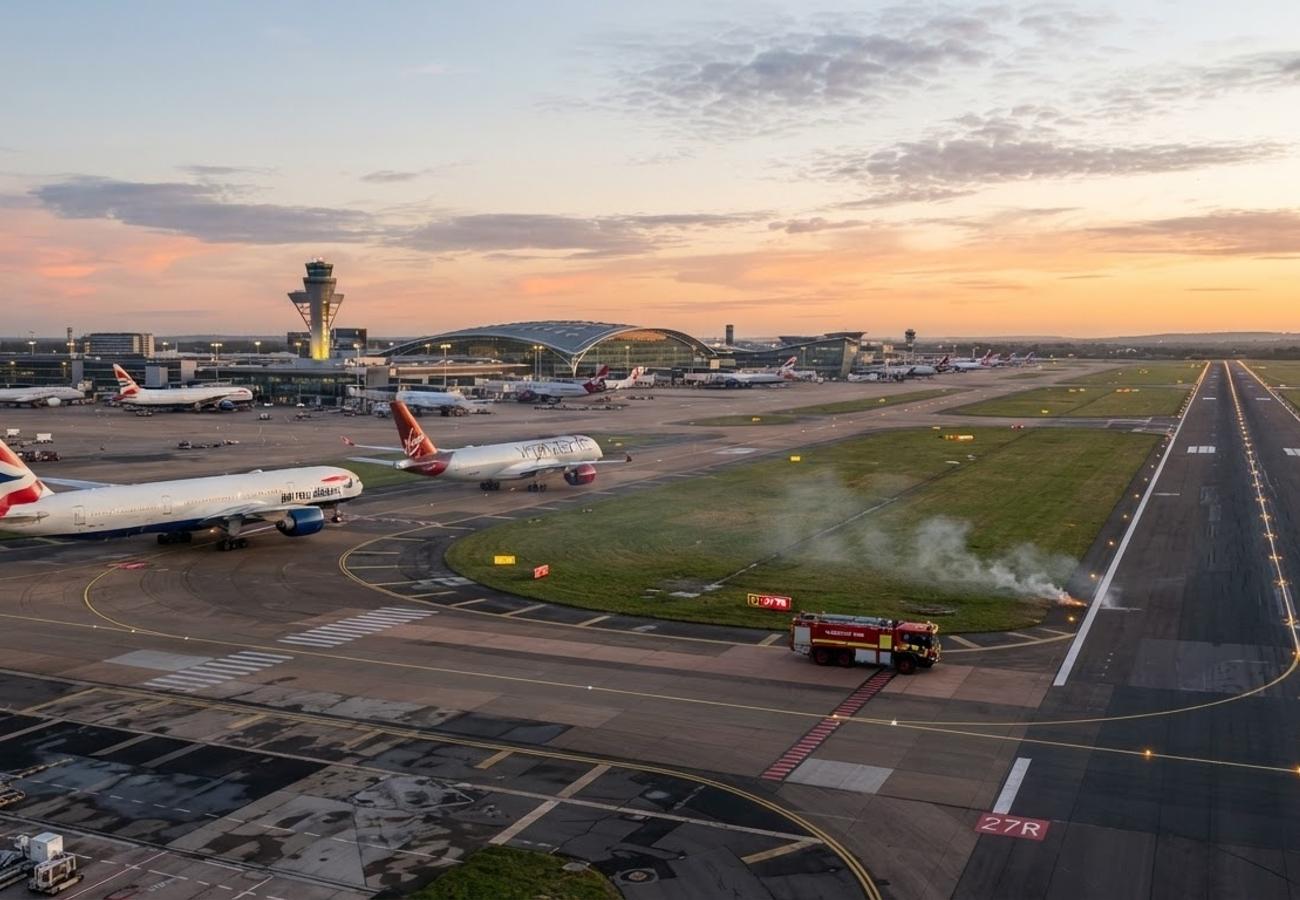
Image generated by AI
Flight operations at London Heathrow (LHR) have returned to normal following the rapid containment of a grass fire adjacent to the southern runway. While the incident caused temporary runway closures and scheduling volatility, emergency protocols prevented a systemic collapse of the airport's international traffic.
Southern Runway Emergency and Operational Response
On September 6, 2026, emergency crews were deployed to address a grass fire that ignited in an area immediately adjacent to Heathrow’s southern runway. To ensure the safety of arriving and departing aircraft, airport authorities activated immediate safety protocols, which necessitated the temporary closure of the affected runway.
Our analysis of the event indicates that the proximity of the fire to the active runway created an immediate risk to aviation safety, requiring the suspension of all movements on that strip until the flames were extinguished and a full safety sweep was completed.
The coordinated effort between airfield operations staff and emergency responders allowed for a swift resolution. Following the extinguishment of the fire and the completion of mandatory safety checks, Heathrow confirmed that both runways were returned to full operational status.
While Heathrow has not released a specific count of delayed flights, the temporary loss of one runway at one of the world's busiest hubs typically results in immediate ripple effects.
- Affected Infrastructure: Southern Runway (Temporary Closure).
- Impacted Routes: All international flights utilizing the southern runway for takeoff or landing, including corridors to North America, Asia, Europe, and the Middle East.
- Operational Status: Both runways are now fully operational.
- Primary Cause: Environmental (Grass fire adjacent to runway).
Passenger Rights and Advisory
For the affected passenger, a runway closure—even a brief one—can trigger a chain of delays, missed connections, and aircraft rotations. Depending on the length of the delay and the nature of the disruption, passengers may have specific entitlements.
Duty of Care and Rebooking Under UK261 (the UK's version of EU261/2004), if a passenger is delayed significantly at the airport, the airline is responsible for providing:
- Food and drink vouchers.
- Access to communication (emails or phone calls).
- Hotel accommodation and transport if the delay extends overnight.
Compensation Analysis Our analysis of aviation policy suggests that "extraordinary circumstances" often exempt airlines from paying cash compensation. A grass fire on an airport runway is typically classified as an external event beyond the airline's control. However, this does not waive the airline's obligation to rebook the passenger on the next available flight or provide a full refund if the flight is canceled.
Actionable Steps for Passengers:
- Verify Status: Check the official Heathrow flight board or the airline's mobile app for real-time updates.
- Document Delays: Keep a record of the exact time of arrival and departure to determine if the 3-hour threshold for duty of care is met.
- Request Vouchers: If waiting in the terminal for more than two hours, request refreshment vouchers from the airline ground staff.
The rapid resolution of the LHR incident underscores the critical nature of "Operational Resilience" in hub-and-spoke aviation models. At an airport operating near peak capacity, the loss of a single runway creates an immediate bottleneck.
The fact that Heathrow avoided a prolonged shutdown suggests that their emergency response capabilities are functioning at a high level. However, this incident highlights a recurring vulnerability for major airports: environmental risks. As climate volatility increases, the risk of runway-side vegetation fires grows, necessitating more aggressive airfield maintenance and faster response times to prevent global network contagion.
Safe travels depend on the invisible efficiency of airfield emergency teams.
Related Travel Guides
Disclaimer
This article is for informational and educational purposes only. It does not constitute legal, financial, or professional advice. While we strive to provide accurate and up-to-date information, travel policies, regulations, and conditions change rapidly. Always verify information with official sources before making travel decisions. Nomad Lawyer makes no representations about the accuracy, reliability, completeness, or suitability of the information provided. Readers should consult qualified professionals for advice specific to their circumstances. The views expressed in this article are those of the author and do not necessarily reflect the views of Nomad Lawyer.
Raushan Kumar
Founder & Lead Developer
Full-stack developer with 11+ years of experience and a passionate traveller. Raushan built Nomad Lawyer from the ground up with a vision to create the best travel and law experience on the web.
Learn more about our team →