
Hawaii Responsible Travel Guide 2026: Mandatory Wildlife Distances, Reef Laws, and Cultural Etiquette

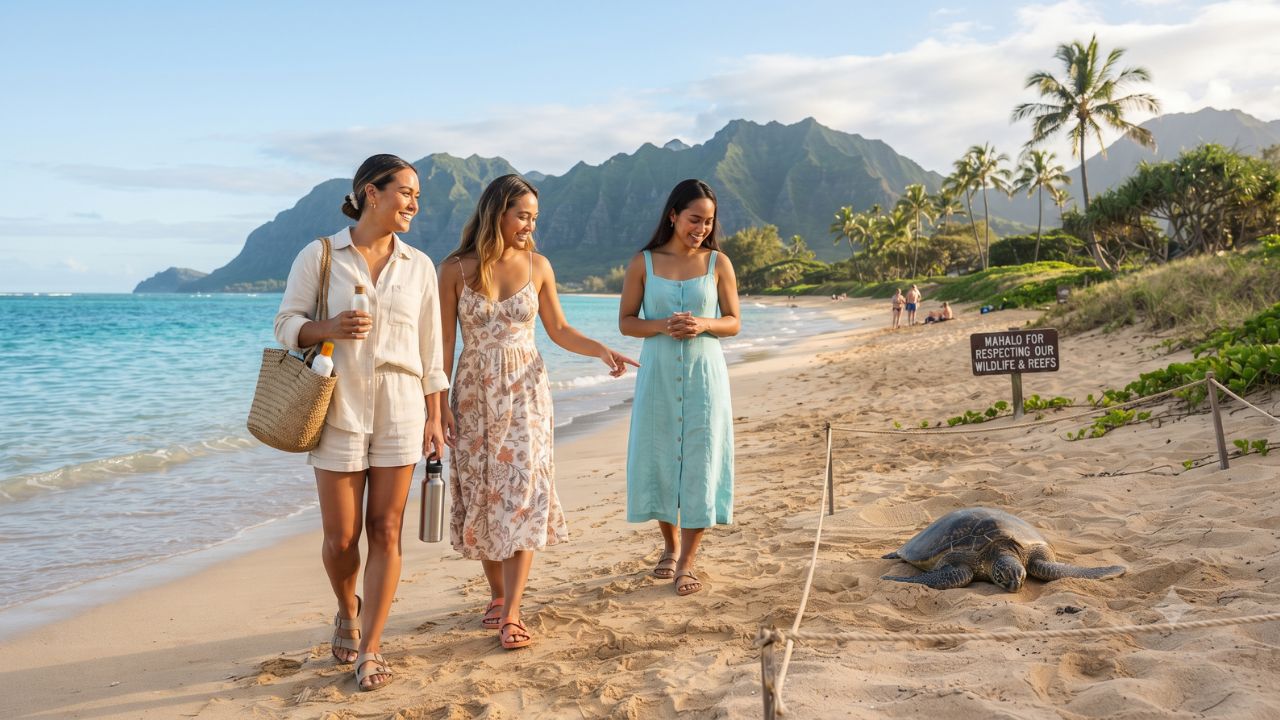
Approaching an endangered Hawaiian monk seal closer than 50 feet or stepping within 50 yards of a wild spinner dolphin is not simply frowned upon in the Hawaiian Islands—it violates federal and state wildlife protection statutes carrying severe financial penalties. While millions arrive in the islands anticipating intimate encounters with marine life, Hawaii's delicate reefs and indigenous traditions demand that travelers replace casual tourist assumptions with strict environmental adherence and cultural respect.
Hawaii represents both an extraordinary tropical paradise and an ancestral homeland home to over 1.4 million residents. When visitors overlook basic guidelines—such as using chemical sunscreens that damage coral larvae, removing black lava rocks from volcanic parks, or aggressively honking in island traffic—they strain local communities and fragile marine ecosystems. Understanding the legal boundaries, conservation protocols, and cultural customs ensures that your Hawaiian journey protects the very beauty you came to experience.
Legal Mandates: Mineral Sunscreens and Marine Protection Boundaries
Environmental stewardship begins before unpacking your suitcase. Since 1 January 2021, state law prohibits the sale, offer for sale, and distribution of sunscreens containing oxybenzone or octinoxate without a prescription. Research by the Hawaii Department of Land and Natural Resources (DLNR) demonstrates that chemical UV filters accelerate coral bleaching, disrupt coral DNA, and deform fragile coral larvae. Visitors must inspect product ingredient labels carefully, selecting only mineral sunscreens formulated with non-nano zinc oxide or titanium dioxide rather than trusting vague commercial "reef-friendly" marketing labels.
Marine wildlife encounters are governed by strict federal distance regulations enforced by NOAA Fisheries Pacific Islands. Because Hawaii's native species rely on shoreline resting periods and undisturbed feeding behaviors, touching, chasing, or encircling wild animals is strictly forbidden:
- Hawaiian Monk Seals (ʻIlioholoikauaua): Maintain a minimum buffer of 50 feet (15 meters). For mother seals nursing newborn pups—such as the seasonal pupping events monitored at Kaimana Beach on Oʻahu in May 2026—state officials establish temporary perimeter fences requiring visitors to remain at least 150 feet (45 meters) away.
- Hawaiian Green Sea Turtles (Honu): Keep a minimum clearance of 10 feet (3 meters) on sand and in the water, allowing turtles unobstructed access to surface for air or haul out on beaches.
- Hawaiian Spinner Dolphins (Naiʻa): Federal regulations strictly ban swimming with, approaching, or lingering within 50 yards (45 meters) of spinner dolphins in interisland bays where pods rest during daytime hours.
- Humpback Whales (Koholā): Vessels, paddleboards, kayakers, and swimmers must maintain a minimum distance of 100 yards (91 meters / 300 feet) throughout Hawaiian waters during winter calving and nursing seasons.
HAWAII WILDLIFE PROTECTION & LEGAL DISTANCE MATRIX
| Entity / Facility | Delays | Cancellations | Details |
|---|---|---|---|
| Protected Species | Hawaiian Name | Mandatory Distance Buffer | Key Conservation Note |
| Hawaiian Monk Seal | ʻIlioholoikauaua | 50 ft (150 ft with nursing) | Endangered / DLNR pen |
| Green Sea Turtle | Honu | 10 ft (3 meters) | Federal ESA protected |
| Spinner Dolphin | Naiʻa | 50 yards (45 meters) | Daytime rest bays |
| Humpback Whale | Koholā | 100 yards (91 meters) | Winter calving zones |
| Coral Reef Formations | Koʻa | No standing / non-nano zinc | Zero chemical filters |
| Sacred Cultural Sites | Heiau | No climbing / stay on trail | Sacred stone walls |
What Makes Hawaii's Living Culture and Land Ethics Distinct
Beyond federal wildlife laws, navigating Hawaii requires embracing pono (living in balance and harmony) and mālama (caring for the land and community). Unlike mainland resort strips where tourism operates in isolation, Hawaiian communities, residential neighborhoods, and sacred historical landscapes are deeply interconnected.
Travelers must recognize that sacred temple ruins (heiau), stacked stone markers (ahu), and ancient burial grounds are active cultural sites, not decorative photo backdrops. Climbing ancient basalt walls, walking across preserved stone platforms, or moving rocks to create social media markers desecrates indigenous Hawaiian heritage. Furthermore, taking natural materials—including black or green volcanic sand, lava rocks, shells, and native flora—violates state conservation laws and disrespects cultural traditions surrounding Madame Pele, the deity of volcanoes.
On island roadways, travelers should adapt to the local rhythm often expressed through the concept of "talk story"—unhurried, respectful conversation and patience. Honking horns aggressively, tailgating slower local drivers on two-lane coastal roads, or parking across residential driveways to photograph waves causes unnecessary community friction. Yielding to oncoming traffic at single-lane wooden bridges on Kauai's North Shore or the Road to Hāna in Maui reflects basic island courtesy.
Visitor Insider Tips
- Wildlife Observation Gear: Never compromise legal distance buffers for a smartphone photo. Pack a compact pair of marine binoculars or use a telephoto zoom lens (200mm to 400mm) on your camera to capture natural animal behaviors without causing distress.
- Reef-Safe Sun Protection Protocol: Apply mineral sunscreen 20 minutes before entering the ocean so it adheres to your skin. Pair mineral sunscreen with UV-blocking rash guards, wide-brim surf hats, and swim leggings to reduce lotion usage entirely.
- Navigating Heiau and Cultural Landmarks: When visiting cultural sites such as Puʻuhonua o Hōnaunau on Hawaii Island or Ulupo Heiau on Oahu, speak quietly, remove trash, keep footwear on marked paths, and never place personal items or coins on ceremonial stones.
- Respecting Roadway Etiquette: When driving scenic routes, use designated scenic lookouts to let faster local commuter traffic pass behind you. Give a polite two-finger wave or "shaka" when another driver yields right-of-way at narrow intersections.
Cultural and Environmental Context
The modern movement toward regenerative tourism in Hawaii, spearheaded by the Hawaii Tourism Authority / Mālama Hawaii, seeks to transform visitors from passive consumers into active stewards. Tourism organizations partner with grassroots non-profits to offer volunteer opportunities, ranging from native taro (kalo) patch restoration to removing invasive mangrove along coastal fishponds.
At the same time, regional land trusts and community leaders work to protect sensitive geological landmarks from over-tourism. Popular hiking ridges that cross private property or fragile watershed boundaries are subject to strict trespassing enforcement. By honoring warning signs, hiring certified Native Hawaiian cultural guides, and spending vacation dollars at locally owned small businesses, travelers contribute directly to the economic and ecological resilience of the islands.
FAQ: Visiting Hawaii Responsibly 2026
What types of sunscreen are prohibited in Hawaii?
Sunscreens containing oxybenzone and octinoxate are banned from sale and distribution without a prescription. Visitors should use only mineral sunscreens formulated with zinc oxide or titanium dioxide.
What is the penalty for touching a green sea turtle or monk seal?
Harassing, touching, or getting too close to protected marine species violates federal laws (Endangered Species Act and Marine Mammal Protection Act) and state statutes, carrying fines up to tens of thousands of dollars.
How far must I stay away from Hawaiian spinner dolphins?
Federal regulations require swimmers, vessels, and paddleboarders to remain at least 50 yards (45 meters) away from Hawaiian spinner dolphins.
Is it illegal to take lava rocks or sand home from Hawaii?
Yes. Removing rocks, sand, or natural resources from national and state parks is prohibited by law and violates traditional Native Hawaiian cultural protocols.
Walking gently along Hawaii's volcanic shores and honoring its sacred living waters ensures that the true spirit of aloha thrives for generations to come.
Related Travel Guides
Disclaimer
This article is for informational and educational purposes only. It does not constitute legal, financial, or professional advice. While we strive to provide accurate and up-to-date information, travel policies, regulations, and conditions change rapidly. Always verify information with official sources before making travel decisions. Nomad Lawyer makes no representations about the accuracy, reliability, completeness, or suitability of the information provided. Readers should consult qualified professionals for advice specific to their circumstances. The views expressed in this article are those of the author and do not necessarily reflect the views of Nomad Lawyer.
Raushan Kumar
Founder & Lead Developer
Full-stack developer with 11+ years of experience and a passionate traveller. Raushan built Nomad Lawyer from the ground up with a vision to create the best travel and law experience on the web.
Learn more about our team →