
Hawaii Sports Tourism Guide 2026: Ocean Paddling Regattas, Marathon Culture, and $11.64 Billion in Visitor Spending

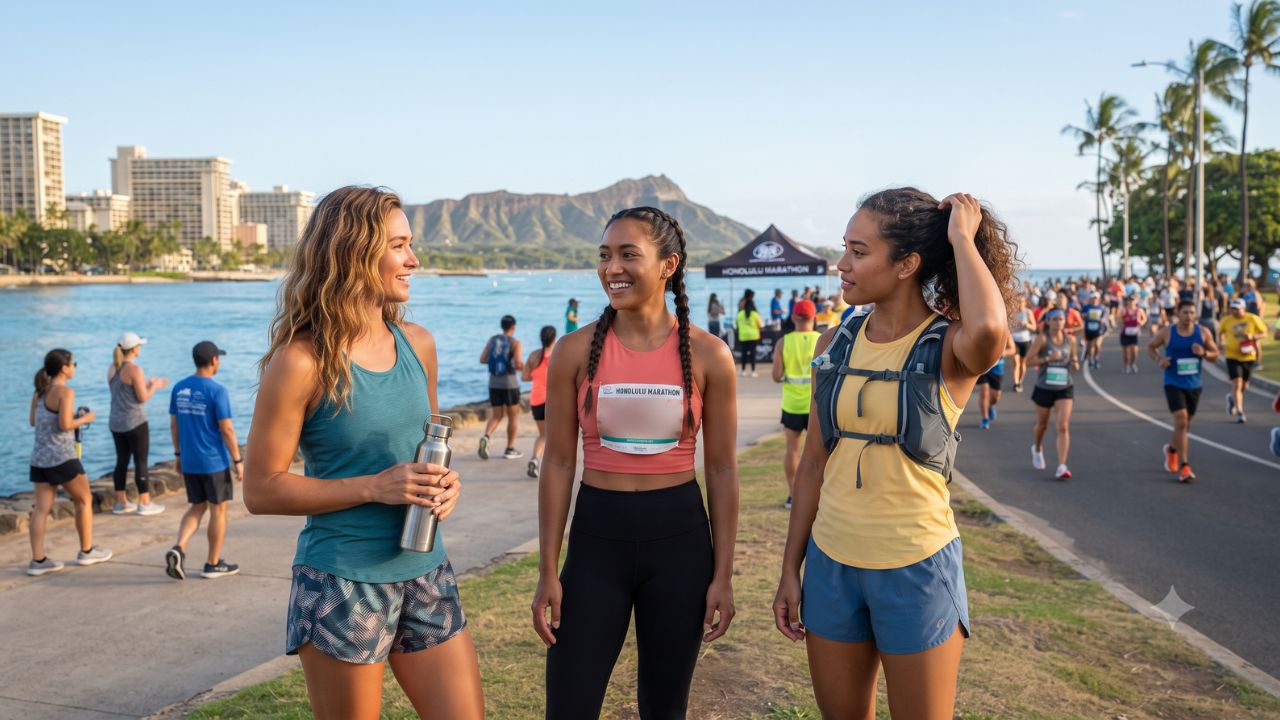
Even as total visitor days contracted by 3.8% due to shorter travel stays, tourist expenditure across the Hawaiian Islands jumped 6.3% to reach $11.64 billion during the first half of 2026. By strategically deploying public tourism capital into premier international competitions—ranging from the 42,000-runner Honolulu Marathon to grueling 41-mile open-ocean outrigger canoe crossings—state tourism planners have repositioned athletics as an economic engine that attracts high-spending global participants without overburdening island infrastructure.
Sports tourism in Hawaii is not a manufactured marketing gimmick; it represents a deep extension of indigenous Polynesian ocean traditions and modern endurance racing. When athletes travel to the archipelago, they enter a sporting culture defined by rough-water channel crossings, historic wave riding, and elite collegiate tournaments. For travelers, building an itinerary around major athletic fixtures offers a rare opportunity to witness authentic community celebrations, experience ancient navigation arts, and explore island gastronomy beyond traditional resort perimeters.
The High-Value Shift: How Sports Tourism Drove $11.64 Billion in H1 2026
Official economic reporting from the Department of Business, Economic Development & Tourism (DBEDT) highlights a profound shift toward quality and spending depth over sheer arrival volume. Statewide visitor arrivals reached 5,037,820 (5.04 million) in the first half of 2026, marking a 2.5% increase from 4,917,106 in H1 2025. Over the same period, total visitor spending expanded at more than double that rate, rising 6.3% from $10.96 billion to $11.64 billion, while hotel occupancy rose 1.5 percentage points to 75.9%.
To accelerate this higher-yield demographic, the Hawaii Tourism Authority (HTA) allocated $1.9 million through its Signature Events Programme across 21 major athletic and cultural events during fiscal 2026, followed by a second $1.0 million investment in July 2026 supporting 10 major statewide competitions through the end of the year.
The economic impact of athletic fixtures is exemplified by the Honolulu Marathon. The December 2025 edition attracted nearly 42,000 runners, with roughly 70% traveling from outside Hawaii. Among them, approximately 12,000 participants flew in directly from Japan. During that month alone, Hawaii recorded 71,929 Japanese visitor arrivals (+8.3% year-on-year) generating $104.9 million in spending (+8.4%). In the first half of 2026, Japanese arrivals climbed to 339,588 (+6.3%) with $495.2 million in expenditure, averaging a robust $247 per person per day.
HAWAII H1 2026 ECONOMIC & SPORTS TOURISM INDICATORS
| Tourism Metric | H1 2026 Recorded | Comparison vs H1 2025 | Key Analytical Note |
|---|---|---|---|
| Total Visitor Arrivals | 5,037,820 (5.04M) | +2.5% Increase | Steady demand growth |
| Total Visitor Spending | $11.64 Billion | +6.3% Increase (+$680M) | Outpacing arrivals |
| Total Visitor Days | 41.4 Million | -3.8% Contraction | Shorter, richer trips |
| Statewide Hotel Occupancy | 75.9% | +1.5 Percentage Points | Robust resort yield |
| Oahu Visitor Volume | 2,924,512 Arrivals | +1.5% Volume / $5.15B spend | +6.4% spending gain |
| Maui Visitor Volume | 1,284,580 Arrivals | +1.3% Volume / $3.34B spend | +12.3% spending gain |
| Japanese Market Volume | 339,588 Arrivals | +6.3% Volume / $495.2M spend | $247/day avg spend |
| Full-Year 2025 Baseline | 9,642,991 Arrivals | +5.7% Spend to $21.75B | Historical benchmark |
What Makes Hawaii's Athletic and Cultural Calendar Distinct
Unlike standard stadium-bound sports events, Hawaii's signature competitions unfold across open marine channels and historic coastal valleys. On Oahu, the Duke Kahanamoku OceanFest honors the father of modern surfing along Waikīkī Beach, integrating longboard surfing, paddleboarding, and ocean swimming with traditional Hawaiian surfboard shaping demonstrations and opening beachside blessings.
In open-ocean racing, the Na Wahine O Ke Kai (women's division) and the Molokaʻi Hoe (men's division) represent the pinnacle of world outrigger canoeing. Teams paddle 41 continuous miles across the treacherous, wind-whipped Kaiwi Channel from Hale O Lono Harbor on Molokaʻi to the shores of Duke Kahanamoku Beach on Oahu. These regattas preserve pre-Columbian Polynesian wayfinding heritage while drawing international paddling clubs from Tahiti, Australia, California, and Europe.
Beyond water sports, the autumn calendar features the eight-team Southwest Maui Invitational, bringing top-tier NCAA Division I men’s basketball programs to the Lahaina Civic Center. In Honolulu, the postseason Hawaiʻi Bowl anchors collegiate football at the Clarence T.C. Ching Athletics Complex, complemented by the statewide International ʻUkulele Festival, demonstrating how music and athletics intertwine under HTA's Community Enrichment initiative.
HAWAII SIGNATURE ATHLETIC & CULTURAL EVENTS 2026
| Entity / Facility | Delays | Cancellations | Details |
|---|---|---|---|
| Signature Event | Island / Location | Format / Discipline | Community Focus |
| Honolulu Marathon | Oahu (Honolulu) | 26.2-Mile Road Marathon | ~42,000 participants |
| Duke OceanFest | Oahu (Waikīkī) | Surfing, paddle, swim | Kahanamoku legacy |
| Na Wahine O Ke Kai | Molokaʻi to Oahu | 41-Mile Kaiwi Canoe Race | Women's world champ |
| Molokaʻi Hoe | Molokaʻi to Oahu | 41-Mile Kaiwi Canoe Race | Men's world champ |
| Maui Invitational | Maui (Lahaina) | 8-Team NCAA Basketball | High-yield mainland |
| Hawaiʻi Bowl | Oahu (Honolulu) | NCAA College Football | Postseason holiday |
| International ʻUkulele | Oahu (Kapiʻolani) | Music & Cultural Workshop | Free public access |
Visitor Insider Tips
- Marathon Weekend Hotel Reservations: If traveling for the December Honolulu Marathon, book accommodations along the eastern end of Waikīkī near Kapiʻolani Park. The finish line is located inside the park, allowing you to walk directly back to your hotel without waiting for post-race shuttle buses or rideshares.
- Viewing the Kaiwi Channel Finish: To witness the dramatic conclusion of the Molokaʻi Hoe or Na Wahine O Ke Kai, head to Fort DeRussy Beach in Waikīkī by 12:30 PM. Spectators gather on the sand with cowbells and traditional ti-leaf leis to welcome six-person outrigger crews as they cross the reef after five hours in open ocean swells.
- Pre-Race Fueling in Honolulu: Avoid generic chain dining before endurance events. Head to local noodle shops along King Street in Moʻiliʻili for traditional saimin (dashi-broth noodle soup topped with char siu and green onions) or order high-protein fresh ahi poke bowls from neighborhood fish markets along Kapahulu Avenue.
- Maui Invitational Ticket Strategy: General admission booster tickets for the Southwest Maui Invitational sell out months in advance. Monitor official university athletic associations for allotted fan-travel packages that bundle game passes with West Maui lodging.
Cultural and Environmental Context
The expansion of sports tourism operates within a rigorous destination-management framework that prioritizes resident well-being and natural resource conservation. Events supported by the HTA Signature Events Programme must include educational outreach, ocean-stewardship workshops, and community giving components.
Outrigger canoe clubs and surf organizations actively maintain coastal trailheads, clean shoreline reefs, and educate visiting athletes on Hawaiian protocols regarding marine sanctuaries. By investing in competitions that honor native traditions and distribute economic benefits across family-owned restaurants, equipment rental shops, and local cultural artisans, Hawaii ensures that sports tourism enriches host communities while preserving the natural playgrounds of the Pacific.
FAQ: Hawaii Sports Tourism 2026
What was Hawaii's total visitor spending in the first half of 2026?
Visitor spending reached $11.64 billion during the first half of 2026, representing a 6.3% increase over the $10.96 billion recorded in H1 2025.
How many participants run the Honolulu Marathon?
The Honolulu Marathon attracts nearly 42,000 runners annually, with approximately 70% traveling from outside Hawaii, including roughly 12,000 participants from Japan.
What is the route for the Molokaʻi Hoe canoe race?
The race covers 41 continuous ocean miles across the Kaiwi Channel, beginning at Hale O Lono Harbor on Molokaʻi and finishing on Duke Kahanamoku Beach in Waikīkī.
When does the Southwest Maui Invitational take place?
The eight-team NCAA college basketball tournament takes place annually during Thanksgiving week in late November at the Lahaina Civic Center on Maui.
Whether paddling through open Pacific swells or racing beneath Diamond Head at sunrise, experiencing Hawaii through sport reveals a culture where physical endurance and sacred ocean heritage move as one.
Related Travel Guides
Disclaimer
This article is for informational and educational purposes only. It does not constitute legal, financial, or professional advice. While we strive to provide accurate and up-to-date information, travel policies, regulations, and conditions change rapidly. Always verify information with official sources before making travel decisions. Nomad Lawyer makes no representations about the accuracy, reliability, completeness, or suitability of the information provided. Readers should consult qualified professionals for advice specific to their circumstances. The views expressed in this article are those of the author and do not necessarily reflect the views of Nomad Lawyer.
Raushan Kumar
Founder & Lead Developer
Full-stack developer with 11+ years of experience and a passionate traveller. Raushan built Nomad Lawyer from the ground up with a vision to create the best travel and law experience on the web.
Learn more about our team →