
Hawaii Tourism Shift 2026: Visitor Spending Rises 6.3% as Travelers Pivot from Kauai to Oahu and Maui
New 2026 data reveals a strategic shift in Hawaiian travel patterns, with visitor spending climbing 6.3% in H1 despite a pivot away from Kauai toward Honolulu and Maui.

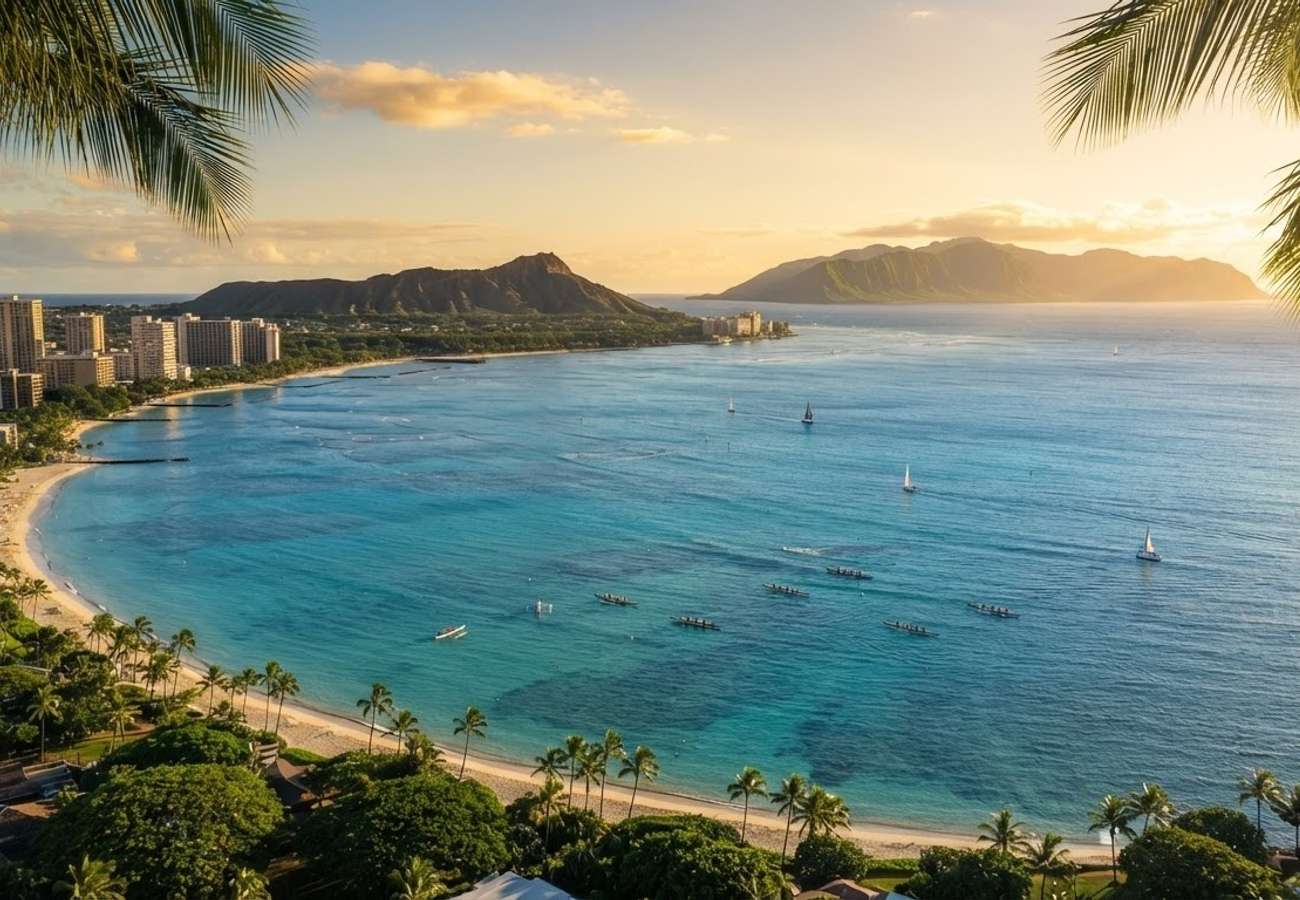
Image generated by AI
Visitor spending in Hawaii surged by 6.3% during the first half of 2026, reaching $11.6035 billion, even as the average daily visitor census declined by 3.9%. This divergence between volume and value signals a critical shift in the Pacific travel market: travelers are spending more per capita while strategically redistributing their footprints across the islands, moving away from Kauai as it continues its recovery process.
The Trend in Numbers: Value Over Volume
The current data from the Department of Business, Economic Development, and Tourism (DBEDT) indicates that the Hawaiian tourism engine is transitioning from a "volume-recovery" phase to a "value-optimization" phase. While the first 11 months of 2025 saw visitor volumes remain nearly flat—8,774,096 visitors compared to 8,793,885 in 2024—the financial output increased significantly. Spending rose from $18.54 billion in 2024 to $19.64 billion in 2025, a 5.9% increase.
This trend intensified in 2026. Despite a slight year-over-year dip in March 2026 visitors (888,349, down 1.7%), the first half of 2026 saw air arrivals climb by 2.2%. The most striking metric is the Q2 2026 visitor spending, which hit $5.50586 billion, marking a 3.4% increase over the previous year.
Aviation data supports this redistribution. In March 2026 alone, there were 5,562 trans-Pacific flights providing 1,247,294 seats. International connectivity remains robust, with 888 international flights offering 228,195 seats in March. The market share for these seats is dominated by Japan (105,335 seats), followed by Canada (51,260), South Korea (22,713), and Australia (12,244). This high level of accessibility allows travelers to easily pivot their itineraries toward Oʻahu or Maui when Kauai is less viable.
Comparative Context: Island-Level Market Shifts
The redistribution of tourism is not uniform. While Kauai manages its recovery, other islands are absorbing the overflow and increasing their yield. Hawaiʻi Island, for instance, showed aggressive growth in early 2026. February 2026 saw 152,151 visitors—a 7.2% increase over February 2025—while spending for that month skyrocketed by 22.8% to reach $333 million.
The following table illustrates the broader trajectory of the Hawaiian market over the last five years, highlighting the shift from pandemic recovery to the current high-spend environment.
| Year | Market Phase | Primary Driver | Key Data Point |
|---|---|---|---|
| 2021 | Initial Recovery | Domestic Leisure | Post-pandemic rebound |
| 2022 | Reopening | International Return | Gradual market expansion |
| 2023 | High-Volume | Recovery / Crisis | Maui wildfire impact |
| 2024 | Normalization | Statewide Recovery | Near-normal volume |
| 2025 | Value Shift | Spending Growth | 8.77m visitors; spending up 5.9% |
| 2026 (H1) | Strategic Pivot | Air Arrival Growth | Air arrivals +2.2%; spending +6.3% |
This data suggests that the "Ultimate Escape" is no longer defined by isolation (Kauai) but by a blend of infrastructure and nature. Oʻahu, with its concentrated resources in Honolulu, is now the primary beneficiary of this shift. According to IATA, global travel patterns are increasingly favoring hubs that offer diverse "city-and-beach" combinations, a trend Honolulu exemplifies.
What This Means for Travelers
For the individual traveler, the data indicates that the "cost of entry" for a Hawaii vacation is rising, but the availability of high-quality infrastructure in specific hubs is improving.
- Prioritize Oʻahu for Logistics: If you are replacing a Kauai trip, Honolulu is the most data-backed alternative. With the highest density of hotels and public transit, it reduces the "rental car friction" found on smaller islands. A 5-day itinerary focusing on Waikīkī, Pearl Harbor, and the North Shore provides a balanced alternative to Kauai's nature-centric appeal.
- Budget for "Value-Based" Pricing: With spending increasing by 6.3% while visitor counts remain stable, expect higher ADRs (Average Daily Rates) for hotels. To mitigate this, book 12-16 weeks in advance, particularly for Q2 and Q3.
- Target Hawaiʻi Island for Growth: The 22.8% spending jump in February 2026 suggests that the "Big Island" is becoming a premium destination. If you seek the volcanic landscapes of Kauai, the Kona-Hilo axis is currently the most viable substitute.
- Respect Recovery Zones: In Maui, the economic significance of tourism is high following the 2023 Lahaina disaster. Travelers should utilize official government tourism resources to identify "safe-to-visit" zones and avoid recovery areas.
Forward Projection: The 2027 Trajectory
Based on the current trajectory of H1 2026, we expect a continued "de-concentration" of tourism. The reliance on a few primary islands will likely shift toward a more distributed model. As air arrivals continue to grow (up 2.2%), the pressure on Honolulu's infrastructure will increase, potentially driving a second wave of growth toward Molokaʻi and Lānaʻi for luxury travelers seeking extreme seclusion.
Furthermore, the strong performance of the Japanese and Canadian markets suggests that Hawaii is successfully diversifying its international base. If the 6.3% spending growth trend continues, we will likely see an increase in high-end, boutique hospitality developments on the Big Island and Maui to cater to this higher-spending demographic.
FAQ: Hawaii Island Pivots 2026
Will hotel prices continue to rise in Honolulu? Yes. With spending increasing by 6.3% despite stable visitor numbers, the market is shifting toward higher-yield tourism. Expect premiums for beachfront properties in Waikīkī to remain elevated through 2026.
Is Maui a safe alternative to Kauai right now? Yes, provided you follow official guidance. Maui remains a top destination for beaches and scenery, but travelers must avoid recovery zones in Lahaina and respect local access restrictions.
Which island offers the best value for money in 2026? Oʻahu remains the most cost-effective due to a broader range of accommodation types and better public transportation, reducing the need for expensive rental cars.
Are international flights increasing to Hawaii? Yes. March 2026 data shows over 228,000 international seats available, with Japan providing the largest share (105,335 seats), indicating strong global accessibility.
The data is clear: Hawaii is no longer just recovering volume; it is optimizing for value.
Related Travel Guides
Disclaimer
This article is for informational and educational purposes only. It does not constitute legal, financial, or professional advice. While we strive to provide accurate and up-to-date information, travel policies, regulations, and conditions change rapidly. Always verify information with official sources before making travel decisions. Nomad Lawyer makes no representations about the accuracy, reliability, completeness, or suitability of the information provided. Readers should consult qualified professionals for advice specific to their circumstances. The views expressed in this article are those of the author and do not necessarily reflect the views of Nomad Lawyer.
Kunal K Choudhary
Co-Founder & Contributor
A passionate traveller and tech enthusiast. Kunal contributes to the vision and growth of Nomad Lawyer, bringing fresh perspectives and driving the community forward.
Learn more about our team →