
Tokyo Haneda Airport Opens New Six-Gate International Expansion to Support 2030 Tourism Goals
Tokyo Haneda Airport has launched a six-gate international satellite concourse to alleviate capacity pressures as Japan targets 60 million annual visitors by 2030.

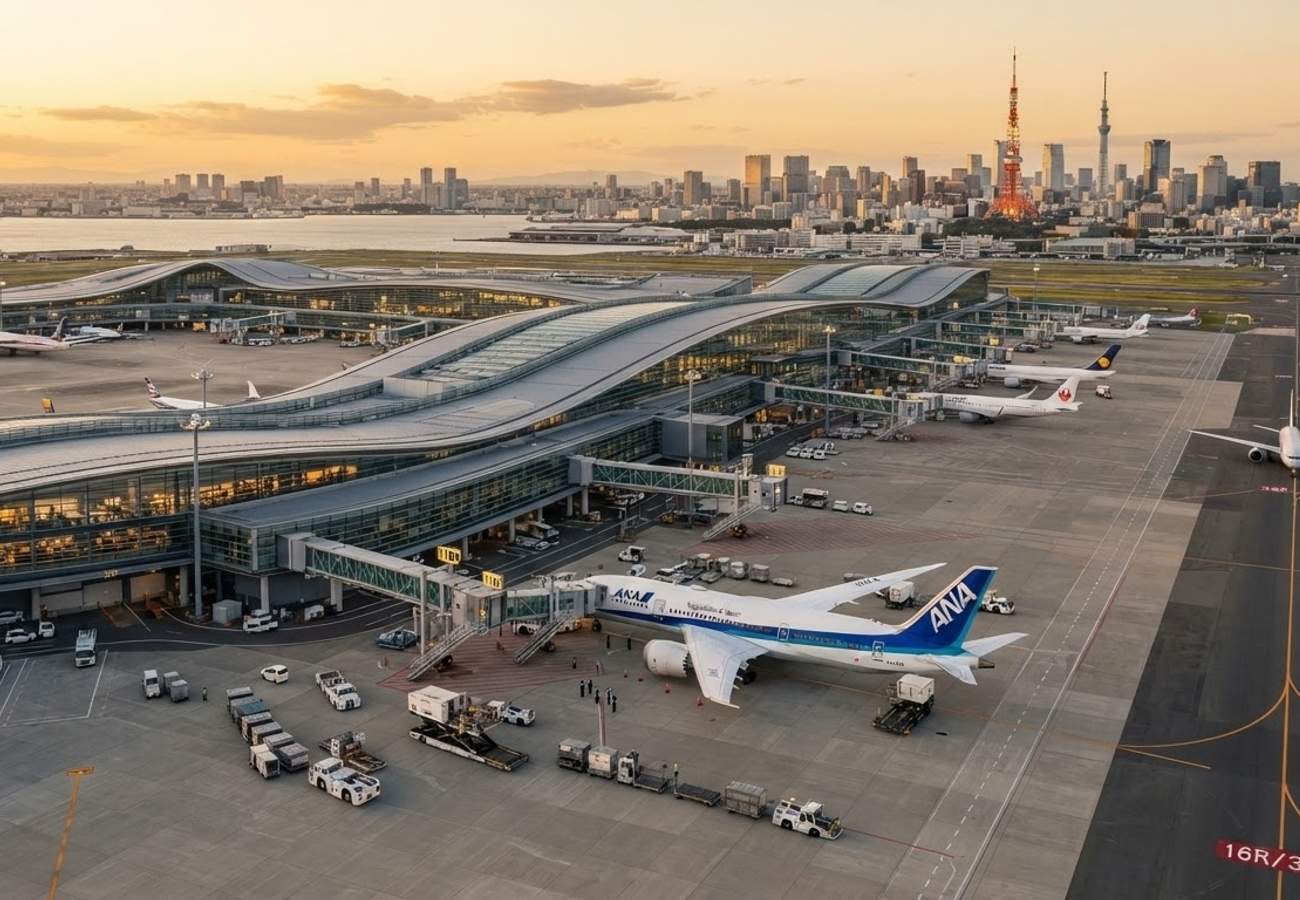
Image generated by AI
Tokyo’s primary gateway has activated a new six-gate international facility to mitigate severe capacity constraints. This strategic infrastructure upgrade arrives as Japan surpasses pre-pandemic visitor peaks, moving toward a national target of 60 million annual arrivals by 2030.
Haneda International Capacity Expansion
Tokyo Haneda Airport has officially commissioned a new six-gate satellite concourse within its international sector. This expansion is designed to supplement existing contact stands and remote bays, specifically targeting the operational requirements of widebody aircraft serving high-demand corridors in North America and across Asia.
The facility is integrated into Haneda’s Terminal 2, which has undergone a phased transformation since 2024 to blend domestic and international operations. The new concourse extends from the existing international pier via secure airside walkways. To maximize versatility, several stands are equipped with dual boarding bridges, allowing the airport to alternate between large twin-aisle jets and narrowbody aircraft based on real-time route demand.
Beyond the gates, the airport has implemented a comprehensive reconfiguration of apron space and taxi lanes. These modifications aim to reduce towing movements and shorten taxi times during peak congestion banks, supporting the aggressive turnaround schedules required by competitive international carriers.
Tourism Surge and Strategic Growth
The infrastructure expansion is a direct response to unprecedented inbound travel volumes. According to data from the Japan National Tourism Organization, Japan welcomed approximately 36.9 million international visitors in 2024. This figure represents a year-on-year increase of over 40 percent compared to 2023 and exceeds the previous pre-pandemic record set in 2019.
This growth is attributed to a combination of a weak yen, increased air service frequency, and a sustained rebound in long-haul demand. The Japanese government has outlined a strategic ambition to reach 60 million annual visitors by 2030, positioning Haneda as the critical infrastructure node for this growth. While Narita Airport continues to manage a significant portion of long-haul traffic, Haneda's proximity to central Tokyo makes it the preferred hub for premium and time-sensitive travelers.
Route Specifications and Operational Impact
The additional gate capacity allows airlines to refine their "bank" structures—the clustering of arrivals and departures—to better align with early-morning and late-night waves from key global markets.
| Feature | Specification/Detail | Impact on Operations |
|---|---|---|
| New Capacity | 6 International Gates | Increased slot availability for widebody aircraft |
| Terminal Location | Terminal 2 (International Sector) | Seamless domestic-to-international transfers |
| Equipment | Dual Boarding Bridges | Flexibility for both twin-aisle and narrowbody jets |
| Airside Changes | Reconfigured Taxi Lanes | Reduced ground delays and towing movements |
| Visitor Target | 60 Million by 2030 | Long-term scaling for national tourism goals |
Traveler Logistics Guide: Navigating Haneda
From a ground-level perspective, the expansion of Haneda’s international capacity changes how travelers should plan their transit through Tokyo.
Booking Connections and Layovers The integration of international gates into Terminal 2 strengthens the airport's role as a domestic hub. For those connecting from an international flight to a regional Japanese city, the "same-day connection" is now more viable. When booking, allow a minimum of 3 hours for international-to-domestic transfers to account for immigration and customs, even with the expanded facilities.
Navigating the Terminal Travelers should utilize the following transit options to move between terminals and the city:
- Tokyo Monorail & Keikyu Line: The primary rail arteries for central Tokyo access.
- Free Shuttle Buses: Use these for transfers between Terminals 1, 2, and 3.
- Underground Passages: Available between Terminals 1 and 2 for those preferring to avoid shuttles.
Digital Transit Policies To expedite entry, travelers are encouraged to use the Visit Japan Web portal for digital customs and immigration declarations. This reduces queues at the newly enlarged immigration zones. Additionally, keep an eye on the development of the Haneda Airport Access Line by JR East, which will eventually provide more direct rail links to major urban hubs, further reducing surface-transfer times.
Regional Infrastructure Assessment
The expansion of Haneda is not merely about volume but about the distribution of tourism. Japanese policymakers are using the airport's dense domestic network to combat "overtourism" in Tokyo, Kyoto, and Osaka. By increasing the ease of international-to-domestic transfers, the government aims to steer visitors toward secondary cities and rural regions.
Furthermore, the expansion includes upgraded security zones, additional check-in counters, and expanded baggage claim areas to prevent the processing bottlenecks typically seen during peak seasons. The new concourse also integrates high-end retail and dining, reflecting a shift toward maximizing passenger "dwell time" revenue.
The expansion marks a pivotal shift in Tokyo's aviation strategy, prioritizing city-center access to maintain a competitive edge in the Asia-Pacific region.
Related Travel Guides
Disclaimer
This article is for informational and educational purposes only. It does not constitute legal, financial, or professional advice. While we strive to provide accurate and up-to-date information, travel policies, regulations, and conditions change rapidly. Always verify information with official sources before making travel decisions. Nomad Lawyer makes no representations about the accuracy, reliability, completeness, or suitability of the information provided. Readers should consult qualified professionals for advice specific to their circumstances. The views expressed in this article are those of the author and do not necessarily reflect the views of Nomad Lawyer.
Raushan Kumar
Founder & Lead Developer
Full-stack developer with 11+ years of experience and a passionate traveller. Raushan built Nomad Lawyer from the ground up with a vision to create the best travel and law experience on the web.
Learn more about our team →