
Guyana 2026 Tourism Strategy: Expanding Eco-Travel in Georgetown and Indigenous Hubs
Guyana is redefining South American travel in 2026 by integrating community-led conservation and Indigenous heritage into its national tourism agenda across Georgetown and the Rupununi Savannahs.

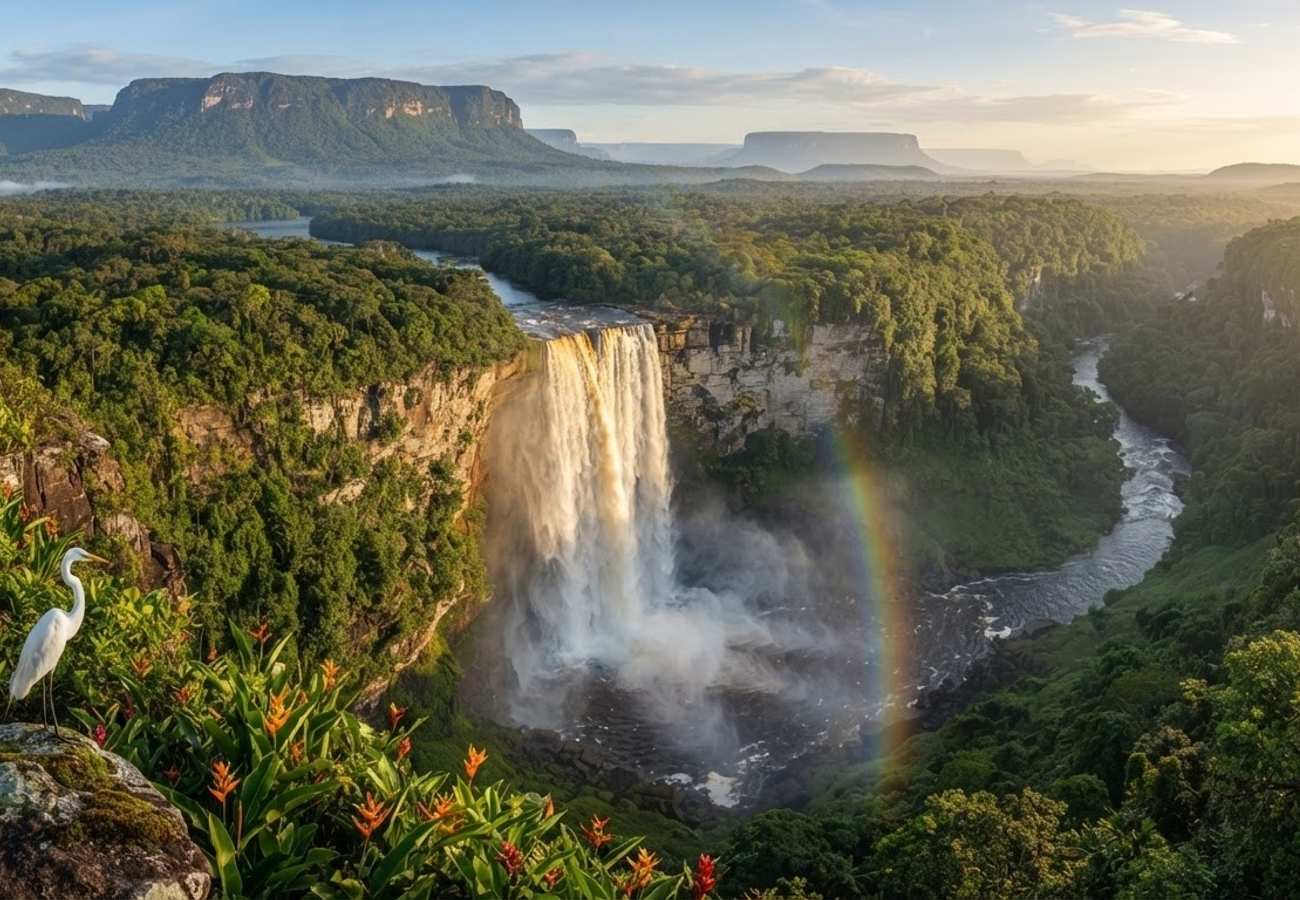
Image generated by AI
Guyana is pivoting its economic engine toward low-impact exploration, leveraging its 60th Independence Diamond Jubilee to set a global benchmark for sustainable travel. By merging urban heritage with untamed wilderness, the nation is ensuring that local Indigenous populations maintain direct ownership of their lands and legacies.
The country's 2025–2030 tourism agenda represents a strategic shift away from high-volume tourism in favor of community-led conservation and sustainable infrastructure. This model aims to prevent the environmental degradation often associated with rapid industrial expansion, instead utilizing high-value, low-density travel to fund local education and healthcare.
Urban Heritage and the Diamond Jubilee in Georgetown
As the coastal capital, Georgetown serves as the primary anchor for Guyana's cultural preservation. In 2026, the city is the epicenter of the 60th Independence Diamond Jubilee celebrations, positioning the capital as a hub for international diplomacy and heritage.
The city is currently hosting the Caribbean Tourism Organization (CTO) State of the Tourism Industry Conference (SOTIC), signaling its readiness for global engagement. Visitors are increasingly drawn to:
- Architectural Tours: Exploring 19th-century timber structures, including City Hall and St. George’s Cathedral.
- Cultural Festivals: The Mashramani Republic Day celebrations, featuring national parades and street performances.
- Gastronomy: Culinary expeditions that highlight the multicultural influences of Guyanese cuisine.
Indigenous-Led Conservation in the Rupununi and Beyond
Moving inland, the tourism model shifts from urban heritage to grassroots environmentalism. Lethem serves as the critical gateway to the Rupununi Savannahs, where the focus remains on uncommercialized, authentic Indigenous experiences.
In the Rupununi, the priority is the preservation of expansive grasslands. Travelers engage in multi-day treks to spot apex predators and rare wildlife, such as jaguars, giant anteaters, and harpy eagles. This region emphasizes traditional land-management practices, ensuring that tourism does not disrupt the livelihoods of Amerindian communities.
Further into the interior, community-owned eco-villages like Surama, Rewa, and Yupukari operate as the gold standard for grassroots tourism. These villages manage their own eco-lodges, employing local naturalists to lead river excursions and jungle survival training. The financial structure is transparent: proceeds directly fund village-level healthcare and primary education.
Biodiversity Hubs: Iwokrama and Kaieteur
Guyana’s commitment to "untamed nature" is most evident in its protected reserves. The Iwokrama Rainforest Reserve, spanning nearly one million acres, functions as both a research center and a tourist destination. With over 900 bird species, it is a primary destination for global ornithologists. The reserve utilizes canopy walkways and night spot-lighting to track pumas and jaguars, proving that scientific research and tourism can coexist.
Similarly, Kaieteur National Park protects the world’s largest single-drop waterfall by volume. To maintain the integrity of the Potaro Plateau, authorities enforce strict visitor limits. This protects endemic species, including the arapaima and the giant river otter, while offering high-adventure, low-footprint trekking and micro-flights.
Riverine Integration in the Essequibo Region
Bartica is transforming into a sustainable adventure hub, acting as the entry point to the interior. The Essequibo region is now blending wellness tourism with historical exploration. Current initiatives include:
- Historical Excursions: Visits to Dutch colonial ruins, including Kyk-Over-Al and Fort Island.
- Water-Based Wellness: The integration of eco-friendly water sports and nature park retreats along the river corridors.
Strategic Regional Tourism Focus 2026
| City / Region | Primary Tourism Focus | Key 2026 Attractions & Initiatives |
|---|---|---|
| Georgetown | Cultural Heritage & History | Diamond Jubilee celebrations, CTO SOTIC Conference, 19th-century architecture tours. |
| Lethem & Rupununi | Indigenous Culture & Savannahs | Wildlife spotting (jaguars, giant anteaters), authentic Amerindian-led tourism. |
| Eco-Villages (Surama, Rewa, Yupukari) | Grassroots Conservation | Community-owned lodges, immersive jungle survival, direct funding for local education. |
| Iwokrama Reserve | Biodiversity & Research | Canopy walkways, tracking big cats, protection of 900+ bird species. |
| Kaieteur National Park | Active Adventure | Kaieteur Falls, low-impact trekking, protection of giant river otters and arapaima. |
| Bartica & Essequibo | Riverine Culture | Essequibo River excursions, Dutch colonial ruins, wellness and water-sports. |
The Economic Logic of Sustainable Travel
The transition to an eco-centric model is a deliberate response to industrial growth. By prioritizing low-impact travel, Guyana avoids the permanent environmental scars typical of unchecked expansion. This strategy creates a circular economy where international visitation provides the capital necessary to protect biodiversity and preserve the cultural traditions of Indigenous peoples.
Guyana is proving that the most valuable asset a nation can export is the preservation of its own wilderness.
Related Travel Guides
Disclaimer
This article is for informational and educational purposes only. It does not constitute legal, financial, or professional advice. While we strive to provide accurate and up-to-date information, travel policies, regulations, and conditions change rapidly. Always verify information with official sources before making travel decisions. Nomad Lawyer makes no representations about the accuracy, reliability, completeness, or suitability of the information provided. Readers should consult qualified professionals for advice specific to their circumstances. The views expressed in this article are those of the author and do not necessarily reflect the views of Nomad Lawyer.
Raushan Kumar
Founder & Lead Developer
Full-stack developer with 11+ years of experience and a passionate traveller. Raushan built Nomad Lawyer from the ground up with a vision to create the best travel and law experience on the web.
Learn more about our team →