
Guarulhos International Airport to Paulista Avenue: 2026 Transit Guide and Route Analysis
A comprehensive analysis of transport options from GRU Airport to São Paulo's Paulista Avenue, including travel times, costs, and passenger rights for business travelers.
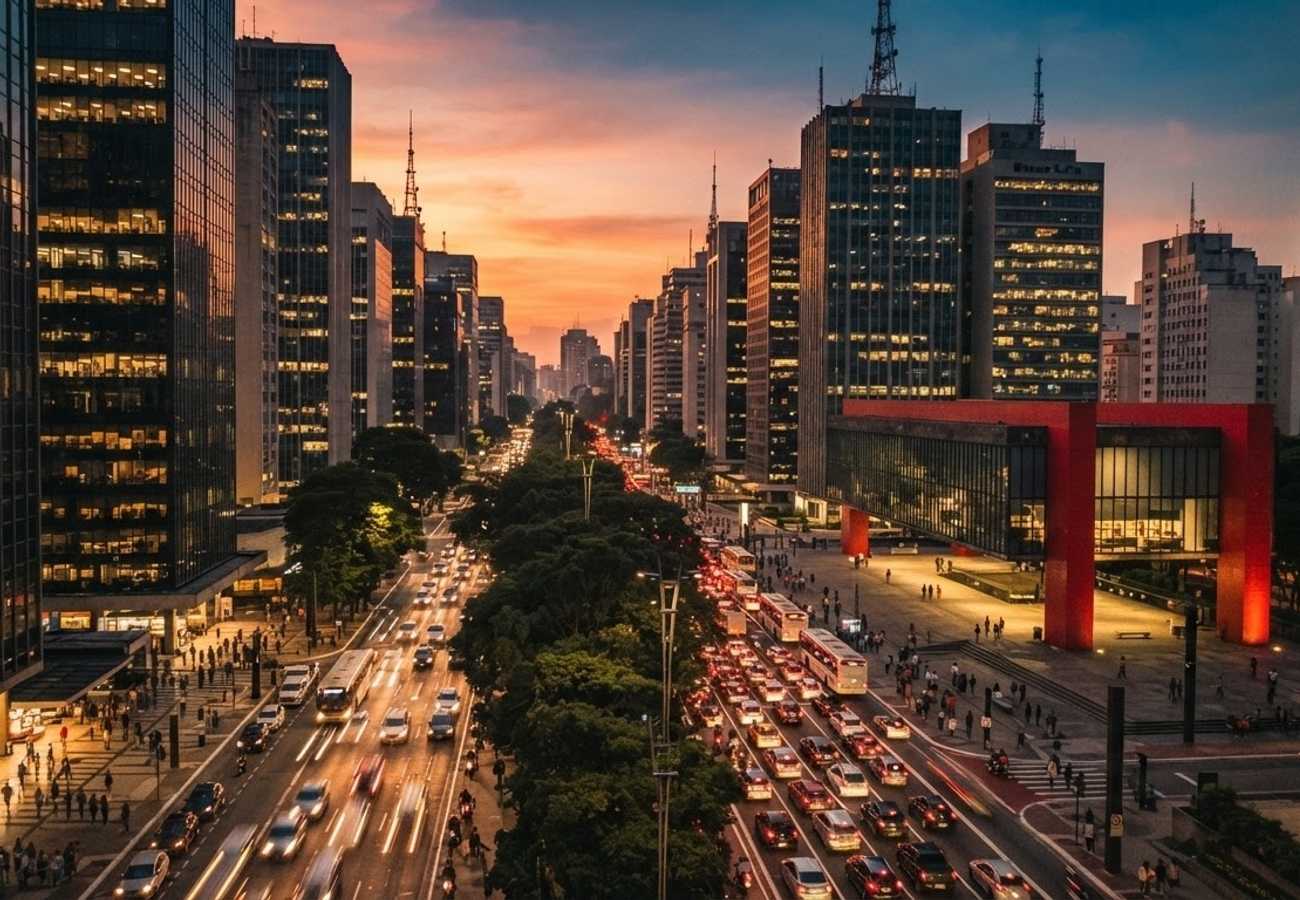
Image generated by AI
The 25 to 30-kilometer transit from Guarulhos International Airport (GRU) to Avenida Paulista is one of the most congested corridors in South America. Depending on the time of arrival, transit times fluctuate from 35 minutes to over 90 minutes.
The GRU to Paulista Avenue Corridor Analysis
Guarulhos International Airport serves as the primary gateway to São Paulo. For the majority of international business travelers, the destination is Avenida Paulista—the city's central financial and hotel hub. This area encompasses key landmarks such as the MASP museum and critical transit nodes including the Consolação and Trianon-Masp metro stations.
Our analysis of the corridor indicates that timing is the most critical variable for passengers. While a direct trip in light traffic averages 35 to 45 minutes, weekday rush hours (07:00–10:00 and 17:00–20:00) frequently extend travel times to 60–90 minutes due to severe bottlenecks on the main approach roads.
Depending on the arrival terminal and time of day, passengers should expect the following operational impacts:
- Route Distance: 25 to 30 kilometers.
- Peak Congestion Windows: 07:00–10:00 and 17:00–20:00.
- Primary Hubs: Terminal 3 (International), Terminal 2, and Terminal 1.
- Key Drop-off Zones: Consolação, Bela Vista, Paraíso, and Brigadeiro.
- Critical Transit Points: Line 13 Jade (Rail), Airport Bus Service counters, and official taxi stands.
Transport Option Comparison
Executive Airport Bus Service
The "Circuito dos Hotéis Paulista/Augusta" is an official premium coach service. It is designed for passengers with moderate luggage who require a predictable environment without the complexity of the metro.
- Route: Direct from GRU terminals to the Paulista/Augusta hotel circuit.
- Performance: 60 to 90+ minutes depending on traffic.
- Best For: Solo travelers avoiding surge pricing of ride-hailing apps.
Ride-Hailing and Licensed Taxis
For door-to-door delivery to hotels like the Renaissance São Paulo or Tivoli Mofarrej, private vehicles are the standard.
- Official Taxis: Available at dedicated stands with fixed or metered fares. These provide the highest level of security and authorization.
- Ride-Hailing (Uber/Similar): Offers flexibility and generally lower costs outside peak hours, though subject to demand-based surge pricing.
- Private Transfers: Recommended for corporate groups to simplify accounting and ensure meet-and-greet services in the arrivals hall.
Rail and Metro Integration
The most budget-friendly and time-predictable option during peak traffic is the rail network.
- The Connection: Passengers take a complimentary shuttle from the terminals to the Aeroporto-Guarulhos station.
- The Path: Line 13 Jade $\rightarrow$ Engenheiro Goulart $\rightarrow$ Line 12 Safira $\rightarrow$ Central Hubs (Brás/Luz) $\rightarrow$ Metro Lines (Blue/Green) $\rightarrow$ Paulista Avenue.
- Best For: Budget-conscious travelers or those arriving during peak rush hour who wish to bypass road traffic entirely.
Passenger Rights & Advisory
For the affected passenger arriving at GRU, navigating the transition to the city requires an understanding of local transport regulations and consumer rights.
Our analysis of the transit policy suggests the following for travelers:
- Fare Transparency: When using official airport taxis, always request a quote or verify the meter at the start of the journey. For ride-hailing, ensure the app reflects the final destination to avoid mid-trip price disputes.
- Security Protocols: We strongly advise using only official taxi stands or registered ride-hailing apps. Avoid "unsolicited" transport offers inside the terminal.
- Luggage Liability: When using the Airport Bus Service, ensure luggage is properly tagged. For rail travel, be aware that Line 13 Jade and the subsequent metro lines are not designed for oversized luggage, which may cause delays during boarding.
- Corporate Reimbursement: For those on business travel, official taxi receipts from the airport desks are generally more widely accepted for corporate audits than fragmented app receipts.
The reliance on the Line 13 Jade rail link represents a strategic shift in São Paulo's urban mobility. However, the "last mile" problem remains significant. The transition from the rail network to the Paulista plateau still requires a secondary transfer or a short taxi ride, meaning the time saved on the road is often partially offset by the complexity of the transfer. For the high-net-worth business traveler, the premium on private transfers is not just for comfort, but for the mitigation of "transit friction" in a city known for unpredictable traffic volatility.
Navigating São Paulo requires a balance of patience and precise timing.
Related Travel Guides
Disclaimer
This article is for informational and educational purposes only. It does not constitute legal, financial, or professional advice. While we strive to provide accurate and up-to-date information, travel policies, regulations, and conditions change rapidly. Always verify information with official sources before making travel decisions. Nomad Lawyer makes no representations about the accuracy, reliability, completeness, or suitability of the information provided. Readers should consult qualified professionals for advice specific to their circumstances. The views expressed in this article are those of the author and do not necessarily reflect the views of Nomad Lawyer.