
Guam Airfares Drop as South Korean Fuel Surcharges Ease for 2026 Winter Travel
Reduced jet fuel surcharges on South Korean routes are lowering total airfares to Guam, boosting the territory's primary tourism market for the 2026 season.

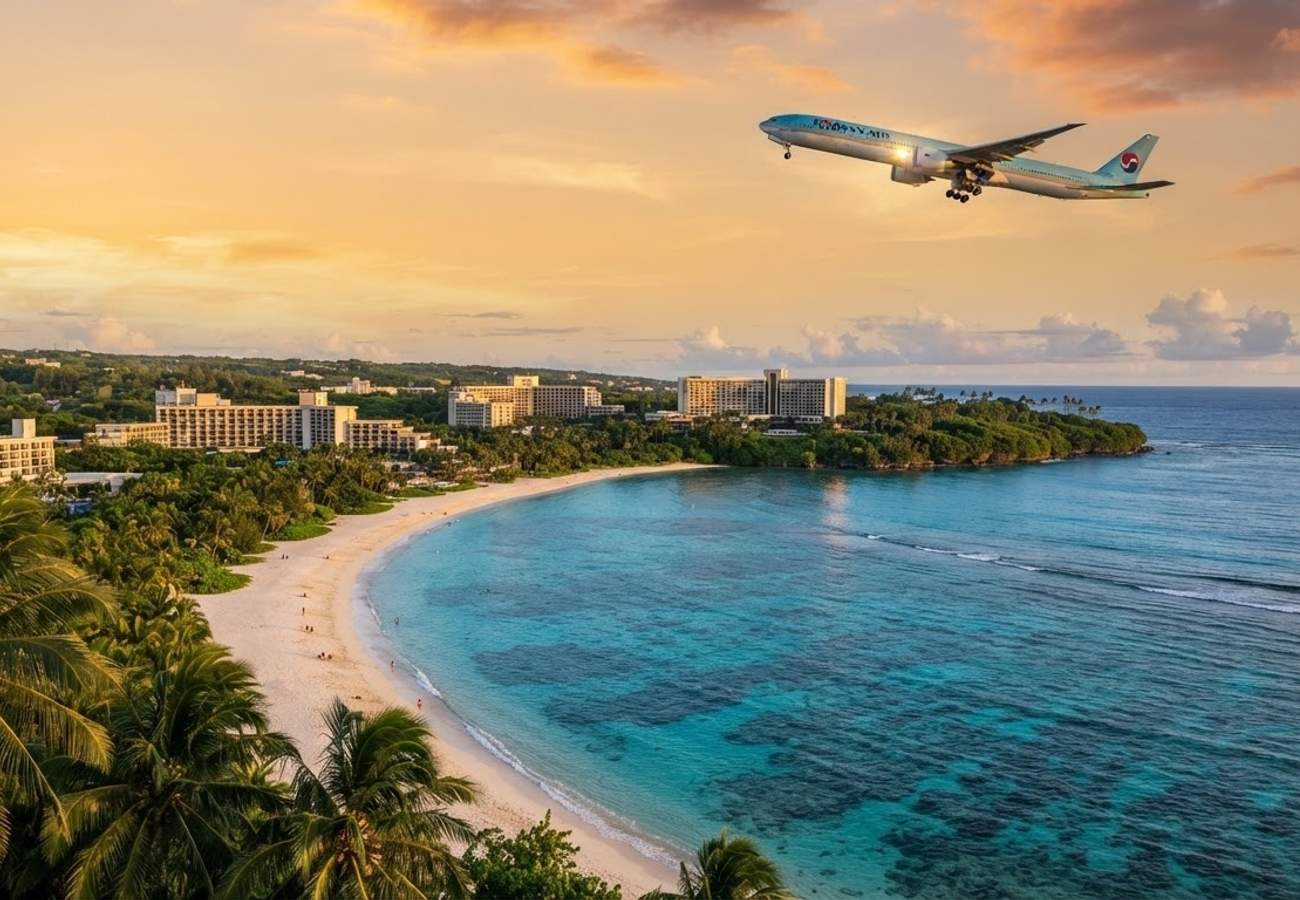
Image generated by AI
Lower jet fuel surcharges on South Korean routes are trimming total airfares to Guam, providing a critical catalyst for the U.S. territory's tourism recovery.
Aviation Cost Analysis: Fuel Surcharges and Fare Impact
The cost of travel between South Korea and Guam is experiencing a downward trend as international fuel surcharges, which peaked in early 2026, begin to moderate. Our analysis of current pricing structures indicates that these surcharges—calculated separately from base fares—are now filtering into lower advertised headline prices.
Korean Air’s 2026 published tables confirm a step-down in surcharge levels for several international routes. Because these fees fluctuate based on global oil prices and airline policy, their reduction allows carriers to offer more aggressive discounting on medium-haul leisure routes, specifically the Incheon–Guam corridor.
Flight tracking and fare data from August 2026 reveal a surge in promotional seating and discounted packages from both full-service and low-cost carriers. Travel agencies in Seoul and Busan are currently advertising package rates that undercut the peak levels seen in 2025, specifically targeting the winter and spring getaway markets.
Tourism Dependency and Market Data
Guam remains heavily reliant on the South Korean market for its economic stability. Data from the Guam Visitors Bureau and regional hospitality groups highlight the scale of this dependency:
- Market Share: In 2025, South Korea accounted for approximately 48.7 percent of all visitor arrivals to Guam.
- Regional Dominance: Together with Japan, South Korea represents nearly four-fifths of the island's total arrivals.
- Growth Trends: Late 2025 statistics showed double-digit percentage increases in Korean arrivals during November and December.
- Economic Impact: Tourism contributed roughly 1.4 billion dollars to the Guam economy in 2024.
The moderation of fuel surcharges is viewed by industry analysts as a pivotal factor in regaining competitiveness against regional rivals such as Okinawa, Saipan, the Philippines, and various Southeast Asian destinations.
Capacity Expansion and Strategic Repositioning
The drop in costs coincides with a significant increase in air seat capacity. According to Guam Visitors Bureau board materials, seat capacity from Korea was projected to reach:
- July 2025: Over 50,000 seats
- August 2025: Over 60,000 seats
This expanded capacity, combined with a multi-million dollar marketing budget and incentive funds for carriers, has resulted in a "breakout year." Official arrival summaries through July 2026 confirm that air arrivals rose by more than 40 percent year-on-year during certain peak months.
Guam is also shifting its strategic focus. Policy papers from the Bureau of Statistics and Plans indicate a move away from high-volume group tours toward "free independent travelers." This strategy prioritizes higher-value experiences, including:
- Development of hiking trails and heritage sites.
- Promotion of maritime activities and traditional sailing.
- Focus on safety, cleanliness, and authentic local experiences in the Tumon district.
Passenger Rights & Advisory: Navigating Fare Changes
For passengers booking travel between South Korea and Guam in 2026, the current volatility in fuel surcharges creates specific consumer considerations.
Understanding the "All-In" Price Our analysis of aviation pricing suggests that passengers should distinguish between the "base fare" and the "fuel surcharge." If a ticket is booked during a surcharge peak and the airline later lowers these fees, passengers may be entitled to a fare difference depending on the ticket class (Economy Flexible vs. Basic).
Rebooking and Compensation Rights For those traveling on carriers subject to specific jurisdictions:
- Refunds: If an airline cancels a flight due to capacity adjustments during this "breakout year," passengers are entitled to a full refund or re-routing to their destination at no extra cost.
- Fare Drops: For non-refundable tickets, we recommend checking the "Fare Difference" policy. Some carriers allow a one-time change to a lower fare minus a change fee, which may still be cheaper than the original high-surcharge ticket.
- Bundled Packages: Passengers booking through Seoul or Busan agencies should ensure that the "lower fuel surcharge" is explicitly reflected in the final contract, rather than listed as a "potential discount."
Price relief is now the primary engine driving Guam's return to pre-pandemic tourism benchmarks.
Related Travel Guides
Disclaimer
This article is for informational and educational purposes only. It does not constitute legal, financial, or professional advice. While we strive to provide accurate and up-to-date information, travel policies, regulations, and conditions change rapidly. Always verify information with official sources before making travel decisions. Nomad Lawyer makes no representations about the accuracy, reliability, completeness, or suitability of the information provided. Readers should consult qualified professionals for advice specific to their circumstances. The views expressed in this article are those of the author and do not necessarily reflect the views of Nomad Lawyer.
Preeti Gunjan
Contributor & Community Manager
A passionate traveller and community builder. Preeti helps grow the Nomad Lawyer community, fostering engagement and bringing the reader experience to life.
Learn more about our team →