
Greenland Travel Enters a New Arctic Chapter as Nuuk and Ilulissat Airports Transform Remote Adventures
Greenland Travel Enters a New Arctic Chapter as Nuuk and Ilulissat Airports Transform Remote Adventures

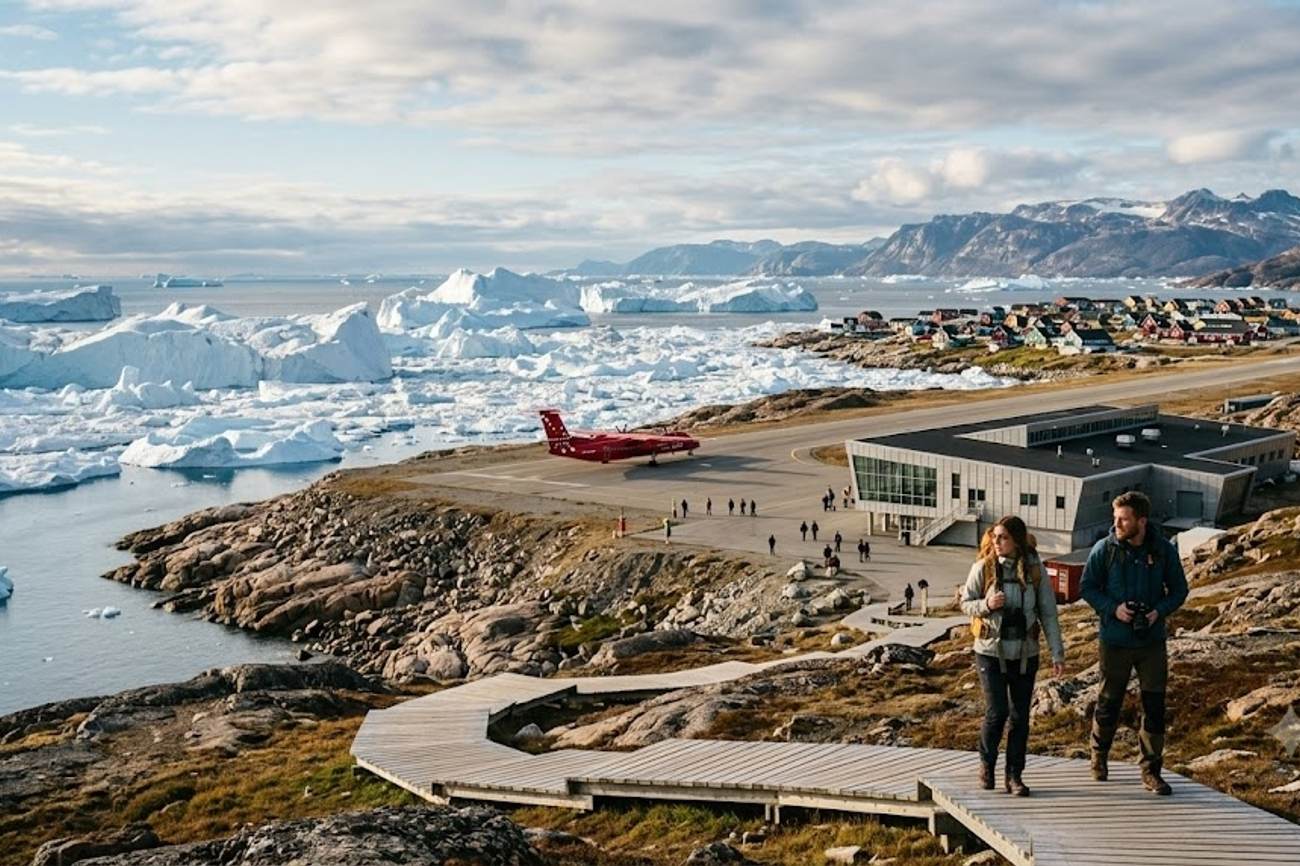
Image generated by AI
City: Nuuk, Date: May 2024 — Greenland is fundamentally restructuring its tourism economy by pivoting from a cruise-dependent model to an aviation-led strategy centered on high-value, long-stay visitors. The transition is anchored by massive infrastructure investments in the capital, Nuuk, and the wilderness hub of Ilulissat, aimed at breaking the geographical isolation that has historically limited the territory to short-term expedition visits.
The shift is driven by the government's desire to move away from "observation-based" tourism—where passengers view glaciers from the decks of ships—toward immersive land-based experiences. By expanding international airport capacities, Greenland aims to attract independent travelers and premium adventure seekers who spend more per capita within local communities than traditional cruise passengers.
The Infrastructure Catalyst
The primary driver of this transformation is the overhaul of Greenland's aviation gateways. For decades, the territory relied on a fragmented network of seasonal flights and complex connections that made independent travel nearly impossible for the average tourist. The development of a modern international airport in Nuuk serves as the linchpin for this new era, transforming the capital from a mere administrative center into a global entry point.
By establishing a reliable international hub, the Government of Greenland is enabling a new category of "fly-cruise" itineraries. These packages allow travelers to fly directly into the country and combine urban cultural stays in Nuuk with expedition cruises, rather than relying on ships to provide both transport and accommodation. This structural change reduces the operational risks for tour operators and provides travelers with greater flexibility in their scheduling.
Simultaneously, Ilulissat is being positioned as the epicenter of Arctic adventure. As the gateway to the Ilulissat Icefjord—a designated UNESCO World Heritage Site—the city is receiving targeted aviation upgrades. The goal is to convert Ilulissat from a brief stopover into a primary destination where visitors engage in extended hiking, sailing, and wildlife excursions.
Market Impact and Visitor Demographics
The economic scale of this shift is reflected in recent data from Visit Greenland’s first Tourism Satellite Account. In 2024, the tourism sector generated DKK 1.245 billion in total value, accounting for 4.9% of Greenland’s national GDP and supporting roughly 1,800 direct jobs.
The current visitor breakdown highlights the reliance on maritime travel, but also the growth potential for aviation:
| Visitor Category | 2024 Passenger Count | Primary Impact Type |
|---|---|---|
| Cruise Tourists | 95,000 | Short-term, high-volume, limited local spend |
| Air Travelers | 54,000 | Long-term, lower-volume, high local spend |
| Total Visitors | 149,000 | Shift toward "Value over Volume" |
The strategic objective is to increase the proportion of air travelers. While cruise ships bring more people, air travelers utilize hotels, dine in local restaurants, and hire regional guides, ensuring that a larger percentage of tourism revenue remains within the Greenlandic economy.
Practical Traveler Advisory and Strategic Insights
For the modern traveler, the "New Greenland" means the end of the "expedition-only" era. The barrier to entry is lowering, but the nature of the experience is becoming more sophisticated.
1. Greater Flexibility: Travelers no longer need to commit to a rigid 14-day cruise itinerary to see the Arctic. The new airport infrastructure allows for "modular" trips—for example, three days of urban exploration in Nuuk followed by a flight to Ilulissat for a week of glacier trekking.
2. Higher Cost of Entry: The focus on "high-value" tourism suggests a move toward premium pricing. While access is easier, the experiences being promoted—luxury Arctic packages and private guided expeditions—are targeted at a higher spending bracket.
3. Extended Seasons: The push for year-round infrastructure means that the "Arctic window" is widening. Travelers may soon find more viable options for visiting outside the peak summer months, though winter travel remains highly specialized.
4. Direct Local Engagement: With more land-based stays, visitors will have more opportunities for authentic cultural encounters with Greenlandic residents, moving beyond the curated shore excursions typical of large cruise ships.
The Sustainability Tightrope
Increased accessibility brings significant environmental and social risks. The Greenlandic government is now tasked with balancing economic growth against the preservation of some of the world's most fragile ecosystems. The "value over volume" strategy is specifically designed to prevent the "over-tourism" seen in other Arctic and Alpine destinations.
The challenge lies in managing local capacity. Small towns like Ilulissat are not built for massive influxes of land-based tourists. Consequently, the Visit Greenland strategy emphasizes sustainable planning, ensuring that new hotel and transport capacities grow in lockstep with airport arrivals to avoid straining local resources.
Furthermore, the transition seeks to reduce the environmental pressure caused by massive cruise ships. By encouraging smaller-scale, high-impact visits, the territory hopes to maintain its status as an exclusive, pristine wilderness while still extracting the necessary economic value to support its population.
Future Roadmap for Arctic Travel
The next phase of development will likely see a proliferation of boutique hospitality options in Nuuk and Ilulissat. As the airports stabilize, international carriers are expected to evaluate more frequent routes, potentially reducing the reliance on transit hubs in Denmark or Iceland.
For travel agents and operators, the "product" of Greenland is changing. It is evolving from a "bucket list" checkbox—where a passenger simply sees a glacier from a balcony—into a structured destination with a diverse array of land-based activities. The integration of aviation and maritime transport will create a hybrid travel market, where the "fly-cruise" model becomes the standard for premium Arctic exploration.
FAQ: Greenland Travel 2024-2025
Do I still need to take a cruise to see the glaciers? No. With improved airport infrastructure in Nuuk and Ilulissat, travelers can now fly directly into the territory and book land-based glacier tours, boat excursions, and hiking trips without committing to a full cruise itinerary.
How has the cost of visiting Greenland changed? While flights are becoming more accessible, the government is pivoting toward "high-value" tourism. This means a shift toward premium, immersive experiences which may result in higher average costs for accommodation and guided activities.
Which cities are the best entry points for independent travelers? Nuuk is the primary international gateway for urban culture and regional connectivity. Ilulissat is the essential hub for those seeking wilderness experiences, specifically the UNESCO-listed Icefjord.
Is Greenland open for travel year-round? While the government is working to extend the tourism season, the majority of infrastructure and activities are still concentrated in the summer months. Winter travel is possible but requires specialized planning and equipment.
The Arctic is opening up, but the price of admission is a commitment to sustainable, high-value exploration.
Related Travel Guides
Disclaimer
This article is for informational and educational purposes only. It does not constitute legal, financial, or professional advice. While we strive to provide accurate and up-to-date information, travel policies, regulations, and conditions change rapidly. Always verify information with official sources before making travel decisions. Nomad Lawyer makes no representations about the accuracy, reliability, completeness, or suitability of the information provided. Readers should consult qualified professionals for advice specific to their circumstances. The views expressed in this article are those of the author and do not necessarily reflect the views of Nomad Lawyer.
Preeti Gunjan
Contributor & Community Manager
A passionate traveller and community builder. Preeti helps grow the Nomad Lawyer community, fostering engagement and bringing the reader experience to life.
Learn more about our team →