
Greenland Joins Norway and Other Leading Destinations as HX Broadens Expedition Tourism for 2028–2029
Greenland Joins Norway and Other Leading Destinations as HX Broadens Expedition Tourism for 2028–2029

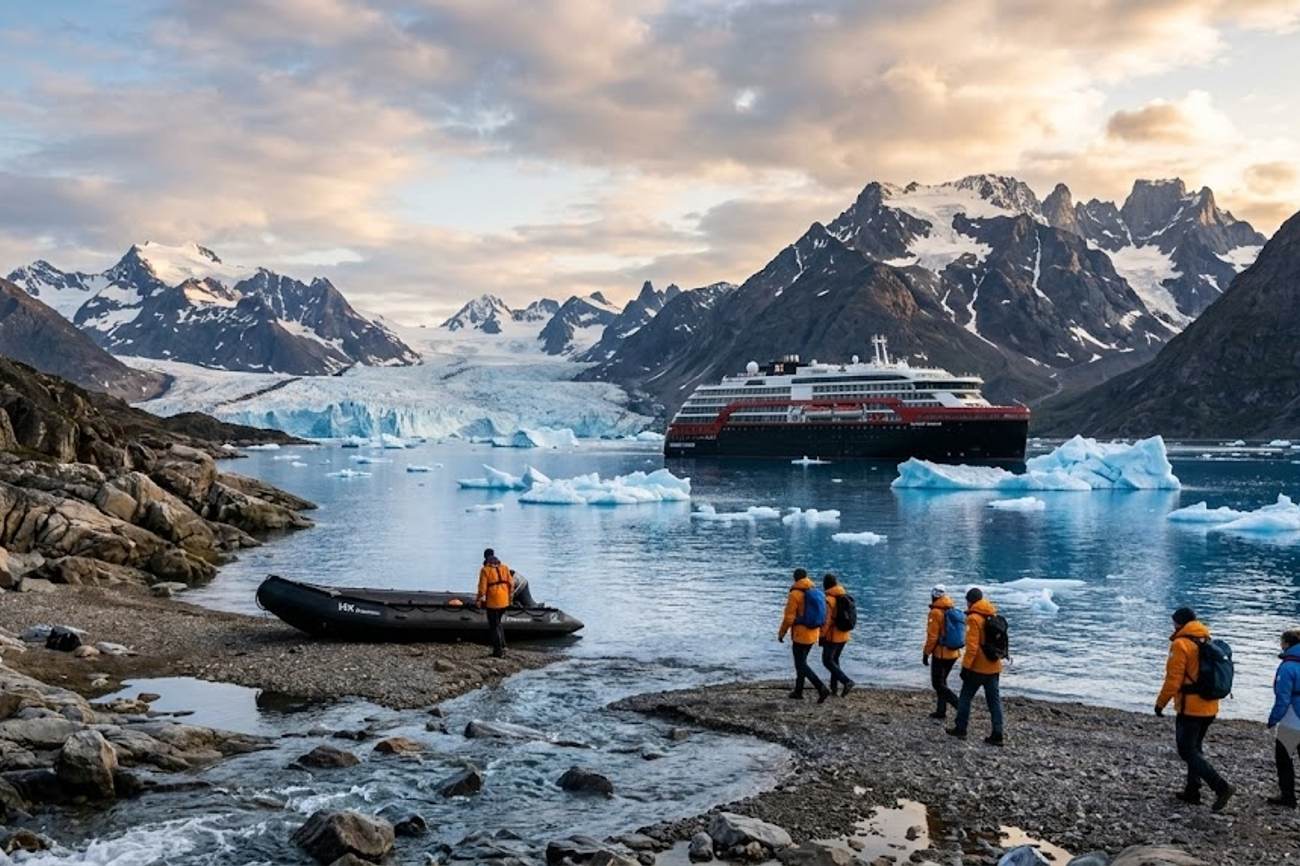
Image generated by AI
[Nuuk, October 2024] — HX has unveiled an aggressive expansion of its 2028–2029 expedition cruise programme, introducing shorter, high-frequency itineraries to Greenland, Southeast Alaska, and Scandinavia to capture a surging demand for remote, nature-based travel.
The new strategic rollout pivots away from traditional high-volume cruise hubs, focusing instead on coastal communities, wildlife habitats, and unspoiled Arctic environments. The expansion includes the launch of eight-day voyages in West Greenland and Southeast Alaska, alongside a broadened Scandinavian footprint covering Norway, Sweden, the Baltic Sea, and the Gulf of Bothnia. To drive early adoption for these 2028–2029 dates, HX is offering immediate booking incentives, including a 10% price reduction on suites and a 5% discount on standard cabins.
The Shift Toward Short-Form Expeditioning
The immediate driver for this expansion is a documented shift in consumer behavior toward "experience-based" travel. Travelers are increasingly seeking the prestige and environmental immersion of expedition cruising but are opting for shorter timeframes rather than month-long voyages. By introducing eight-day modules, HX is lowering the barrier to entry for Arctic and Alaskan exploration.
This move coincides with a significant spike in Arctic accessibility. In Greenland, the trend is already evident in the data provided by Statistics Greenland, which shows a sharp rise in maritime arrivals. Cruise-passenger port visits jumped from 181,406 in 2024 to 213,674 in 2025. Simultaneously, land-based tourism is climbing, with overnight stays increasing from 346,173 in 2024 to 396,846 in 2025.
Regional Impact and Route Specifications
The 2028–2029 programme distributes its operational focus across four primary remote markets. The following table outlines the specific regional developments:
| Destination | Primary Development | Passenger Relevance |
|---|---|---|
| Greenland | New 8-day West Greenland route | Shorter Arctic window; focus on Ilulissat Icefjord, Disko Island, and Eternity Fjord |
| United States | New 8-day Southeast Alaska routes | Northbound and southbound options focusing on wildlife and local communities |
| Norway/Sweden | Baltic Sea & Gulf of Bothnia expansion | New Scandinavian geography; integration of Swedish west-coast itineraries |
| Svalbard | Extended operating season | 22 scheduled departures for the 2028 season |
The Scandinavian expansion leverages a booming Norwegian tourism sector. According to Statistics Norway, the country recorded 40.6 million commercial guest nights in 2025, a 5.2% increase over 2024. International demand is growing even faster, with foreign guest nights rising 14% to reach 14.2 million in 2025. This infrastructure provides a stable launchpad for HX to push further into the remote fjords and Arctic gateways.
Practical Traveler Advisory and Strategic Insights
For the modern nomad or luxury traveler, this announcement signals a democratization of expedition cruising. Previously, visiting sites like the Ilulissat Icefjord or the remote coasts of Svalbard required significant time investments and high-cost, long-duration bookings.
Plain-Language Impact:
- Lower Time Commitment: You can now experience "bucket list" Arctic destinations in 8 days rather than 2-3 weeks.
- More Entry Points: The addition of the Baltic Sea and Gulf of Bothnia means more departure options for European-based travelers.
- Cost Incentives: Early booking for the 2028–2029 season provides a direct 5-10% discount depending on the cabin class.
- Avoidance of Crowds: By targeting "smaller destinations" over "high-volume ports," travelers are less likely to encounter the cruise-ship congestion typical of Caribbean or Mediterranean routes.
The Economic Engine of Arctic Tourism
The expansion is not merely a corporate growth strategy but a response to the economic realities of the regions involved. In Greenland, tourism has evolved into a primary economic pillar. In 2024, the first Tourism Satellite Account revealed that tourism directly generated DKK1.245 billion in value, accounting for 4.9% of Greenland's total GDP.
This sector supports approximately 1,800 direct jobs. While the total number of international tourists in 2024 was estimated at 149,000, the composition of these visitors is critical. Of those, roughly 95,000 were cruise passengers, with 19,000 specifically categorized as expedition cruise visitors. The distinction is vital because expedition travelers typically spend more in local communities and visit less-developed areas, distributing wealth beyond the primary port cities.
Future Timeline and Arctic Windows
The 2028–2029 season is designed to maximize the "Arctic window"—the period when ice conditions allow for safe navigation. The most significant change is the extension of the Svalbard season, with 22 departures planned to ensure coverage across different stages of the Arctic summer and autumn.
HX has expanded its 2028–2029 expedition itinerary to include Greenland, focusing on remote coastal exploration and sustainable tourism. Travelers planning these voyages can find essential entry requirements and regional travel advisories through Visit Greenland, the official tourism organization.
Looking toward 2026 and beyond, the data suggests a continuing upward trajectory. In July 2026 alone, Norway recorded 8.11 million total guest nights, with 7.76 million occurring at commercial establishments. The Vestland region specifically saw over 1.2 million commercial guest nights in that single month, proving that the appetite for the Norwegian coast remains insatiable.
As HX implements these routes, the focus will remain on "nature-based" travel. This involves a tighter integration with local environmental guidelines and a reliance on smaller-scale port infrastructure to ensure that the increase in passenger volume does not degrade the "unspoiled" nature of the destinations.
FAQ: HX Arctic Expeditions 2028–2029
How long are the new Greenland and Alaska cruises? Both West Greenland and Southeast Alaska now feature streamlined eight-day itineraries, designed for travelers who cannot commit to longer expedition voyages.
What are the early booking discounts for 2028–2029? HX is offering a 5% reduction on standard cabins and a 10% reduction on suites for passengers booking these specific expedition routes early.
Which specific sites in Greenland will be visited? The new West Greenland route prioritizes the Ilulissat Icefjord, Disko Island, and Eternity Fjord.
How does the Svalbard program differ from previous years? The 2028 program features a longer operating season with 22 scheduled departures, providing a wider window for Arctic exploration.
The Arctic is opening up, and the clock is ticking for early-bird pricing.
Related Travel Guides
Disclaimer
This article is for informational and educational purposes only. It does not constitute legal, financial, or professional advice. While we strive to provide accurate and up-to-date information, travel policies, regulations, and conditions change rapidly. Always verify information with official sources before making travel decisions. Nomad Lawyer makes no representations about the accuracy, reliability, completeness, or suitability of the information provided. Readers should consult qualified professionals for advice specific to their circumstances. The views expressed in this article are those of the author and do not necessarily reflect the views of Nomad Lawyer.
Kunal K Choudhary
Co-Founder & Contributor
A passionate traveller and tech enthusiast. Kunal contributes to the vision and growth of Nomad Lawyer, bringing fresh perspectives and driving the community forward.
Learn more about our team →