
Greece Experiences a Stealth Economic Crisis as Middle East Conflict Drives Energy Inflation, Surging Ferry and Airfare Costs, and Shifting Tourism Flows Across the Eastern Mediterranean: Latest Update
A stealth economic crisis in Greece has been triggered by Middle East tensions, driving up domestic ferry fares, airfares, and energy inflation.

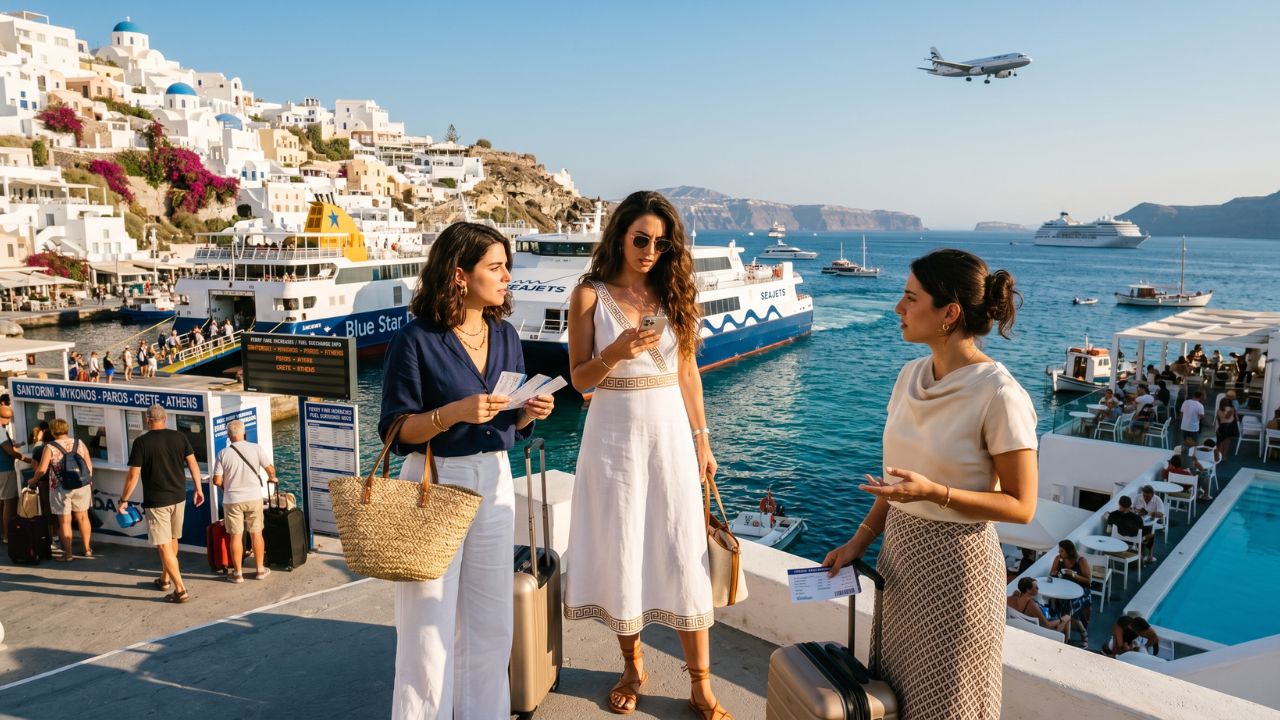
Image generated by AI
Published on June 19, 2026
A widening Middle East conflict is triggering a stealth economic crisis in Greece, sending powerful economic shockwaves into the nation's vital tourism and transportation sectors. While Greek islands remain physically safe and open for business, escalating regional tensions have driven global oil prices past $100 per barrel, leading to double-digit increases in domestic petrol prices, ferry ticket rates, and international airfare. To manage these surging travel expenses, visitors planning trips across the Eastern Mediterranean must budget for higher transport fees and monitor shifting airline routing schedules.
Quick Summary
- Stealth Economic Impact: While Greece is not in direct conflict, Middle Eastern tensions are triggering a stealth economic crisis via energy inflation and shipping disruptions.
- Energy Cost Surge: Global oil benchmarks have exceeded $100 per barrel, forcing double-digit spikes in Greek petrol prices and electricity costs.
- Rising Transit Fees: Travelers face higher airfare pricing and increased domestic ferry ticket costs to access popular Greek islands.
- Maritime Rerouting: Instability in the Suez Canal and Strait of Hormuz forces container shipping to divert around the Cape of Good Hope, raising freight costs.
- Tourism Redistribution: Greece is experiencing an influx of redirected bookings from closer-to-conflict zones like Cyprus, though cruise arrivals are projected to fall by 10% in 2026.
Underneath Greece's stable tourism surface, a gradual accumulation of cost pressures is reshaping local commerce and traveler behavior. While airports and island resorts continue to operate at capacity, the broader regional geopolitical instability acts as a cost multiplier across energy markets, transit links, and logistics systems. According to the International Energy Agency (IEA), global fuel price volatility is directly impacting domestic electricity grids and commercial transport networks, forcing Greek businesses to adapt to rising operational costs.
Event/Incident Details: Regional Geopolitical Instability and Economic Shockwaves
The economic ripple effects affecting Greece are tied to a wide geopolitical network across the Middle East. The escalating tensions involve multiple regional powers and key trade hubs, including:
- Israel
- Lebanon
- United Arab Emirates
- Qatar
- Saudi Arabia
- Kuwait
- Oman
- Iran
- Iraq
- Syria
- Jordan
- Egypt (impacting Suez Canal shipping)
These nations control vital transit corridors and oil production resources, meaning that any escalation of regional instability has an immediate effect on global shipping rates and energy imports. In Greece, this instability has led to double-digit increases in petrol prices and electricity generation costs. Furthermore, cruise operators are re-routing itineraries, leading to a projected 10% decline in Greek cruise arrivals for the year 2026.
The table below outlines how geopolitical transmission channels are impacting Greece's tourism and logistics sectors:
| Economic Sector | Geopolitical Transmission Channel | Specific Impact in Greece | Consequence for Travelers |
|---|---|---|---|
| Aviation and Airlines | Rising fuel prices and airspace re-routing | Higher jet fuel costs and insurance premiums | Increased airfare pricing on international routes |
| Maritime Shipping | Suez Canal and Strait of Hormuz disruptions | Ships divert around the Cape of Good Hope | Long-term supply chain delays and retail price hikes |
| Island Ferry Networks | Surging maritime fuel prices | Ferry operators raise passenger ticket costs | Increased holiday expenses to access Greek islands |
| Cruise Industry | Regional security concerns and re-routings | Cruise itineraries shifted away from the Levant | A projected 10% decline in Greek cruise arrivals |
| Domestic Infrastructure | Rising imported oil and gas costs | Elevated petrol prices and electricity tariffs | Higher cost of local lodging, food, and transport |
Risk/Impact: Energy Inflation, Shipping Bottlenecks, and Maritime Instability
The primary threat of the conflict is a layered economic squeeze that spreads gradually through the supply chain. Because Greece is highly dependent on external energy supplies, the rising price of crude oil has created immediate cost pressures.
The key risks and disruptions affecting Greece and its visitors include:
- Escalating Fuel Costs: Increased prices for petrol, diesel, and aviation fuel drive up the cost of road transport, taxis, flights, and freight logistics.
- Maritime Shipping Delays: Delays at major checkpoints like the Suez Canal force ships to detour around Africa, increasing travel distance by thousands of miles, raising fuel consumption, and inflating insurance premiums.
- Ferry Ticket Fare Hikes: Domestic ferry services, which are critical for island connectivity, have adjusted fares upward, making island-hopping trips more expensive.
- Aviation Rate Hikes: International airlines must navigate route adjustments, high insurance fees, and expensive fuel, passing these costs onto travelers through dynamically adjusted ticket prices.
- Broad Inflation Spillover: Higher transport fees and supply chain bottlenecks gradually drive up hospitality service expenses, food prices, and hotel operational costs.
What Authorities Are Saying: Economic Revisions and Travel Industry Perspectives
In response to the shifting economic landscape, government analysts have adjusted their growth forecasts slightly downward. According to reports released by the Ministry of Tourism of Greece, international arrival numbers remain strong, indicating the brand resilience of Greek destinations, but underlying operational cost pressures remain a key concern.
Travel operators have noted that while tourists from Europe and North America are still visiting in large numbers, the composition of tourism spending is changing. High-spending international segments are partially being replaced by European travelers who have shorter booking windows and smaller budgets. Financial experts warn that while the surface remains calm, long-term competitiveness will depend on stabilizing energy costs.
Practical Traveler Advice: Navigating a Stealth Economic Crisis as a Tourist in Greece
Travelers visiting Greece during this period of economic adjustment can manage their expenses using the following strategies:
- Book Ferry and Flight Tickets Early: Secure your domestic island-hopping transit in advance to avoid peak-season fare adjustments.
- Budget for Transport Surcharges: Factor in higher local taxi fares, public transport rates, and car rental costs when planning your budget.
- Monitor Cruise Itinerary Changes: If you are booking a Mediterranean cruise, coordinate with your provider to check if any ports of call have been modified.
- Compare Island Accommodations: Focus on destinations with established local supply chains, as remote islands experience higher relative inflation due to shipping distances.
- Lock in Packages to Mitigate Inflation: Consider booking all-inclusive packages to protect yourself from dynamic price hikes during your stay.
- Expect Slower Retail and Import Delivery: Keep in mind that imported goods and logistics services may face slight delays due to shipping detours.
Broader Context: Strategic Maritime Vulnerabilities and the Stealth Economic Crisis
Greece's position as a leading global maritime nation makes it particularly vulnerable to disruptions in shipping lanes. The Suez Canal handles a major share of container traffic heading toward Europe, while the Strait of Hormuz is the primary channel for global oil shipments.
Disruptions in these pathways force cargo fleets to navigate around the Cape of Good Hope, adding days to their voyages and increasing global shipping costs. This maritime instability has also caused a redistribution of tourism within the Eastern Mediterranean. While travelers avoid higher-risk destinations close to the conflict zone, they are redirecting bookings to Greece. Conversely, neighboring Cyprus has seen softer forward bookings due to its geographical proximity to the Levant, creating a regional tourism imbalance.
What to Expect Next / Looking Ahead: Market Rebalancing and Regulatory Adjustments
In the coming months, the Greek tourism sector is expected to adjust to the new pricing environment. The Greek Ministry of Maritime Affairs and Insular Policy is monitoring ferry fuel surcharges and may introduce targeted subsidies to protect island supply lines and keep ticket prices stable.
Additionally, cruise operators will continue to adjust their Mediterranean routes for 2026, focusing on western and central Mediterranean ports to bypass the eastern conflict zone. Travelers should prepare for persistent inflation across the service and hospitality sectors as businesses pass on energy and transport costs. Ultimately, Greece's recovery will depend on the stability of global energy markets and the resolution of maritime corridors.
Conclusion
The impacts of the Middle East conflict demonstrate how global geopolitical events can trigger a stealth economic crisis in stable travel destinations. While Greece remains safe and welcoming, the rising costs of energy, ferry tickets, and airfares are reshaping the traveler experience. By planning ahead and adjusting budgets, visitors can still experience the beauty of the Greek islands during this economic transition.
Related Travel Guides
- European Border Authorities Suspend Biometric Scans at Amsterdam, Frankfurt, London Gatwick, and Brussels to Rescue Millions of Tourists from EES Summer Gridlock: New Travel Alert
- Thailand and Southeast Asian Nations Issue Urgent Weather Warnings as an Active Southwest Monsoon Triggers Heavy Rain, Thunderstorms, and Rough Seas: New Travel Alert
- The 10 Best Budget Tips for Greek Island Hopping in 2026, According to Reddit
FAQ: Greece Stealth Economic Crisis and Middle East Geopolitical Impact
What is the "stealth economic crisis" in Greece?
It refers to the gradual accumulation of cost pressures—including energy inflation, rising fuel costs, higher ferry ticket prices, and increased airfares—driven by geopolitical tensions in the Middle East.
How are Greek ferry ticket costs affected?
Ferry operators have raised ticket prices because surging maritime fuel costs have increased the expense of operating island transit networks.
Why is the cruise industry in Greece experiencing a slowdown?
Greek cruise arrivals are projected to fall by nearly 10% in 2026 due to re-routing of Mediterranean itineraries away from Levant zones and reduced participation from high-spending long-haul markets.
How does the shipping disruption in the Suez Canal impact Greece?
Disruptions force container fleets to divert around the Cape of Good Hope, resulting in higher fuel consumption, longer delivery times, increased shipping insurance, and supply chain delays.
Is it safe to travel to Greece?
Yes. Greece is physically safe, and its islands, airports, and hotels remain fully operational. The crisis is purely economic, affecting travel costs and service pricing.
Disclaimer
This article is for informational and educational purposes only. It does not constitute legal, financial, or professional advice. While we strive to provide accurate and up-to-date information, travel policies, regulations, and conditions change rapidly. Always verify information with official sources before making travel decisions. Nomad Lawyer makes no representations about the accuracy, reliability, completeness, or suitability of the information provided. Readers should consult qualified professionals for advice specific to their circumstances. The views expressed in this article are those of the author and do not necessarily reflect the views of Nomad Lawyer.
Kunal K Choudhary
Co-Founder & Contributor
A passionate traveller and tech enthusiast. Kunal contributes to the vision and growth of Nomad Lawyer, bringing fresh perspectives and driving the community forward.
Learn more about our team →