
European Border Authorities Suspend Biometric Scans at Amsterdam, Frankfurt, London Gatwick, and Brussels to Rescue Millions of Tourists from EES Summer Gridlock: New Travel Alert
To prevent a severe EES summer gridlock, European airports at Amsterdam, Frankfurt, Gatwick, and Brussels have paused biometric scans for manual checks.

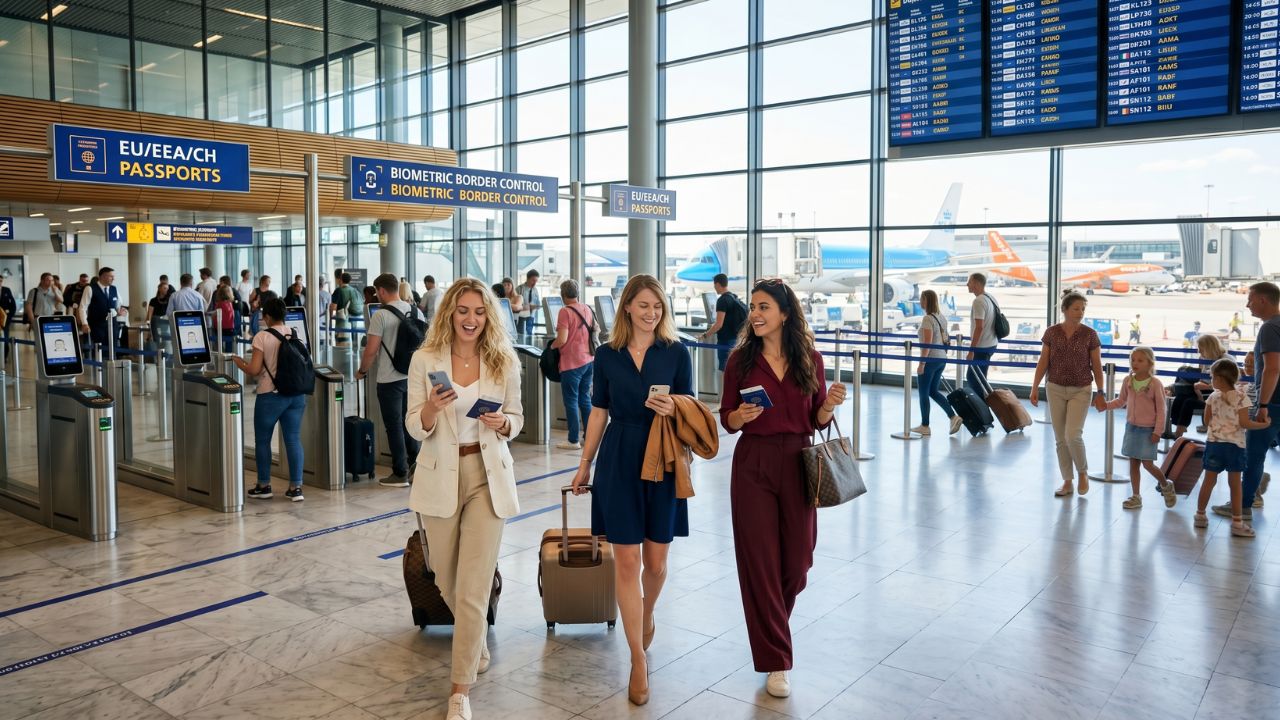
Image generated by AI
Published on June 19, 2026
To prevent millions of international tourists from being trapped in an unprecedented EES summer gridlock, European border control authorities have systematically paused mandatory biometric scans at key aviation hubs. Amsterdam Schiphol, Frankfurt, London Gatwick, and Brussels airports have activated emergency contingency provisions to bypass digital kiosks and transition to rapid manual checks. Holidaymakers traveling through these major transit corridors should prepare for changing border rules but can expect improved passenger flows as authorities prioritize safety and crowd management.
Quick Summary
- Biometric Checks Paused: European border forces have suspended fingerprint and facial biometric scans at major airports to combat the EES summer gridlock.
- Contingency Activated: Emergency operational frameworks at Amsterdam, Frankfurt, London Gatwick, and Brussels allow visual checks when queues exceed acceptable limits.
- Severe Delays Avoided: Bypassing the automated entry kiosks has restored safe passenger flows and prevented catastrophic terminal overcrowding.
- Systemic Vulnerabilities: System bottlenecks were triggered by language barriers, smudged camera lenses, network latencies, and high registration times.
- Wider Industry Relief: The pause reduces aircraft turnaround delays, protects airport retail sales, syncs baggage handling, and prevents medical/claustrophobic emergencies.
The landscape of European travel is undergoing significant operational adjustments due to the introduction of the digitized entry system. According to the official guidelines released by the European Commission, the new automated border system was designed to modernize procedures, replacing manual passport stamping with facial recognition and fingerprint data collection. However, severe system delays have forced national border authorities to deploy emergency contingency protocols to prevent terminal paralysis.
Event/Incident Details: Operational Easements Across Four Major Aviation Hubs
Border forces across the Netherlands, Germany, the United Kingdom, and Belgium have implemented coordinated easements to clear immigration bottlenecks. When passenger queue lengths exceed acceptable operational limits, border guards are authorized to suspend digital registrations and return to visual checks.
The specific actions taken at the affected aviation hubs include:
- Amsterdam Airport Schiphol: The Royal Netherlands Marechaussee enacted radical easement measures, bypassing mandatory biometric kiosks during peak arrival hours to clear long queues.
- Frankfurt Airport: The German Federal Police (Bundespolizei) conditionally suspended biometric scans and favored traditional visual inspections to keep intercontinental transferring passengers moving.
- London Gatwick Airport: While outside the Schengen zone, Gatwick suffered severe ripple delays as aircraft were trapped at continental airports; the European scan suspension immediately restored pre-departure schedules.
- Brussels Airport: The Belgian Federal Police formally bypassed digital scans during periods of extreme congestion, utilizing expedited manual lanes to clear arriving crowds.
The table below summarizes the conditions and response strategies across the four primary airports:
| Hub Airport | Primary Issue Encountered | Easement Action Taken | Operational Result |
|---|---|---|---|
| Amsterdam Schiphol | Severe congestion and long lines at the digital kiosks | Radical easement measures enacted by border forces | Millions of tourists processed without terminal delays |
| Frankfurt Hub | Extreme queues observed in the international arrival sectors | Biometric scans systematically suspended during peak arrivals | EES summer gridlock successfully avoided by local authorities |
| London Gatwick | Ripple delays experienced from blocked continental flights | Pre-departure checks reduced and flight schedules monitored | Scheduled turnaround times maintained by airline operators |
| Brussels Hub | Terminal overcrowding detected by safety monitors in transit | Digital verifications temporarily bypassed by federal police | Safe passenger flow swiftly restored for arrivals |
Risk/Impact: Safety, Medical, and Logistic Hazards of the EES Summer Gridlock
The introduction of the automated kiosks has created systemic hazards that extend beyond simple flight delays. When thousands of travelers are congested in enclosed immigration areas, the physical and operational infrastructure faces severe strain.
The primary risks and disruptions associated with the EES summer gridlock include:
- Medical and Overcrowding Hazards: Dense crowds trapped in poorly ventilated zones have led to dehydration, fainting spells, and panic attacks, which hinder paramedic access.
- Baggage Handling Backlogs: When passengers are delayed in immigration lines, uncollected suitcases accumulate on carousels, forcing ground crews to store bags in secure holding rooms.
- Ground Transportation Failures: Delayed travelers miss scheduled transfer vehicles, resulting in parking fees for transport companies and disrupted resort schedules.
- Frontline Airline Stress: Airline customer service agents at gates face intense passenger frustration due to missed connecting flights and delayed schedules.
- Commercial Revenue Losses: Gridlocked passengers bypass duty-free and retail outlets, reducing the airport’s commercial income.
- Environmental Carbon Emissions: Turnaround delays force parked aircraft to run auxiliary power units longer, while incoming flights burn extra fuel in holding patterns.
What Authorities Are Saying: Legal Bases and Emergency De-escalation Rules
European border control agencies have emphasized that the decision to pause biometric collection is fully supported by existing Schengen border codes. Under emergency contingency regulations, authorities can suspend biometric registration when the physical safety of travelers is threatened by extreme overcrowding.
National police bodies have issued guidelines stating that manual passport verification remains a reliable backup to protect external borders. The authorities reiterated that maintaining terminal safety and passenger flow must take precedence over comprehensive digital data collection during peak summer travel periods. However, border forces will resume biometric checks as soon as congestion levels drop to normal parameters.
Practical Traveler Advice: How to Navigate the EES Summer Gridlock and Airport Delays
For those traveling through European airports this summer, navigating the new border environment requires careful planning. Travelers should adopt the following strategies:
- Keep Physical Passports Accessible: Have your physical travel documents ready, as border guards may switch to manual inspections without advance notice.
- Build Extended Connection Windows: When booking flights with layovers in Schiphol or Frankfurt, ensure you have at least a three-hour window to account for immigration queues.
- Verify Flight Status Regularly: Monitor your airline's mobile app for real-time schedule updates and gate changes.
- Stay Hydrated in Transit: Carry water and essential personal items in your carry-on baggage in case you are caught in terminal queues.
- Follow Ground Staff Instructions: Cooperate with airport safety monitors and follow local signage to expedited processing lanes.
- Arrive Early for Departures: Allow extra time at the airport to navigate potential check-in and security delays caused by inbound bottlenecks.
Broader Context: Automated Frontiers and Technological Vulnerabilities during the EES Summer Gridlock
The vision of a fully digitized European frontier was designed to improve regional security, but the practical rollout has exposed several technological flaws. Historically, physical passports were manually calculated by border agents, a system that, while slow, did not suffer from digital network failures.
The current EES system bottlenecks are caused by a variety of technical and behavioral issues:
- Language Barriers: Foreign visitors struggle to understand the digital instructions displayed on kiosk screens.
- Kiosk Interface Issues: Camera lenses frequently get smudged, and glaring sunlight in arrival halls blinds optical sensors, preventing accurate facial mapping.
- Network Latencies: Centralized database systems experience processing lag during peak arrival periods, slowing down verifications.
- Physical Hardware Failures: Technical support teams report system crashes and inoperable fingerprint readers under heavy use.
Additionally, the long queues have created diplomatic friction, as foreign embassies have received formal complaints from international business leaders and dignitaries delayed at European gateways.
What to Expect Next / Looking Ahead: EES System Upgrades and Future Digital Rollouts
While the biometric pause has resolved immediate summer delays, European policymakers remain committed to implementing the automated border framework. Over the coming months, IT agencies will focus on system upgrades to increase kiosk processing speeds and reduce network latency.
Looking ahead, the European Union plans to deploy mobile pre-registration applications that allow travelers to upload their biometric data before arriving at the airport. Until these software solutions are fully operational, travelers should expect border authorities to continue using emergency manual overrides during peak holiday periods. Frontline officers will maintain manual checks as the primary failsafe to ensure that borders remain secure and terminals remain safe.
Conclusion
The temporary suspension of biometric scans at Amsterdam, Frankfurt, London Gatwick, and Brussels highlights the challenges of balancing digital security with operational efficiency. As airport authorities and border forces manage the EES summer gridlock, pragmatic manual overrides remain essential to safeguard travelers. By staying informed and preparing for delays, international visitors can navigate Europe's evolving border systems safely.
Related Travel Guides
- Vietnam Holiday Travel Scam Exposes Massive Fake Vacation Network in Hanoi, Prompting Urgent Alerts for Tourists Facing High-Pressure Timeshare Schemes: New Update
- US Gulf Coast Issues Urgent Flooding Warning as Hurricane Arthur Batters Travel Sector, Urging Travelers to Suspend Non-Essential Journeys: Latest Update on the Atlantic Hurricane Season 2026
- The 10 Best Tips for Navigating EES Border Checks and Biometric Scans in Europe, According to Reddit
FAQ: EES Biometric Scan Suspensions and Airport Congestion
Why are European airports suspending biometric scans?
Airports have paused biometric scans because the high registration times and technical glitches at automated kiosks caused extreme terminal overcrowding, creating safety and health risks.
Which airports have suspended the mandatory biometric checks?
Amsterdam Airport Schiphol, Frankfurt Airport, London Gatwick Airport, and Brussels Airport have implemented these emergency pauses during peak arrival hours.
Is the biometric scan pause permanent?
No. The suspension is a temporary contingency measure used only when queues and terminal crowding exceed acceptable limits. Standard digital registration will resume during low-traffic periods.
What causes the EES automated kiosks to experience delays?
Delays are caused by smudged camera lenses, sunlight glare in arrival halls, network latencies, physical hardware failures, and traveler confusion over digital prompts.
What should travelers do if they encounter long lines at Schengen borders?
Travelers should keep their physical passports accessible, follow the instructions of the Royal Netherlands Marechaussee or local border police, and prepare for manual checks.
Disclaimer
This article is for informational and educational purposes only. It does not constitute legal, financial, or professional advice. While we strive to provide accurate and up-to-date information, travel policies, regulations, and conditions change rapidly. Always verify information with official sources before making travel decisions. Nomad Lawyer makes no representations about the accuracy, reliability, completeness, or suitability of the information provided. Readers should consult qualified professionals for advice specific to their circumstances. The views expressed in this article are those of the author and do not necessarily reflect the views of Nomad Lawyer.
Kunal K Choudhary
Co-Founder & Contributor
A passionate traveller and tech enthusiast. Kunal contributes to the vision and growth of Nomad Lawyer, bringing fresh perspectives and driving the community forward.
Learn more about our team →