
Grantham Fire Station Evaluates Shift to 24-Hour Staffing to Boost Lincolnshire Emergency Response 2026
Grantham Fire Station is considering a transition to round-the-clock staffing to improve emergency response times and public safety across key Lincolnshire transport corridors.

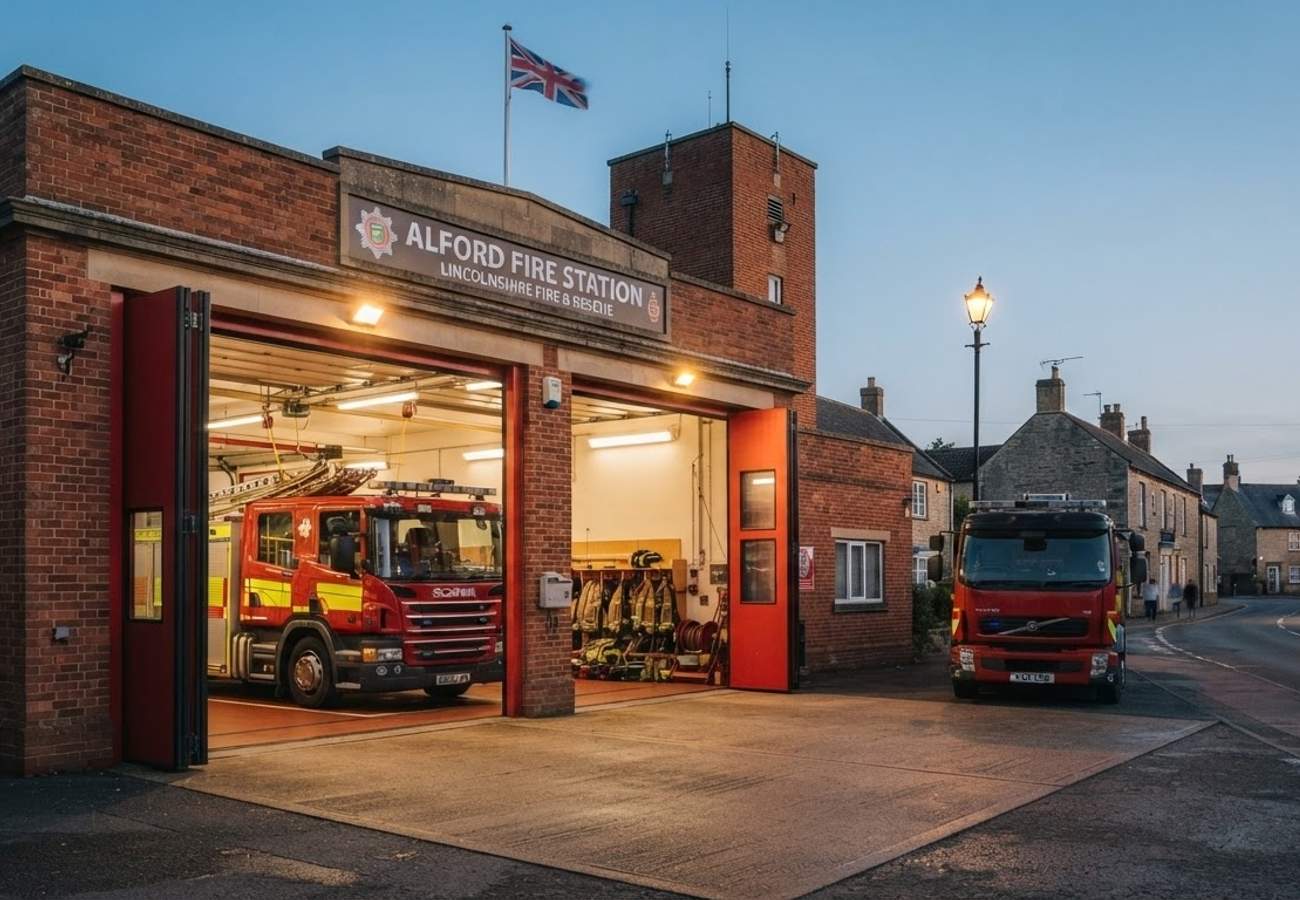
Image generated by AI
Plans are currently under review to transition Grantham Fire Station to a 24-hour staffing model, replacing current shift-based or on-call arrangements to ensure constant emergency availability.
The proposal is part of a comprehensive strategic review of fire and rescue resource deployment across Lincolnshire. By moving to continuous cover, planners aim to strengthen the town's capacity to handle emergencies and align Grantham with larger urban centers that already maintain permanent, round-the-clock crews.
The shift is driven by Grantham's role as a critical strategic base. The station serves one of the county’s most heavily trafficked transport corridors, making immediate availability a priority for regional risk management.
Operational Shift and Strategic Goals
The move toward a 24-hour model focuses on three primary objectives:
- Reduced Response Times: Immediate turnout for house fires and road traffic collisions to lower risk for urban and rural residents.
- Data-Driven Deployment: Analysis of population growth, new housing developments, and incident call patterns suggests current overnight and peak-time coverage may be insufficient.
- Community Integration: A permanent presence allows for increased engagement with local businesses and schools, alongside expanded home fire safety checks.
Staffing and Financial Hurdles
Transitioning a market town station to a continuous-duty system introduces significant logistical complexities. The proposed model would likely utilize a hybrid of wholetime firefighters—permanently based on-site—and on-call personnel.
Industry analysis suggests two primary challenges:
- Human Capital: Recruitment and retention of skilled staff remain difficult across the UK fire and rescue sector.
- Capital Expenditure: 24-hour operations require increased funding for salaries and facility upgrades, including duty rooms and rest areas.
Integration into County-Wide Reorganisation
This proposal does not exist in isolation. It is a component of a broader reorganisation of Lincolnshire's fire and rescue services. This process involves balancing resources between high-density urban centers and isolated rural areas.
Because Grantham manages incidents both within the town and along major regional road and rail routes, it has been identified as a high-priority site for resilience strengthening. However, such resource concentration often necessitates difficult trade-offs, potentially affecting coverage levels in other parts of the county.
Governance and Implementation Path
Before implementation, the proposal must undergo formal scrutiny, including:
- Committee Review: Elected members will examine financial modeling and equality impact assessments.
- Public Consultation: Local businesses and residents will be invited to provide feedback on noise, traffic, and safety impacts.
- Phased Rollout: If approved, the transition is expected to be gradual to ensure no interruption in existing emergency services.
Strategic Impact Summary
| Feature | Current Model | Proposed 24-Hour Model |
|---|---|---|
| Staffing | Set shifts / On-call | Wholetime & On-call hybrid |
| Availability | Variable | Continuous / Round-the-clock |
| Primary Focus | Local town response | Regional corridor resilience |
| Resource Need | Standard operational budget | Increased staffing & facility investment |
Why This Matters
From a logistical perspective, this move signals a recognition of Grantham as a critical node in the UK's transport infrastructure. For travelers and commuters using the major road and rail corridors passing through Lincolnshire, this means a significant reduction in "dead time" between an accident occurring and the arrival of first responders.
Our analysis suggests that when a market town station upgrades to 24-hour staffing, it is usually a lagging indicator of rapid population growth and increased traffic volume. For the local economy, this increased safety infrastructure can make the area more attractive for further commercial development, as risk profiles for insurance and logistics hubs are lowered.
Industry Outlook
We expect to see a trend of "strategic hubbing" across UK fire services, where specific market towns are upgraded to full-time status to cover gaps left by the decline of smaller, rural on-call stations. The success of the Grantham transition will likely serve as a blueprint for other Lincolnshire towns. If the financial burden is deemed too high, we may see a shift toward "enhanced on-call" models rather than full wholetime staffing.
The transition to 24-hour coverage represents a pivot from reactive local service to proactive regional risk management.
Related Travel Guides
Disclaimer
This article is for informational and educational purposes only. It does not constitute legal, financial, or professional advice. While we strive to provide accurate and up-to-date information, travel policies, regulations, and conditions change rapidly. Always verify information with official sources before making travel decisions. Nomad Lawyer makes no representations about the accuracy, reliability, completeness, or suitability of the information provided. Readers should consult qualified professionals for advice specific to their circumstances. The views expressed in this article are those of the author and do not necessarily reflect the views of Nomad Lawyer.
Preeti Gunjan
Contributor & Community Manager
A passionate traveller and community builder. Preeti helps grow the Nomad Lawyer community, fostering engagement and bringing the reader experience to life.
Learn more about our team →