
US Flash Floods Prompt Emergency Travel Alerts from Grand Canyon to New Jersey

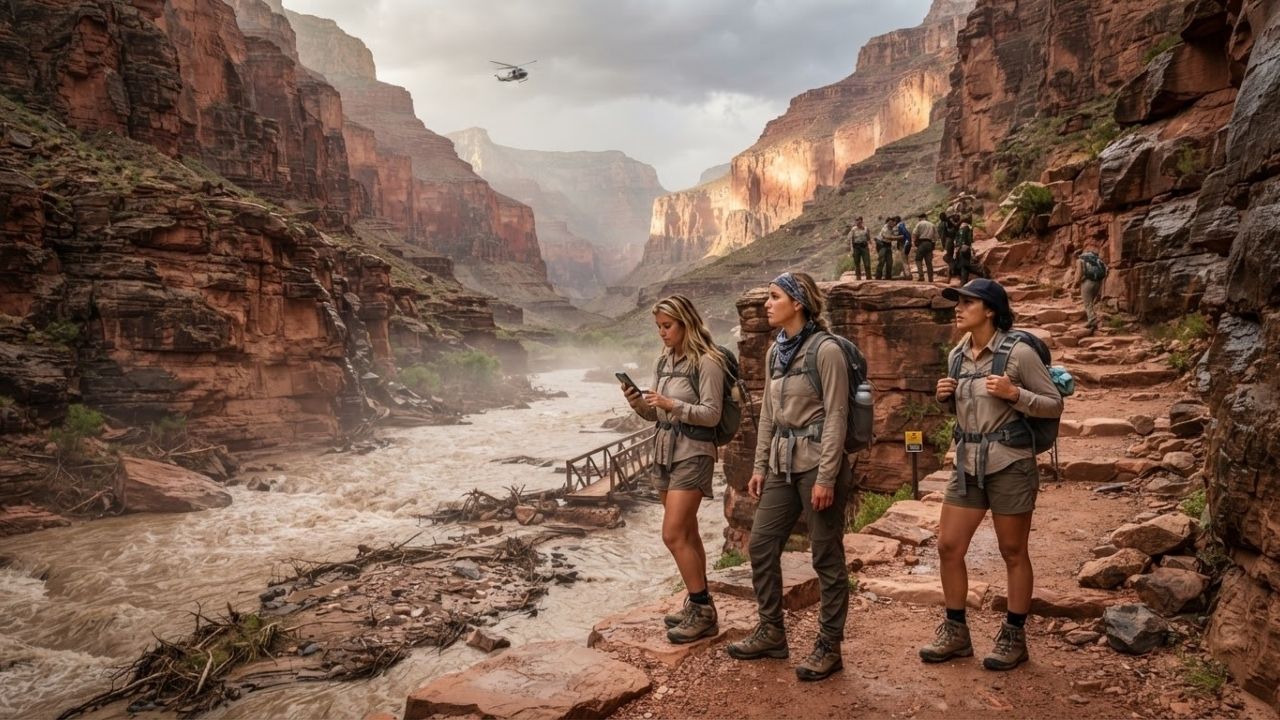
Image generated by AI
Severe flash flooding across major US travel hubs has forced emergency airlifts, trail closures, and water conservation mandates from Arizona's Grand Canyon National Park to urban transit corridors in New Jersey.
[GRAND CANYON NATIONAL PARK, Ariz., Aug. 31, 2026] — A surge of severe weather across the United States has triggered flash flood emergencies across primary tourist destinations, leaving one dead, more than 20 people initially unaccounted for, and over 60 visitors evacuated by helicopter in Arizona's Grand Canyon National Park. Torrential rains overwhelmed narrow canyon drainage corridors and urban transit networks alike, impacting travel infrastructure in Arizona, New Jersey, New York, Pennsylvania, Hawaii, Texas, Oklahoma, Missouri, Illinois, Wisconsin, and West Virginia.
Emergency search-and-rescue operations inside the Grand Canyon's Bright Angel Creek and Phantom Ranch corridors remain active as park rangers and state rescue units assess severe damage to footbridges, hiking trails, and subterranean water pipelines. Concurrently, state emergency management agencies across the Northeast and Midwest are issuing severe weather travel advisories as saturated grounds and urban drainage overflows disrupt regional flights, passenger rail, and outdoor recreation.
Bright Angel Creek Surge Ejects 60+ Visitors and Destroys Trans-Canyon Pipeline
Inside Grand Canyon National Park, torrential rainfall over the North Rim watershed transformed Bright Angel Creek into a fast-moving torrent within minutes. The deluge inundated Phantom Ranch and the Bright Angel Campground, resulting in one confirmed fatality and launching an urgent search for over 20 missing backpackers and hikers.
Helicopter rescue teams evacuated more than 60 stranded visitors from the inner gorge to the South Rim, where emergency shelter and medical triage centers were established. The floodwaters destroyed multiple footbridges along Bright Angel Creek, severed sections of the North Kaibab Trail, and crushed the Trans-Canyon Water Pipeline, forcing park officials to suspend overnight lodge accommodations and enforce mandatory water conservation across all South and North Rim facilities.
National Park Service engineers report that key inner canyon corridors—including Phantom Ranch, Bright Angel Campground, and the lower North Kaibab Trail—remain closed indefinitely pending structural safety evaluations and trail reconstruction.
Urban Transit and Coastal Tourism Under Pressure Across New Jersey and Northeast
While remote canyon landscapes faced severe flash flooding, high-density urban tourism corridors across New Jersey, New York, and Pennsylvania encountered severe storm runoffs that overwhelmed municipal drainage infrastructure. Heavy summer downpours caused widespread road closures, delayed passenger train networks connecting to major international airports, and flooded cultural sightseeing districts.
In New Jersey, urban travel corridors linking coastal boardwalks, hotel districts, and metropolitan transport hubs experienced flash flooding that stranded vehicles and forced hotels to activate emergency power protocols. In New York and Pennsylvania, saturated soil conditions led to sudden mudslides along mountain highways, forcing the temporary closure of state park hiking trails, riverside campsites, and historical heritage sites.
Tourism boards across the Northeast are updating digital visitor portals with real-time road closure alerts, advising travelers to monitor localized flood watches before embarking on regional road trips.
Geographic Breakdown: US Flash Flood Impacts and Emergency Operations
The table below outlines the primary affected US travel destinations, flood impacts, and current operational statuses recorded during the August 2026 storms:
| Affected Region / Destination | Primary Tourism Assets | Recorded Flood Impact & Damage | Operational & Safety Status |
|---|---|---|---|
| Grand Canyon National Park (AZ) | Bright Angel Creek, Phantom Ranch | 1 death, 20+ missing, 60+ airlifted, pipeline destroyed | Inner trails & Phantom Ranch closed; water conservation active |
| New Jersey Urban Corridors | Coastal resorts, transport hubs | Drainage overflow, road inundation, train delays | Transit advisories active; urban routes open with caution |
| Northeast (NY & PA) | State parks, historical sites | Saturated soil, trail washouts, river overflow | State park trails closed; mudslide alerts issued |
| Hawaii Island Chains | Mountain trails, waterfall parks | Flash runoff along steep slopes, trail erosion | Select mountain hiking routes closed |
| Texas Recreation Areas | Lakes, state parks, river routes | Sudden river rises, campground flooding | Temporary park closures & river bans in effect |
| Midwest (OK, MO, IL, WI) | National parks, camping grounds | Severe storm runoff, flooded access roads | Regional trail closures & campsite evacuations |
| West Virginia Highlands | Mountain hiking, whitewater rafting | Rapid valley flooding, bridge washed out | Emergency weather alerts for river outfitters |
The table below details specific trail and facility closures inside Grand Canyon National Park:
| Grand Canyon Inner Gorge Facility | Pre-Flood Usage | Current Operational Status | Recovery & Engineering Assessment |
|---|---|---|---|
| Phantom Ranch Cabins & Lodge | Overnight accommodation | Closed Indefinitely | Utility infrastructure & structural integrity checks |
| Bright Angel Campground | Backcountry camping hub | Closed Indefinitely | Campsite clearing & debris removal underway |
| North Kaibab Trail | Major Rim-to-Rim route | Closed (North Rim to Phantom) | Major trail washouts & bridge damage reported |
| Trans-Canyon Water Pipeline | Primary park water supply | Severed / Inoperable | Water rationing enforced across South & North Rims |
Recurring Weather Risks Impact Outdoor Travel in Hawaii, Texas, and Midwest
Beyond the Southwest and Northeast, severe weather events have impacted regional outdoor tourism across multiple US geographic zones:
- Hawaii: Intense tropical rainfall across steep mountain valleys triggered rapid stream rises, temporarily closing popular waterfall hiking paths and beach access roads across Maui and Kauai.
- Texas: Repeated flash flood warnings forced state park rangers to evacuate low-lying river campsites and suspend kayaking and tubing operations along swollen waterways.
- Midwest (Oklahoma, Missouri, Illinois, Wisconsin): Heavy thunderstorm cells damaged access roads to state parks, flooded lakefront campgrounds, and forced outdoor festival cancellations.
- West Virginia: Steep Appalachian valley geography accelerated runoff into narrow river channels, disrupting whitewater rafting expeditions and mountain hiking circuits.
Tourism operators nationwide are responding by implementing flexible cancellation policies, expanding emergency text notification systems, and installing automated flash flood warning sensors near high-risk streams.
Why This Matters: Practical Safety Protocols for Outdoor and Road Travelers
For travelers planning vacations across affected US national parks and outdoor recreation areas, this multi-state flood event establishes essential safety protocols:
- Check Backcountry Pipeline and Water Status: Before hiking into remote canyon environments, verify that potable water stations are active. Always carry portable water filters (such as squeeze filters or purification tablets) in case main water pipelines break.
- Recognize Flash Flood Warning Signs: If exploring creeks or slot canyons, watch for sudden mud discoloration in stream water, floating debris, or a deep rumbling sound upstream. Immediately move to higher ground—climbing at least 100 feet up canyon walls—rather than taking shelter under rock overhangs.
- Carry Satellite Communication Devices: Cellular signals are unavailable in deep canyons and remote wilderness areas. Travelers should carry dedicated two-way satellite communicators (e.g., Garmin inReach) and register itineraries with park authorities.
- Monitor Local Weather Bulletins: Saturated soils can trigger sudden flash floods hours after rain stops. Check National Weather Service radar updates and local road condition portals before driving through low-lying valleys or mountain passes.
Frequently Asked Questions
What caused the emergency closures inside Grand Canyon National Park?
Heavy localized rainfall over the North Rim watershed sent a flash flood down Bright Angel Creek, destroying footbridges, damaging trails, and severing the Trans-Canyon Water Pipeline.
How many people were affected during the Grand Canyon flash flood?
Official reports confirmed one fatality, over 20 people initially reported missing or unaccounted for, and more than 60 visitors safely evacuated by helicopter from Phantom Ranch and Bright Angel Creek.
Are South Rim viewpoints open at the Grand Canyon?
Yes, South Rim viewpoints and the Rim Trail remain open, though overnight lodge accommodations are operating under strict water conservation measures due to pipeline damage.
Which other US states experienced major flash flood travel disruptions?
Severe flash flooding affected tourism and transport infrastructure across New Jersey, New York, Pennsylvania, Hawaii, Texas, Oklahoma, Missouri, Illinois, Wisconsin, and West Virginia.
Related Travel Guides
Disclaimer
This article is for informational and educational purposes only. It does not constitute legal, financial, or professional advice. While we strive to provide accurate and up-to-date information, travel policies, regulations, and conditions change rapidly. Always verify information with official sources before making travel decisions. Nomad Lawyer makes no representations about the accuracy, reliability, completeness, or suitability of the information provided. Readers should consult qualified professionals for advice specific to their circumstances. The views expressed in this article are those of the author and do not necessarily reflect the views of Nomad Lawyer.
Raushan Kumar
Founder & Lead Developer
Full-stack developer with 11+ years of experience and a passionate traveller. Raushan built Nomad Lawyer from the ground up with a vision to create the best travel and law experience on the web.
Learn more about our team →