
Granada Spain Earthquake: Andalusia Travel Alert
A magnitude 5.0 earthquake hits Granada near Armilla, Spain, shaking Andalusia and triggering emergency safety inspections. Read travel alerts.

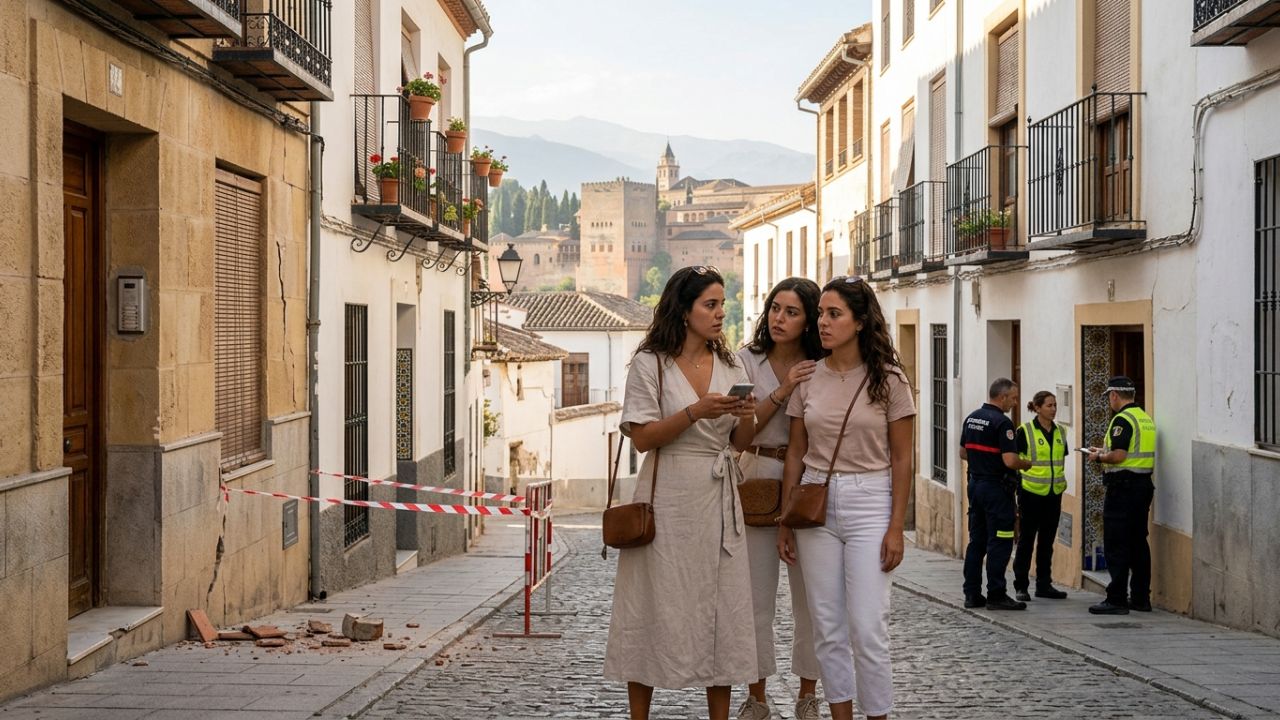
Image generated by AI
According to emergency services in southern Spain, a powerful magnitude 5.0 earthquake struck the Granada province on August 15, 2026, shaking the region of Andalusia and triggering safety protocols.
The tremor occurred at around 1:04 AM local time, with its epicentre located near Alhendín at a shallow depth of approximately 2 kilometres. This shallow position caused intense ground-level shaking, awakening residents across Granada and surrounding metropolitan areas like Armilla, Las Gabias, Ogíjares, and Otura. Regional authorities activated Operational Level 1 of the seismic emergency plan to inspect structures for minor structural issues, such as cracks and fallen plaster, while monitoring a series of aftershocks.
The event occurred during the busy summer travel season, raising immediate questions regarding visitor safety in Granada, which is home to world-renowned cultural landmarks like the Alhambra. Fortunately, emergency officials reported no major injuries, and transport networks and hotels continue to operate without major disruptions. To minimize risks, visitors and residents are advised to follow official safety instructions, avoid buildings with visible damage, and remain prepared for ongoing aftershocks. The rapid response from regional emergency teams has helped secure public spaces, ensuring that historic sites remain open for cautious exploration.
Shallow Tremor Centers Near Alhendín Epicentre Overnight
The shallow depth of the magnitude 5.0 tremor contributed to the high intensity of shaking experienced at ground level throughout the metropolitan area. While minor structural damage, such as cracked masonry and detached plaster, was reported near the epicentre, the city's historic monuments remain intact under close observation. To help travelers understand the seismic parameters, affected areas, and emergency responses issued during this travel alert, the following table summarizes the primary points of the incident:
| Seismic Parameter Category | Granada Earthquake Specifics | Affected Andalusian Municipalities | Regional Emergency Recommendations |
|---|---|---|---|
| Earthquake Magnitude | Recorded at magnitude 5.0 on the scale | Alhendín epicentre, Armilla, Las Gabias | Seek open spaces; avoid balconies and facades |
| Time and Depth | Around 1:04 AM at 2 kilometres depth | Granada province, Málaga, Jaén, Almería | Follow directives from 112 Andalusia teams |
| Emergency Level | Operational Level 1 plan activated | Jaén and Córdoba provinces felt the tremor | Avoid entering buildings with visible cracks |
| Aftershock Range | Ranging between magnitude 2.2 and 3.7 | Gójar, Ogíjares, Otura, La Zubia | Stay prepared for secondary under-ground shifts |
| Evacuation Actions | Precautionary building clearance | Las Gabias municipal apartment block | Keep emergency phone lines clear for critical calls |
| Tourism Activity | Historic sites remain open for visits | Alhambra fortress and Sierra Nevada park | Monitor local weather and geological reports |
Andalusian Emergency Services Activate Regional Seismic Protocols
Following the overnight tremor, the Government of Andalusia activated Operational Level 1 of the regional seismic emergency plan to coordinate structural inspections and public safety services. The regional emergency services center initially received more than 80 emergency calls from residents reporting tremors and minor damage, with subsequent updates raising the total to more than 200 incident reports. Security teams, fire crews, and structural inspectors were deployed across the metropolitan area to secure loose masonry and check infrastructure stability.
In Las Gabias, a municipality located near the epicentre, emergency teams conducted a precautionary evacuation of a residential building after concerns were raised regarding potential structural cracks. This preventive measure allowed engineers to evaluate the foundation and ensure safety before residents returned. Regional emergency services reported that while falling debris and cracked facades caused concern, no major injuries or severe structural collapses were recorded during the overnight checks.
Secondary Aftershocks Impact Armilla and Surrounding Municipalities
Seismic activity continued across the Granada province throughout the morning, with scientists recording a series of smaller aftershocks ranging between magnitude 2.2 and 3.7. These secondary tremors affected several nearby municipalities, including Armilla, Alhendín, Gójar, Ogíjares, Otura, and La Zubia, causing minor tremors but no further damage. Authorities advised residents and visitors to remain calm but prepared, as aftershock sequences are common following a magnitude 5.0 seismic event.
The widespread feeling of the earthquake across Andalusia highlighted the region's complex geological structure. Residents in neighboring provinces, including Almería, Málaga, Jaén, and Córdoba, reported feeling the ground move, while coastal provinces like Huelva and Cádiz recorded no significant impact. Emergency services continue to monitor seismic data from the National Geographic Institute (IGN) to track the aftershock pattern and provide updates to the public.
Tectonic Movement Along the African and Eurasian Plate Boundary
Granada is recognized as one of the most seismically active areas on the Iberian Peninsula due to its proximity to the plate boundary. The geological pressure beneath southern Spain is created by the ongoing movement between the African Plate and the Eurasian Plate, which results in regular tectonic adjustments and localized fault slips. While the majority of these events are micro-earthquakes that go unnoticed, larger shallow events like the magnitude 5.0 tremor serve as a reminder of the region's tectonic activity.
Building codes in Granada and the wider Andalusia region enforce strict earthquake resilience standards, which helped prevent major structural damage during this shallow event. Historical preservation teams are conducting detailed inspections of historic structures in the Albayzín and at the Alhambra to verify their stability. By combining modern engineering standards with advanced monitoring systems, local authorities work to ensure that Granada's cultural heritage remains protected against regional geological movements.
Why This Matters (Information Gain & Experience)
For the traveler, this means that while Granada remains open for tourism, visitor safety requires maintaining awareness of local emergency procedures. If you are visiting the Alhambra or exploring the historic streets of the Albayzín, you should check with the Patronato de la Alhambra for potential tour slot adjustments as structural engineers complete precautionary checks. From a logistical standpoint, travelers should download the My112 emergency app for real-time alerts from Andalusian Emergency Services, and keep their mobile devices charged in case of secondary aftershocks.
Additionally, choosing to support the local economy during your stay directly aids the recovery of independent businesses in Granada's historic districts. Travelers can practice responsible tourism by staying in locally owned guest houses, purchasing handcrafted ceramics from independent shops in the Alcaicería market, and dining at traditional family run tavernas. Sampling local culinary specialties like habas con jamón, remojón granadino, or traditional piononos sweet pastries ensures that your spending directly supports the host community. Following the directives of Andalusian Emergency Services (112), respecting restricted areas around historic facades, and avoiding the use of single-use plastics during excursions to the Sierra Nevada National Park ensures a safe, eco-friendly, and culturally respectful journey through southern Spain.
Related Travel Guides
Disclaimer
This article is for informational and educational purposes only. It does not constitute legal, financial, or professional advice. While we strive to provide accurate and up-to-date information, travel policies, regulations, and conditions change rapidly. Always verify information with official sources before making travel decisions. Nomad Lawyer makes no representations about the accuracy, reliability, completeness, or suitability of the information provided. Readers should consult qualified professionals for advice specific to their circumstances. The views expressed in this article are those of the author and do not necessarily reflect the views of Nomad Lawyer.
Raushan Kumar
Founder & Lead Developer
Full-stack developer with 11+ years of experience and a passionate traveller. Raushan built Nomad Lawyer from the ground up with a vision to create the best travel and law experience on the web.
Learn more about our team →