
US Airports Losing Airbus A380 Service as Airlines Retire Iconic Superjumbo Fleet
Breaking airline news and aviation industry updates for 2026.

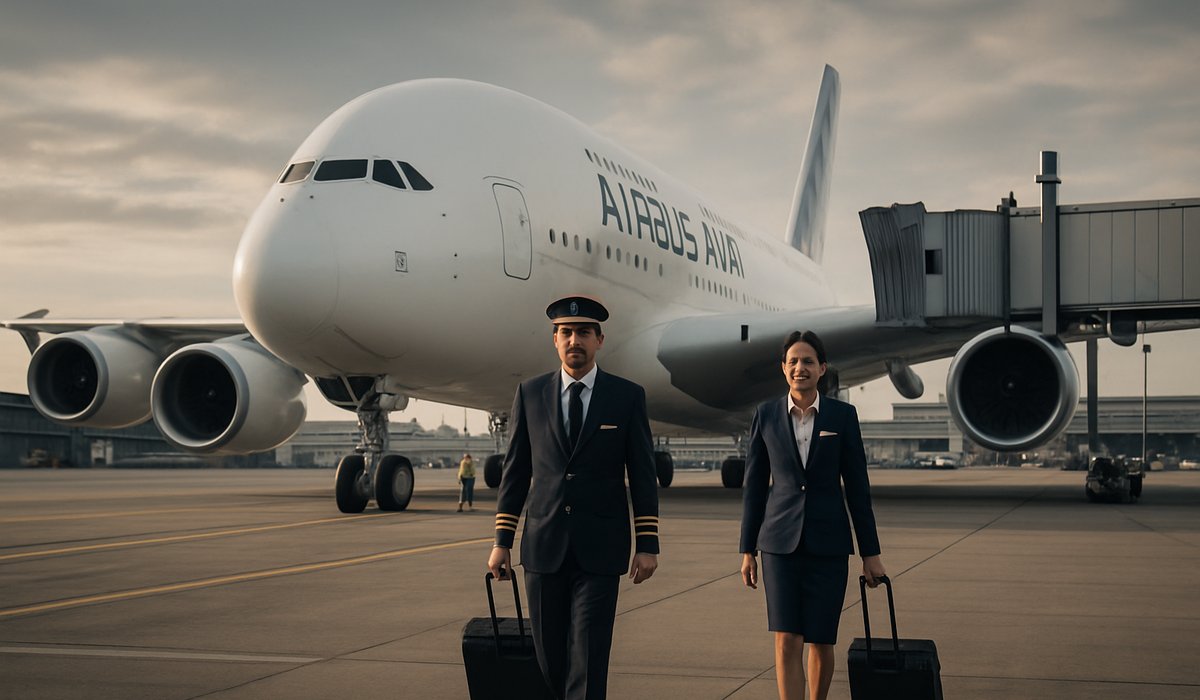
Image generated by AI
US Airports Losing Airbus A380 Service as Airlines Retire Iconic Superjumbo Fleet
The double-decker giant faces extinction on American routes as carriers reassess profitability on long-haul international flights
The End of an Era for American Aviation
The Airbus A380—aviation's most recognizable wide-body aircraft—is quietly disappearing from America's airport terminals. Despite never being operated by a single US carrier, the European superjumbo once graced several major American hubs with its commanding presence. Today, that footprint is shrinking as international airlines abandon the double-decker giant in favor of more economically efficient aircraft.
The shift represents a fundamental restructuring in global aviation strategy, driven by changing travel patterns, fuel economics, and post-pandemic fleet optimization. For travelers and aviation enthusiasts alike, it signals the closing chapter on one of commercial aviation's most distinctive aircraft.
Why the A380 Can't Sustain US Routes
The A380's business model has always relied on a single critical factor: relentless demand. With seating capacity exceeding 500 passengers across two decks and four engines, the aircraft demands the kind of high-volume, hub-to-hub traffic that justifies its substantial operating costs. Jet fuel expenses, maintenance requirements, and airport infrastructure needs make the superjumbo viable only on the world's busiest intercontinental corridors.
American airports, while important international gateways, have proven insufficient to maintain consistent A380 service. The aircraft thrives on ultra-competitive routes like London-Dubai or Paris-Singapore, where passenger loads and premium cabin revenue justify its operational complexity. US destinations, by comparison, offer limited year-round capacity to fill its enormous fuselage.
Three Major US Airports Say Goodbye
Several prominent American aviation hubs have now lost their A380 connections entirely. The carriers operating these aircraft—primarily Middle Eastern and European airlines—made the difficult decision to redeploy their limited superjumbo fleets to more profitable markets. This consolidation reflects broader industry trends toward smaller, wide-body twin-engine aircraft like the Boeing 787 and Airbus A350, which offer superior fuel efficiency and operational flexibility.
The loss impacts not only passenger experience but also airport prestige and cargo handling capabilities, as these airports lose the capacity advantages the A380 provided.
Industry-Wide Aircraft Fleet Transformation
The retreat from US markets exemplifies a sector-wide pivot toward sustainable aviation economics. Airlines worldwide are retiring or reducing A380 operations, with only a handful of carriers maintaining meaningful fleets. This mirrors the aviation industry's broader adjustment to volatile fuel costs and climate-conscious travel patterns, forcing operators to recalibrate long-haul strategies around profitability rather than prestige.
FAQ: Airbus A380 and American Aviation
Why don't US airlines operate the Airbus A380? No American carrier has ever ordered the A380 commercially. US airlines traditionally favored twin-engine wide-bodies, and the superjumbo's economics never aligned with domestic or transpacific operations requiring the aircraft's scale.
What aircraft are replacing A380 flights to the US? Airlines are deploying more fuel-efficient twin-engine wide-bodies like the Boeing 787, Airbus A350, and A330neo, which offer comparable long-haul range with lower per-seat operating costs.
Is the Airbus A380 being completely retired? No, but its future is limited. Only select carriers like Emirates maintain substantial A380 fleets, primarily on ultra-high-capacity routes in Asia and the Middle East.
How does A380 retirement affect aviation industry jobs? Airport ground handling, maintenance, and specialized crew positions decline as aircraft retire, though fleet transitions create new opportunities in servicing newer wide-body aircraft.
Will the A380 ever return to US airports? Unlikely in the near term. Current aviation economics and shifting airline strategies suggest the superjumbo's American presence will remain minimal throughout the next decade.
Related Travel Guides
Disclaimer
This article is for informational and educational purposes only. It does not constitute legal, financial, or professional advice. While we strive to provide accurate and up-to-date information, travel policies, regulations, and conditions change rapidly. Always verify information with official sources before making travel decisions. Nomad Lawyer makes no representations about the accuracy, reliability, completeness, or suitability of the information provided. Readers should consult qualified professionals for advice specific to their circumstances. The views expressed in this article are those of the author and do not necessarily reflect the views of Nomad Lawyer.
Raushan Kumar
Founder & Lead Developer
Full-stack developer with 11+ years of experience and a passionate traveller. Raushan built Nomad Lawyer from the ground up with a vision to create the best travel and law experience on the web.
Learn more about our team →