
The Airbus A380's Stunning Resurrection: How 190 Superjumbos Became Airlines' Most Prized Asset
Breaking airline news and aviation industry updates for 2026.

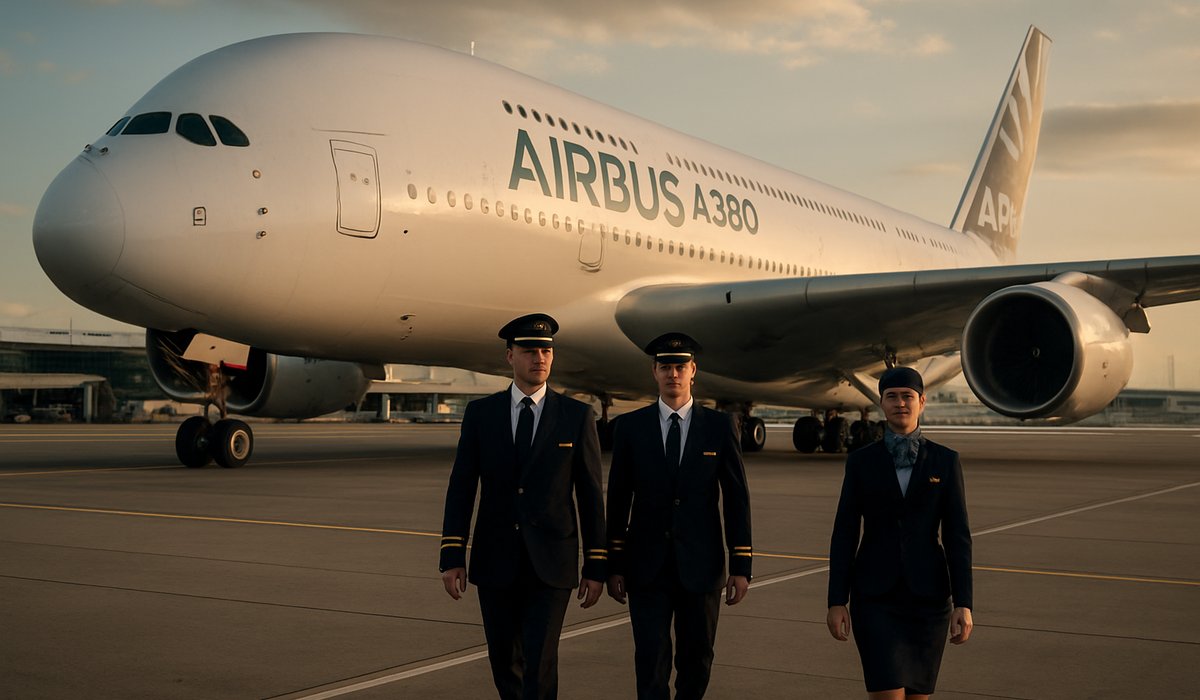
Image generated by AI
The Airbus A380's Stunning Resurrection: How 190 Superjumbos Became Airlines' Most Prized Asset
Once written off as aviation's costliest failure, the world's largest passenger aircraft is now commanding premium valuations as global capacity shortages reshape the airline industry
From Graveyard to Goldmine
What was once deemed a commercial catastrophe for Airbus is undergoing a dramatic reversal of fortune. The A380, the world's only double-deck wide-body airliner, has shifted from being an industry burden to becoming one of aviation's most strategically valuable assets in 2026—a remarkable turnaround that defies predictions made just years earlier.
The transformation reflects a fundamental shift in global aviation dynamics. Of the 251 Airbus A380s delivered before the production program's termination in 2021, approximately 190 aircraft remain in active service or are being restored to revenue operations. This unexpected scarcity has created unprecedented demand for the four-engine behemoth, reversing the financial hemorrhaging that characterized its 18-year production history.
The Cost of Ambition
Airbus's A380 program stands as one of the aviation industry's most expensive miscalculations. The European manufacturer never achieved financial break-even on the program, with estimated cumulative losses reaching approximately $25 billion—a sobering reminder of the risks inherent in next-generation aircraft development. Weak initial orders, shifting airline preferences toward twin-engine long-range aircraft, and persistent fuel-efficiency concerns contributed to the program's struggle.
The decision to cease production in 2021 came after years of declining demand, with airlines increasingly favoring smaller, more economical aircraft platforms that could operate profitably on diverse route networks without requiring massive passenger loads.
Market Dynamics Drive Unexpected Value Recovery
The A380's sudden resurgence stems from multiple converging factors. Post-pandemic travel demand has surged beyond capacity projections, while twin-engine aircraft production has struggled to keep pace with global fleet expansion requirements. Simultaneously, rising jet fuel prices and sustained aviation industry capacity constraints have made the A380's high-volume passenger configuration financially attractive despite its operational costs.
Airlines operating these aircraft are now commanding premium yields on high-demand international routes, leveraging the A380's 544-seat configuration to maximize revenue per flight. Carriers including Emirates, Singapore Airlines, Lufthansa, and Qantas have recognized the aircraft's profitability potential and are actively retaining and expanding their A380 fleets.
Looking Forward
The A380's unlikely redemption demonstrates how market conditions and fleet dynamics can fundamentally reshape aviation economics. While Airbus's original investment losses remain historically significant, current market valuations suggest the aircraft's contribution to future airline profitability may ultimately tell a different story than the company's troubled manufacturing experience.
Frequently Asked Questions
Why did the Airbus A380 program fail initially? The program struggled due to weak order projections, airlines' preference for twin-engine wide-body aircraft, rising operational costs, and limited route profitability on networks requiring smaller aircraft.
How many A380 aircraft remain operational today? Approximately 190 of the 251 delivered A380s are currently in active service or undergoing restoration, making them increasingly valuable assets as global capacity shortages persist.
What has driven the A380's unexpected market resurgence? Post-pandemic travel demand, limited twin-engine aircraft availability, elevated jet fuel prices, and strong demand on high-capacity international routes have revived interest in the superjumbo's revenue-generating potential.
Which airlines are benefiting most from A380 operations? Carriers such as Emirates, Singapore Airlines, Lufthansa, and Qantas operate significant A380 fleets and are profiting substantially from premium yields on major international routes.
Could Airbus resume A380 production? While not currently planned, sustained high market valuations and capacity shortages could theoretically justify future production, though significant retooling and investment would be required.
Related Travel Guides
- Massive Travel Chaos Hits Helsinki as Finnair Grounds Fleet, Sparking 8 Flight Cancellations and Global Airport Disruptions
- Breaking Airline News: Delta Deploys Massive LAX-Hong Kong Direct Route to Shield Passengers from Pacific Travel Chaos
- American, Delta, and Lufthansa May Ground Aircraft as 2026 Fuel Costs Threaten Winter Flight Schedules
Disclaimer
This article is for informational and educational purposes only. It does not constitute legal, financial, or professional advice. While we strive to provide accurate and up-to-date information, travel policies, regulations, and conditions change rapidly. Always verify information with official sources before making travel decisions. Nomad Lawyer makes no representations about the accuracy, reliability, completeness, or suitability of the information provided. Readers should consult qualified professionals for advice specific to their circumstances. The views expressed in this article are those of the author and do not necessarily reflect the views of Nomad Lawyer.
Raushan Kumar
Founder & Lead Developer
Full-stack developer with 11+ years of experience and a passionate traveller. Raushan built Nomad Lawyer from the ground up with a vision to create the best travel and law experience on the web.
Learn more about our team →