
Global Flight Disruptions Expose Aviation Networks' Fragile Infrastructure in March 2026
March 2026 exposed global flight disruptions across North America, Europe, and Asia as weather systems, technology failures, and staffing shortages triggered thousands of cancellations. Airlines face mounting pressure as interconnected networks reveal systemic vulnerabilities.

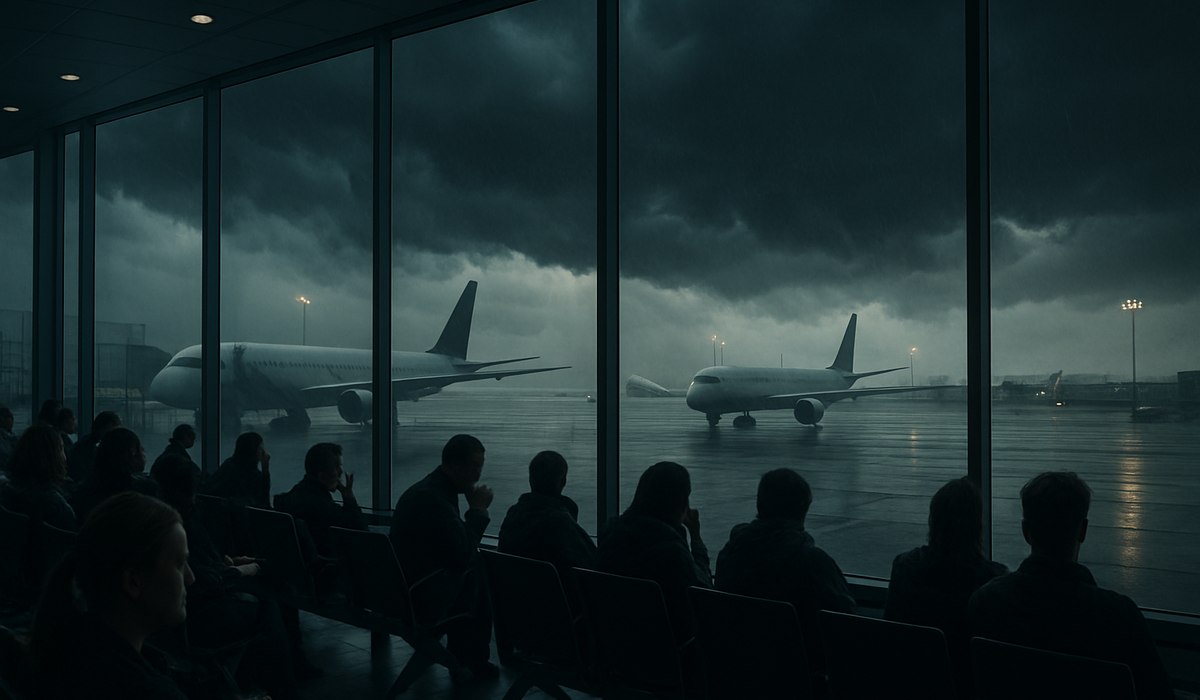
Image generated by AI
March 2026: When Aviation Networks Collided With Perfect Storm Conditions
North America's major aviation hubs—Chicago O'Hare, Atlanta Hartsfield-Jackson, Denver International, and New York's tri-airport complex—experienced unprecedented disruption during March 2026. A convergence of severe weather systems, staffing constraints, and technology infrastructure failures cascaded through the interconnected global aviation ecosystem, revealing how quickly modern air travel networks can collapse when multiple systems fail simultaneously. On March 7 alone, nearly 500 flights faced cancellation and over 5,000 experienced delays across U.S. airports, with ground stops paralyzing Chicago and Atlanta. A subsequent blizzard from March 13-17 compounded strain as airlines struggled to reposition aircraft and crews. The disruptions extended far beyond domestic carriers, affecting international schedules and stranding tens of thousands of passengers worldwide. This March 2026 crisis exposed the bare reality: today's aviation networks remain fragile, vulnerable to cascading failures that propagate through interconnected systems faster than airlines can respond.
Storm Systems Turn Key Travel Corridors Into Bottlenecks
Powerful weather systems repeatedly disrupted major U.S. hubs throughout March, creating bottlenecks that persisted for days. Severe thunderstorms, heavy snow, and low cloud ceilings triggered widespread ground stops at Chicago O'Hare and Atlanta Hartsfield-Jackson, affecting both mainline and regional carriers simultaneously. Denver International faced over 1,000 flight delays or cancellations during a single blizzard event, underscoring how inland connection hubs amplify localized disruptions across the entire network.
The East Coast experienced rolling ground delays driven by high winds and fast-moving systems, with ripple effects stretching into secondary markets as airlines rationed scarce aircraft and crews for primary trunk routes. Each weather event created a domino effect: missed onward connections meant aircraft positioned incorrectly across the network, crews fell out of sequence, and schedule recovery became nearly impossible. Flight-tracking data from FlightAware showed that March 2026 exhibited unusual weather volatility for spring travel season, suggesting climate pattern changes affecting traditional disruption forecasts.
Technology Failures Compound Weather-Related Disruptions
Beyond meteorological challenges, technology infrastructure failures exacerbated global flight disruptions. Air traffic management systems experienced capacity constraints precisely when weather pressures demanded maximum operational flexibility. European air traffic control encountered staffing and scheduling strains that reduced processing capacity on already saturated routes, while outdated technology systems struggled to reroute traffic efficiently around weather impacted sectors.
North American facilities reported communication delays between ground control and aircraft systems, slowing departure sequencing when rapid turnover proved most critical. These technology failures weren't catastrophic breakdowns but rather systemic bottlenecks—systems working at maximum capacity without redundancy or surge capability. When weather increased demand, technology infrastructure proved insufficient, forcing manual interventions that slowed operations further. The FAA acknowledged that aging NextGen implementation left some facilities unable to handle peak loads during crisis periods, highlighting long-standing infrastructure investment gaps.
Staffing Constraints Limit Airline Recovery Capacity
Airline staffing remained critically tight throughout March 2026, preventing rapid disruption recovery. Flight attendants, ground crews, and pilots were already scheduled at operational limits when cascading delays threw crews out of position across multiple time zones. Airlines lacked buffer capacity to reposition staff quickly, creating a vicious cycle: delayed flights meant crews violated mandatory rest regulations, reducing available staffing for subsequent flights, compounding delays.
Regional carriers operating regional jets on behalf of major carriers faced especially acute pressures. Many had reduced staffing investments during post-pandemic recovery, assuming normalized operations. When global flight disruptions struck, these lean workforces couldn't absorb shock. European air traffic control facilities similarly reported insufficient controller staffing to manage peak traffic periods, forcing reduced sector capacity and extending delays system-wide. The shortage of trained personnel created strategic bottlenecks that weather alone might not have caused, proving that fragile staffing models leave aviation networks vulnerable to compound failures.
Geopolitical Tensions Add Pressure to Global Networks
International flight patterns shifted dramatically in March 2026 as geopolitical considerations restricted airspace access. Middle Eastern rerouting forced additional traffic through concentrated Gulf hubs—Dubai, Abu Dhabi, and Doha—precisely when dust storms reduced operational capacity. Dust visibility at UAE and Oman airports created extended closures, stranding regional backlog.
Airspace restrictions diverted Asian traffic through alternative corridors, increasing congestion at already-stressed connectivity points. Airlines couldn't absorb these forced routing changes without schedule disruption, reducing network flexibility when it proved most valuable. The combination of restricted airspace plus severe weather meant airlines had no bypass options, forcing cancellations rather than diversions. This geopolitical-environmental intersection highlighted how interconnected modern global aviation remains—restrictions in one region immediately propagate through international networks.
Key Data: March 2026 Flight Disruptions by Region
| Region | Key Airports Affected | Peak Disruption Date | Cancellations | Delays | Primary Cause |
|---|---|---|---|---|---|
| North America | Chicago, Atlanta, Denver, New York | March 7, 13-17 | ~500+ | ~5,000+ | Severe weather, ground stops |
| North America | Denver (Blizzard event) | March 13-17 | 1,000+ | 1,000+ | Snow, wind, visibility |
| Europe | London, Paris, Frankfurt, Amsterdam | March 5, 21, 24 | 1,000+ | Extensive | Weather, ATC staffing |
| Middle East | Dubai, Abu Dhabi, Doha, Muscat | March 18-24 | 400+ | Extensive | Dust storms, airspace restrictions |
| Asia | Major hubs | March 28-31 | ~400 | 5,000+ | Geopolitical rerouting, weather |
What This Means for Travelers: Action Checklist
Global flight disruptions in March 2026 demonstrated that travelers need proactive strategies when booking or flying during volatile periods:
-
Monitor weather patterns and geopolitical news actively during your travel window—subscription to aviation news sources provides early warning before major disruptions.
-
Build connection time buffers into international itineraries, especially during spring and fall transition seasons when weather volatility increases across northern latitudes.
-
Check FlightAware and airline websites in real-time for delay trends at your origin and destination airports before heading to the terminal.
-
Understand your passenger rights through the U.S. Department of Transportation website, which details compensation and rebooking obligations airlines must honor during operational disruptions.
-
Consider purchasing trip insurance that covers weather-related cancellations and delays, protecting non-refundable components of complex itineraries.
-
Request preferred seating and document special needs early, as schedule changes often separate passengers from seat assignments during recovery operations.
-
Maintain accessible communication with your airline through registered contact details and app notifications to receive real-time rebooking offers.
Frequently Asked Questions About Global Flight Disruptions
What caused the March 2026 aviation crisis? Multiple systemic failures converged simultaneously: severe weather systems disrupted major hubs, air traffic technology reached capacity limits, airlines operated with minimal staffing buffers, and geopolitical airspace restrictions forced inefficient rerouting. No single cause explains the severity; rather, fragile networks failed when several weak points faced pressure concurrently.
How long did disruption recovery take?
Disclaimer
This article is for informational and educational purposes only. It does not constitute legal, financial, or professional advice. While we strive to provide accurate and up-to-date information, travel policies, regulations, and conditions change rapidly. Always verify information with official sources before making travel decisions. Nomad Lawyer makes no representations about the accuracy, reliability, completeness, or suitability of the information provided. Readers should consult qualified professionals for advice specific to their circumstances. The views expressed in this article are those of the author and do not necessarily reflect the views of Nomad Lawyer.
Preeti Gunjan
Contributor & Community Manager
A passionate traveller and community builder. Preeti helps grow the Nomad Lawyer community, fostering engagement and bringing the reader experience to life.
Learn more about our team →