
Global Cruise Bookings Outpace Last Year as Europe, Mediterranean, and Caribbean Sailings Fill Ahead of Summer Peak
Advance reservations across Europe, the Mediterranean, Caribbean, and Alaska are accelerating ahead of the summer peak,

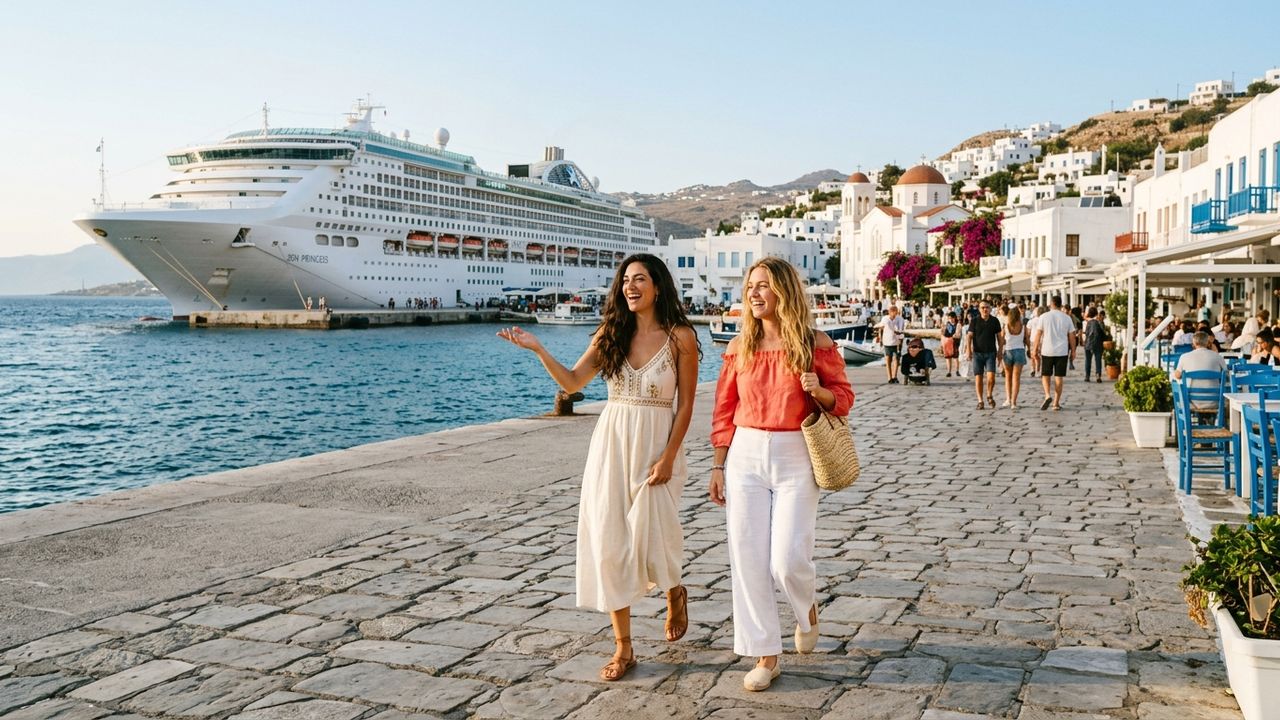
Image generated by AI
Summer cruise bookings for July and August are tracking ahead of the previous year’s pace, driven by sustained global tourism confidence, early inventory absorption, and a pronounced shift toward advance reservation planning. Travelers across multiple source markets are securing itineraries six to eight months ahead of departure, largely to lock in favorable airfare rates before broader pricing inflation and limited flight availability tighten travel windows. Despite lingering geopolitical uncertainty and elevated aviation costs, cruise demand remains structurally strong, with premium cabin categories and Mediterranean sailings leading the recovery.
The most active booking corridors span Europe, the Mediterranean, the Caribbean, and Alaska. Early reservation cycles have already consumed a significant portion of summer capacity, particularly for European itineraries where high destination density and multi-country routing continue to attract leisure travelers. This forward demand curve reflects a broader industry pattern: longer planning windows, elevated spend on upgraded accommodations, and a preference for experience-driven itineraries over traditional mass-market packages.
European and Mediterranean Itineraries Lead Advance Sales
European cruise operations have maintained robust forward bookings despite earlier seasonal fluctuations tied to geopolitical developments. Summer inventory across the Mediterranean is nearly fully absorbed, with core departure ports in Greece, Italy, Spain, and France reporting high occupancy rates. Travelers are increasingly favoring balcony cabins, suites, and premium onboard services, aligning with a wider consumer shift toward comfort, privacy, and immersive destination experiences. River cruises and Northern European routes have also seen strong early uptake, particularly from Central European source markets.
North American Gateways Drive Caribbean and Alaska Growth
The United States continues to serve as the primary engine for global cruise demand. Florida-based departure hubs, including Miami and Port Canaveral, are experiencing high search and booking activity for Caribbean itineraries. Alaska-bound sailings remain a standout product, drawing domestic travelers seeking nature-focused and experiential tourism. Despite airfare volatility, North American cruise demand has held steady, supported by convenient domestic departure infrastructure and established port ecosystems.
Premium Cabins and River Cruises Accelerate Revenue Yields
Cruise operators are reporting accelerated growth in the luxury and premium segments. Higher-tier accommodations are outperforming standard interior bookings, with balcony rooms and suites capturing the largest share of advance reservations. This demand shift is directly tied to consumer prioritization of enhanced amenities, extended itinerary lengths, and destination-rich routing. The trend has improved yield metrics for cruise lines, even as broader inflationary pressures and currency fluctuations influence pricing strategies across the travel sector.
Airfare Inflation and Geopolitics Shape Booking Windows
Global airfare trends and geopolitical conditions continue to influence cruise reservation behavior. Many travelers are extending their booking lead times to secure lower airfare costs before broader price increases materialize. Short-term hesitation has occasionally surfaced during periods of heightened geopolitical uncertainty, but demand has consistently rebounded once travel windows stabilize. Some U.S. travelers are opting for domestic vacations or driving to departure ports to mitigate perceived travel risks, though this behavioral adjustment has not disrupted long-term cruise booking trajectories.
Caribbean Capacity Expansion Tests Market Flexibility
The Caribbean cruise market remains highly competitive, with operators responding to increased inventory and destination diversification. Cruise lines are introducing enhanced private island developments, upgraded shore experiences, and flexible booking terms to differentiate their offerings. Consumers are displaying greater price sensitivity and willingness to compare itineraries, prompting carriers to adjust pricing strategies and introduce dynamic packaging. Despite capacity growth, Caribbean demand remains resilient, supported by strong leisure travel fundamentals and established brand loyalty.
Forward Demand Signals Sustained Industry Recovery
Global cruise demand is underpinned by diversified source markets, extended booking windows, and strong consumer preference for premium travel experiences. Forward reservations across European, Mediterranean, Caribbean, and Alaskan routes indicate that the sector has moved past cyclical recovery into a phase of structural growth. While aviation cost pressures, geopolitical variables, and competitive capacity expansion present ongoing operational considerations, cruise tourism remains one of the most stable and high-yield segments within the global leisure travel industry.
| Market / Region | Cruise Travel Role & Key Focus Areas |
|---|---|
| Greece | Core Mediterranean cruise hub benefiting from high seasonal demand and premium European itinerary inclusion |
| United Kingdom | Major advance booking source market, primarily for Mediterranean and Northern Europe sailings |
| United States | Strong demand across Florida departure ports (Miami, Port Canaveral) and Alaska itineraries |
| Spain | Dual role as destination and embarkation point for Mediterranean cruise circuits |
| France | Consistent participation in Western Mediterranean routes and luxury sailings |
| Italy | Leading Mediterranean destination supporting high-volume port activity and itinerary development |
| Germany | Significant contributor to early European cruise bookings, especially river and Northern Europe routes |
| Netherlands | Supports cruise departures linked to Northern Europe and Baltic itineraries |
| Switzerland | Associated with high-value luxury cruise demand within European travel segments |
| Canada | Contributes to Alaska-bound cruise demand and North American cruise circuit activity |
| Australia | Linked to outbound cruise interest toward Asia-Pacific and global repositioning sailings |
| United Arab Emirates | Supports cruise tourism expansion within the Arabian Gulf segment |
| India | Emerging outbound cruise market, particularly for premium and long-haul itineraries |
| Japan | Contributing to Asia-Pacific cruise tourism growth, focusing on regional circuits |
| Singapore | Strategic Southeast Asian cruise hub supporting regional deployment operations |
Key Takeaways
- July and August cruise bookings are outpacing the previous year, with summer inventory heavily absorbed six to eight months in advance.
- European and Mediterranean itineraries are leading advance sales, driven by destination density, multi-country routing, and high demand for balcony cabins and suites.
- U.S. departure ports, particularly in Florida, and Alaska routes remain primary demand drivers, supported by domestic convenience and strong experiential tourism appeal.
- Airfare inflation and geopolitical uncertainty are extending booking lead times, though overall cruise demand has consistently rebounded after short-term hesitation.
- The Caribbean market is experiencing capacity-driven competition, prompting cruise lines to enhance private island offerings and introduce flexible booking terms.
- Premium and luxury cruise segments are delivering accelerated revenue yields, reflecting a broader consumer shift toward comfort, privacy, and longer itineraries.
FAQ
Why are summer cruise bookings filling faster than in previous years? Travelers are extending their planning windows to secure lower airfare rates before broader aviation pricing inflation and limited flight availability tighten travel options. This early booking behavior has accelerated inventory absorption across European, Mediterranean, and North American routes.
Which cabin categories are seeing the strongest demand? Balcony cabins, suites, and premium onboard accommodations are outperforming standard interior bookings. Consumers are prioritizing comfort, privacy, and enhanced amenities, which has improved revenue yields for cruise operators even amid inflationary pricing pressures.
How is the Caribbean cruise market adjusting to increased capacity? Caribbean operators are responding to higher inventory levels by developing enhanced private island offerings, upgrading shore experiences, and introducing more flexible booking terms. Consumers are displaying greater price sensitivity, prompting carriers to differentiate through destination innovation and dynamic packaging.
What role do airfare costs play in cruise reservation timing? Airfare trends are a primary driver of extended booking lead times. Many travelers secure cruise itineraries months in advance to lock in favorable airfare rates, effectively decoupling cruise planning from last-minute flight volatility and strengthening the sector’s forward demand curve.
Which regions are currently driving the strongest cruise growth? Europe, the Mediterranean, Alaska, and the Caribbean remain the most active corridors. Greece, Italy, Spain, France, and the U.S. (particularly Florida ports) are central to advance sales, while emerging markets like India and Southeast Asian hubs such as Singapore are expanding outbound and regional deployment activity.
Related Travel Guides
Disclaimer
This article is for informational and educational purposes only. It does not constitute legal, financial, or professional advice. While we strive to provide accurate and up-to-date information, travel policies, regulations, and conditions change rapidly. Always verify information with official sources before making travel decisions. Nomad Lawyer makes no representations about the accuracy, reliability, completeness, or suitability of the information provided. Readers should consult qualified professionals for advice specific to their circumstances. The views expressed in this article are those of the author and do not necessarily reflect the views of Nomad Lawyer.
Kunal K Choudhary
Co-Founder & Contributor
A passionate traveller and tech enthusiast. Kunal contributes to the vision and growth of Nomad Lawyer, bringing fresh perspectives and driving the community forward.
Learn more about our team →