
Global Coffee Tourism: Farm-to-Cup Travel Guide From Panama to India

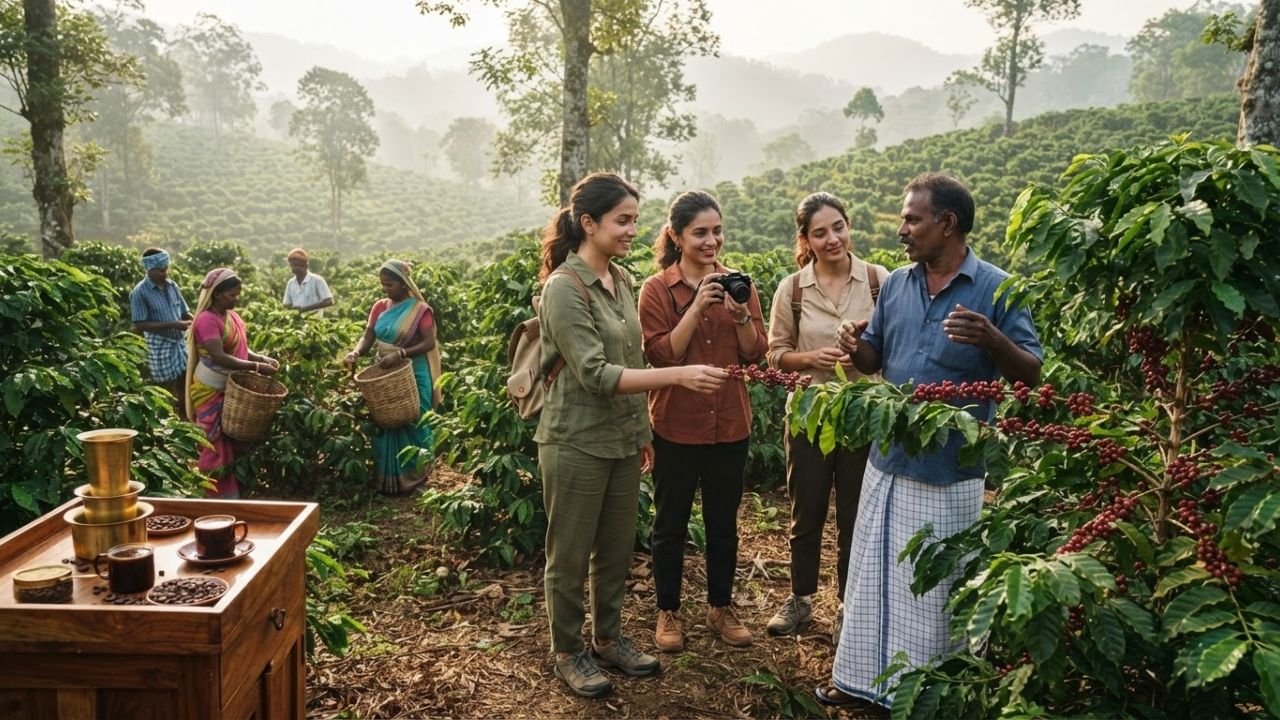
Transforming everyday morning rituals into immersive agricultural journeys, global coffee tourism has emerged as one of the fastest-growing niches in experiential travel, connecting discerning travelers directly with origin terroir, microclimates, and indigenous harvesting traditions. From the UNESCO-inscribed volcanic slopes of Colombia's Coffee Triangle and the high-altitude Geisha micro-lots of Boquete in Panama to the shade-grown biosphere plantations of India’s Western Ghats, travelers are bypassing conventional sightseeing to trace the labor-intensive journey of specialty coffee from flowering cherry to artisanal cup.
This shift reflects a broader consumer evolution toward single-origin traceability, fair-trade transparency, and regenerative agro-tourism. Once treated as closed industrial commodity zones focused exclusively on bulk export volume, premier coffee-producing regions now welcome travelers to historic family-owned haciendas, boutique processing mills, and sensory cupping laboratories, delivering tangible economic benefits to agrarian communities while championing biodiversity.
The Local Trend Revealed: The Rise of Origin Terroir and Cupping Expeditions
Contemporary coffee itineraries are structured around the specific geographic and climatic characteristics that define world-class Arabica varietals:
- Panama’s High-Altitude Geisha Estates:
- Concentrated around the volcanic highlands of Boquete and Volcán beneath the Volcán Barú, boutique estates produce world-record-setting Geisha (Gesha) beans.
- To protect fragile microclimates and crop hygiene, estates have instituted controlled-access educational tours, sensory tasting rooms, and private cupping sessions.
- Colombia’s UNESCO-Listed Coffee Triangle (Eje Cafetero):
- Spanning Caldas, Quindío, and Risaralda, this region combines traditional colonial fincas, steep Andean hillside cultivation, and the towering wax palms of the Cocora Valley.
- Guided estate walks showcase traditional washed (lavado) and natural anaerobic fermentation techniques that have sustained Colombian coffee heritage for generations.
- India’s Biodiverse Shade-Grown Plantations:
- Originating in the 17th century when Sufi saint Baba Budan smuggled seven raw coffee beans into the Chandragiri Hills of Karnataka, India’s coffee belt across Chikmagalur, Coorg (Kodagu), Wayanad, and the Araku Valley remains distinct for growing 100% of its crop beneath dense natural canopy trees.
- Inter-cropped with black pepper, cardamom, vanilla, and wild citrus, Indian estate coffees absorb rich spiced flavor profiles while providing vital biological corridors for wild Asian elephants and hornbills.
- Ancient Origins and Urban Roasting Hubs:
- Ethiopia: High-elevation forest origins in Kaffa, Yirgacheffe, and Sidama offer immersive traditional coffee ceremonies centered around roasting green beans over open coals in clay jebena pots.
- Central America & Hawaii: Volcanic mineral soils in Guatemala’s Lake Atitlán and Costa Rica’s shade-grown valleys highlight organic soil vitality, while Hawaii’s historic Kona district showcases American domestic single-estate heritage.
- Melbourne, Australia: Demonstrates how non-producing urban epicenters thrive by pioneering advanced barista science, micro-roasteries, and experimental brew bars that set global hospitality standards.
| Coffee Origin Region | Primary Terroir & Ecosystem | Iconic Varietals & Methods | Signature Travel Experience |
|---|---|---|---|
| Boquete & Volcán (Panama) | Volcanic slopes of Volcán Barú | Rare Geisha, anaerobic natural | High-elevation cupping labs & estate tours |
| Eje Cafetero (Colombia) | Andean steep slopes, UNESCO reserve | Castillo, Caturra, washed Arabica | Traditional colonial finca homestays |
| Western Ghats (India) | Dense multi-tier tropical rainforest | Arabica & Robusta, monsoon curing | Shade-grown plantation trails & spice walks |
| Yirgacheffe & Kaffa (Ethiopia) | Ancient wild highland forests | Heirloom wild Arabica strains | Traditional clay-pot jebena coffee ceremonies |
| Lake Atitlán (Guatemala) | High-altitude volcanic lakeside | Typica, Bourbon, volcanic soil | Indigenous Mayan cooperative farm visits |
| Kona District (Hawaii, US) | Volcanic Mauna Loa microclimate | 100% Kona Typica, single-estate | Scenic plantation drives along Mamalahoa Hwy |
Cultural & Environmental Value: Canopy Conservation and Fair-Trade Equity
Farm-to-cup tourism directly bridges high-end consumer demand with environmental protection and rural economic resilience:
- Preserving Multi-Tier Forest Canopies: Unlike monoculture industrial sun plantations that trigger soil erosion, shade-grown systems—pioneered in Costa Rica and strictly practiced across Southern India—protect two-tier native tree canopies. These canopy trees provide natural organic leaf litter fertilizer, shelter migratory songbirds, and prevent soil depletion on steep mountain slopes.
- Direct Trade and Economic Empowerment: By purchasing roasted single-origin beans and paying for on-site farm tours, travelers bypass multiple tiers of international middlemen, funneling hard currency directly into smallholder agricultural cooperatives, women-led coffee collectives, and indigenous tribal farmers (such as the Adivasi farmers of Araku Valley).
- Upcycling Agricultural Byproducts: Modern agro-tourism showcases sustainable closed-loop processing, converting discarded coffee cherry pulp into nutrient-rich organic compost and brewing antioxidant-rich cascara infusions (coffee cherry tea).
Visitor Insider Tips: Navigating Coffee Harvests and Cupping Protocols
- Align Journeys With Seasonal Harvest Windows:
- In India (Chikmagalur, Coorg) and Central America (Guatemala, Costa Rica), the primary harvest occurs between November and February, when red coffee cherries are hand-picked.
- In Colombia, take advantage of two harvest periods: the main crop (cosecha principal) from October to December, and the mid-year mitaca harvest from April to June.
- In Boquete, Panama, visit between January and March during the annual flower and coffee festival season.
- Observe Sensory Cupping Etiquette: When participating in professional cupping sessions at an estate or boutique roastery, avoid wearing strong perfumes, colognes, or scented lotions that interfere with olfactory evaluation. Use the provided cupping spoon to slurp the coffee vigorously—aerating the liquid across the entire palate to evaluate acidity, sweetness, and mouthfeel.
- Savor Heritage Coffee and Culinary Pairings:
- In Chikmagalur and Coorg, pair freshly brewed South Indian brass-filter coffee (kaapi) with warm Akki Roti (crispy rice flatbread) served with fresh coconut chutney and wild bamboo shoot curry.
- In Colombia’s Quindío department, enjoy a cup of medium-roast Bourbon paired with warm cheese-filled arepas and sweet arequipe (dulce de leche).
- In Panama, request cold-drip Geisha served over an ice sphere, tasting delicate jasmine, bergamot, and white peach tasting notes.
- Respect Estate Farming Operations: Coffee estates are active agricultural workplaces with heavy machinery and wet mills. Always wear closed-toe walking boots with good grip on steep, damp soil, stay on designated farm pathways, and never pick raw green cherries from bushes without guidance from your local host.
Tourism Outlook for the Specialty Coffee Trail
As travelers increasingly demand transparent, eco-conscious, and culturally authentic vacations, coffee tourism will continue its ascent from a niche enthusiast pastime into a premier global travel trend. By transforming remote agricultural hillsides into celebrated centers of culinary education and conservation, coffee-growing regions around the world are proving that protecting natural heritage and empowering local farmers is the recipe for sustainable tourism prosperity.
Related Travel Guides
Disclaimer
This article is for informational and educational purposes only. It does not constitute legal, financial, or professional advice. While we strive to provide accurate and up-to-date information, travel policies, regulations, and conditions change rapidly. Always verify information with official sources before making travel decisions. Nomad Lawyer makes no representations about the accuracy, reliability, completeness, or suitability of the information provided. Readers should consult qualified professionals for advice specific to their circumstances. The views expressed in this article are those of the author and do not necessarily reflect the views of Nomad Lawyer.
Raushan Kumar
Founder & Lead Developer
Full-stack developer with 11+ years of experience and a passionate traveller. Raushan built Nomad Lawyer from the ground up with a vision to create the best travel and law experience on the web.
Learn more about our team →