
Global Aviation’s New Ground War: JFK, Dubai, and Singapore Changi Face Rising Pressure for Specialized 'Taxi Pilot' Operations to Combat Travel Chaos and Hub Disruptions
Major global hubs including JFK, DXB, and SIN are exploring specialized 'Taxi Pilot' programs to bypass crew duty-time limits and reduce flight cancellations.

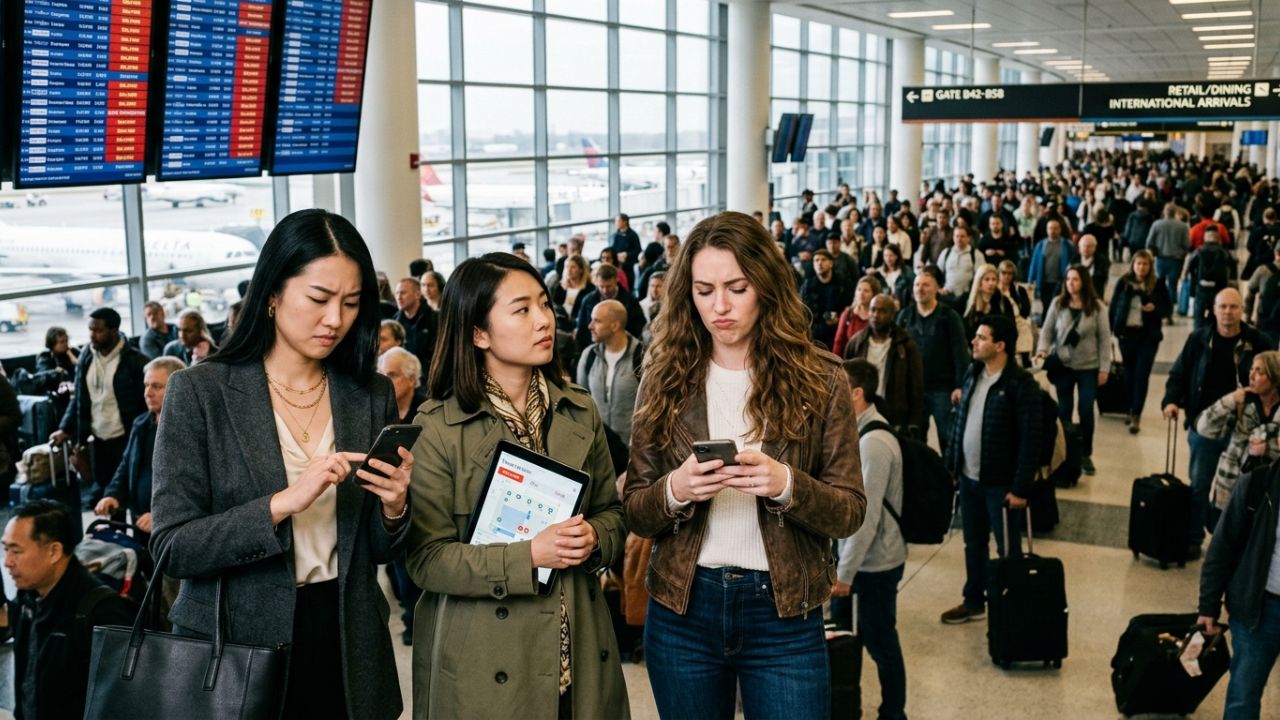
Image generated by AI
In a masterclass of operational survival that is fundamentally redefining the role of the modern aviator, the world’s busiest aviation hubs are currently facing an unprecedented "Ground War." From John F. Kennedy (JFK) and Dubai International (DXB) to Singapore Changi (SIN) and London Heathrow (LHR), the industry is witnessing a massive strategic pivot toward specialized "Taxi Pilot" operations. This major airline news update, sparked by British Airways’ successful implementation of six-figure ground-only pilot roles at Chicago O’Hare (ORD), highlights a critical attempt to decouple aircraft movement from the "Crew-Duty Clock." As global hubs buckle under the weight of systemic travel chaos and chronic airport disruptions, the deployment of specialized taxi pilots is emerging as the ultimate antidote to the last-minute flight cancellations that occur when long-haul crews reach their legal flying limits before the aircraft even leaves the taxiway.
Breaking: The $100,000 Ground Job and the Battle Against the 'Duty Cliff'
The emergence of the "Taxi Pilot" is a direct response to the rigid FAA and UK CAA pilot duty-time regulations. In a landscape where widebody aircraft—specifically the Boeing 777 and Boeing 787—often spend over an hour taxiing between split-terminal systems, active flight crews are frequently "timing out" before they can even initiate a takeoff roll. British Airways is reportedly paying specialized taxi pilots up to $100,000 annually at ORD just to move aircraft between Terminal 5 and Terminal 3.
Aviation analysts suggest that this is a definitive aviation update for the 2026-27 travel cycle. By utilizing ground-only pilots, airlines can protect their transatlantic and transpacific crews for the actual flight mission, ensuring that schedule reliability remains intact. For the global traveler, this move effectively immunizes their itinerary against the "Crew-Duty Cliff," where a simple ground-traffic delay in New York or Dubai would previously have resulted in a total flight cancellation.
Expanded Overview: The 'Mega-Hub' Infrastructure Crisis
The pressure for specialized taxi operations is most acute at airports that were never designed for the massive alliance-based terminal transfers of 2026. At JFK, where international congestion and terminal separation are at an all-time high, widebody turnaround delays are costing carriers tens of thousands of dollars per flight. Similarly, in Dubai (DXB), where long-haul aircraft movement volumes reach record peaks, the "Taxi Pilot" model is viewed as a critical tool for maintaining the efficiency of the world’s largest global transit nexus.
This isn't just about moving planes; it's about "Fuel and Time Optimization." A widebody jet can burn hundreds of kilograms of fuel per hour just idling in a taxiway queue. By employing ground specialists who are intimately familiar with local airport layouts, airlines can navigate the travel chaos of a peak-hour hub with surgical precision, reducing turnaround times and minimizing the localized airport disruptions that occur when aircraft become bottlenecks at gate entrances.
Section-Wise Breakdown: Evaluating the Global Hub Pressure Points
JFK and LAX: The North American Congestion Engines
At JFK, the separation of alliance terminals forces complex cross-airport repositioning. Specialized taxi operations here allow carriers to move aircraft to their departure gates while arriving crews clear customs, effectively "double-ending" the turnaround process. Similarly, at LAX, long taxi times for transpacific flights are being mitigated by ground pilots who handle the repositioning while the flight crew prepares in the cockpit.
Dubai (DXB) and Singapore (SIN): The Premium Hub Standard
For mega-hubs like Dubai and Singapore Changi, "Turnaround Reliability" is the brand. These airports manage enormous volumes of premium long-haul traffic. Specialized taxi pilots here ensure that the "Global Wave" of departures—linking six continents—is never disrupted by a crew duty-time violation. The model is particularly valuable for Boeing 777-300ER and 777X operations, where ground maneuverability requires a high level of pilot expertise.
Frankfurt (FRA) and Schiphol (AMS): The European Gridlock
European hubs are facing extreme capacity constraints and capacity-based flight cancellations. At Frankfurt, dense aircraft movement requires ground pilots who can "Quick-Taxi" aircraft between hub connectivity points. At Schiphol, gate shortages mean aircraft must often be moved to remote stands and back, a process that is significantly faster when handled by a dedicated ground pilot rather than a towing tug.
The Retired Captain Workforce: A Skilled Labor Sanctuary
Perhaps the most intriguing aspect of this trend is the "Workforce Shift." Commercial pilots face mandatory retirement at age 65, but these experienced aviators are perfectly legally qualified to handle ground-based aircraft operations. This has created a high-paying, lower-stress career path for retired captains, allowing airlines to tap into decades of operational knowledge to solve the modern travel chaos of the ground war.
Flight Details: Global Airport Taxi Operations & Hub Efficiency Matrix (2026)
The following table providing the operational pressures and the strategic necessity of specialized taxi pilots as of May 16, 2026.
Global Airport Taxi Operations & Hub Efficiency Matrix (2026)
| Airport (Hub) | Annual Pax Estimate | Primary Operational Challenge | Strategic Necessity for Taxi Pilots |
|---|---|---|---|
| Dubai International (DXB) | 85M+ | Mega-hub transit volume | Reduces transfer-wave delays |
| John F. Kennedy (JFK) | 60M+ | Terminal separation / Congestion | Prevents Transatlantic "Duty Time-outs" |
| Singapore Changi (SIN) | 65M+ | Premium turnaround reliability | Supports rapid hub-and-spoke flow |
| Paris Charles de Gaulle (CDG) | 65M+ | Complex alliance transfers | Optimizes cross-terminal repositioning |
| Frankfurt Airport (FRA) | 60M+ | Dense connectivity pressure | Improves punctuality for connections |
| Chicago O’Hare (ORD) | 75M+ | Split terminal repositioning | Current Model Leader (British Airways) |
| Toronto Pearson (YYZ) | 50M+ | Weather / Terminal coordination | Minimizes repositioning lag in winter |
Aircraft Ground Movement Impact Metrics
| Operational Factor | Industry Impact / Cost | Strategic Antidote |
|---|---|---|
| Widebody Taxi Fuel Burn | 300kg - 600kg per hour | Direct, specialized taxi routing |
| Crew Duty Window | ~12 Hours (FAA/CAA) | Ground-only pilots preserve flight hours |
| Avg. Long-Haul Delay Cost | $25,000 - $75,000 | Taxi pilots prevent schedule erosion |
| Workforce Trend | Age 65+ Retirees | High-paying, ground-only "Second Career" |
Passenger Impact: The Reliability Dividend of Ground Specialization
For the 2026 long-haul traveler, the rise of the taxi pilot offers a new level of "Itinerary Security."
- Bypass the Duty-Time Cliff: No longer will your flight be canceled at the last minute because the crew ran out of legal working hours while waiting in a taxi queue.
- Reduced Turnaround Delays: Specialized ground operations mean the aircraft is at the gate faster, allowing for on-time boarding and cleaner cabins.
- Antidote to Travel Chaos: By transiting through airports that utilize this model (like ORD or soon DXB), travelers are less likely to be caught in the cascading airport disruptions of a congested hub.
- Premium Punctuality: Business travelers in particular benefit from the increased frequency of same-day connections that are protected by the "Taxi Pilot" buffer.
Industry Analysis: The 'Ground-Only' Future of Aviation
Aviation specialists believe that "Taxi Pilot" operations are just the beginning of a broader trend toward the "Hyper-Specialization" of the flight crew.
- Split Duty-Time Management: By separating ground taxiing from actual flight time, airlines can effectively increase their aircraft utilization without increasing the risk of crew fatigue.
- Infrastructure Hedge: As airport infrastructure continues to lag behind passenger growth, specialized ground logistics are the only way to squeeze more capacity out of legacy terminal layouts.
- Experienced Labor Retention: The "Retired Captain Model" provides a way for airlines to retain their most experienced employees in a role that significantly improves hub reliability and reduces flight cancellations.
Conclusion: A New Standard for Hub Efficiency
The unveiling of the global pressure for specialized aircraft taxi operations is a definitive aviation update that confirms the ground is the new frontier for airline competition. By prioritizing hub efficiency and crew-duty preservation, airlines are proving that the travel chaos of the modern era can be bypassed through strategic specialization. As the first taxi pilots take their six-figure seats in New York, Dubai, and Singapore, the era of the "Connection Bottleneck" is officially under threat. For the global traveler, the message is clear: your journey no longer begins when the wheels leave the tarmac—it begins with the strategic, high-tech war being fought on the taxiways of the world’s greatest airports.
Key Takeaways
- Innovation: Growing demand for specialized "Taxi Pilots" to reposition aircraft at major hubs.
- Model: British Airways successfully paying $100k/year for ground pilots at Chicago O'Hare.
- Target Hubs: JFK, LAX, DXB, SIN, CDG, FRA, NRT, and HKG.
- Purpose: Bypass crew duty-time limits and prevent last-minute flight cancellations.
- Aircraft: Focus on widebody Boeing 777 and 787 international operations.
- Workforce: Tapping into retired captains (age 65+) for experienced ground handling.
- Impact: Reduced fuel burn, improved turnaround times, and less hub-based travel chaos.
Related Travel Guides
- France's World Cup Squad Flies All-Business Airbus A321neo to Boston: Inside La Compagnie's Luxury Transatlantic Charter
- British Airways UAE Flights Face Deep Cuts as Emirates and Etihad Gain Ground Across the UK Market
- Spirit Airlines' Prized LaGuardia Slots Hit Auction Block at $87 Million Valuation
Disclaimer
This article is for informational and educational purposes only. It does not constitute legal, financial, or professional advice. While we strive to provide accurate and up-to-date information, travel policies, regulations, and conditions change rapidly. Always verify information with official sources before making travel decisions. Nomad Lawyer makes no representations about the accuracy, reliability, completeness, or suitability of the information provided. Readers should consult qualified professionals for advice specific to their circumstances. The views expressed in this article are those of the author and do not necessarily reflect the views of Nomad Lawyer.
Kunal K Choudhary
Co-Founder & Contributor
A passionate traveller and tech enthusiast. Kunal contributes to the vision and growth of Nomad Lawyer, bringing fresh perspectives and driving the community forward.
Learn more about our team →