
Gulf Aviation Shakeup: Emirates, Qatar, and Etihad Face Massive Contractions as Asia and Europe Bypass Middle East Travel Chaos and Flight Cancellations in 2026
The Middle Eastern aviation sector has seen a massive structural realignment in 2026, with Emirates, Qatar, and Etihad losing market share to Asian bypass hubs.

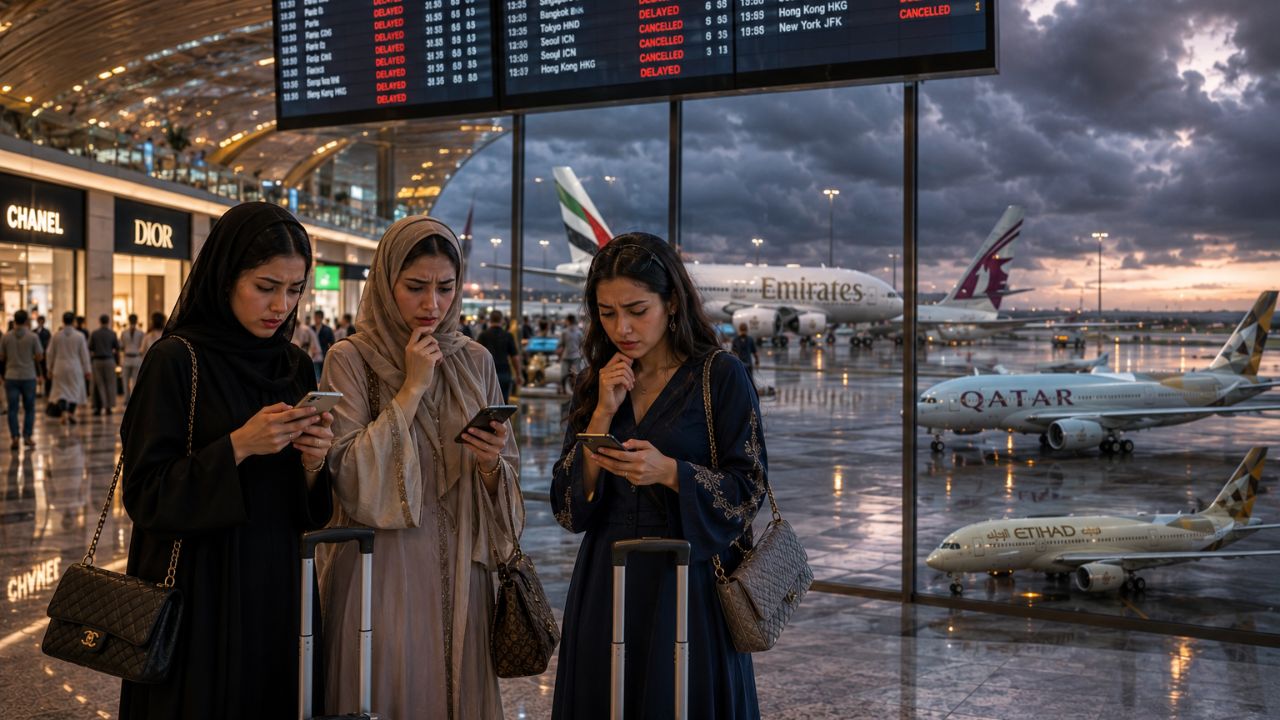
Image generated by AI
In a structural earthquake that has permanently altered the geography of global flight, the long-standing "Mega-Hub" dominance of the Middle East has faced a profound contraction in the 2026 cycle. Driven by intense regional conflict and restricted airspace, the trio of Emirates, Qatar Airways, and Etihad Airways has seen a double-digit decline in flight frequencies, effectively ceding the "Global Transit Throne" to East Asian gateways and European carriers. This major airline news update, backed by definitive Cirium data, reveals that the reliance on Gulf connections has been shattered by systemic travel chaos and localized airport disruptions. For the transcontinental traveler, the 2026 season is no longer defined by a layover in Dubai or Doha, but by a "Bypass Era" where Singapore, Seoul, and Tokyo have emerged as the new high-yield sanctuaries from the unpredictable flight cancellations of the Middle East.
Breaking: The 'Big Three' Contraction and the Rise of the Bypass Hub
The 2026 operational data is a stark departure from the post-pandemic recovery forecasts. Emirates has seen its flight volume drop by 34%, while Qatar Airways has suffered a massive 56% contraction. Even Etihad, previously on a path of aggressive growth, has recorded a 19% decline. The impact is most visible on the lucrative Australia-to-Europe corridor, where traffic through Gulf hubs has plummeted by a staggering 77% year-on-year.
Aviation analysts suggest that this is a "Permanent Realignment" rather than a temporary dip. As restricted airspace and drone activity increase the "Connection Risk," passengers are flocking to robust East Asian axes. Carriers such as Cathay Pacific, Korean Air, and Qantas have capitalized on this displaced traffic, introducing new frequencies and achieving record-high load factors on Asia-Europe routes. This shift is being hailed as the most significant aviation update of the decade, proving that the centralized "Hub-and-Spoke" model is remarkably vulnerable to geopolitical instability.
Expanded Overview: Winners and Losers in the New Aviation Order
While the Gulf giants retrench, the "Bypass Hubs" are thriving. Korean Air reported a staggering 47.3% increase in operating income (517 billion won) for Q1 2026, largely driven by European transit demand bypassing the Middle East. Similarly, Qantas has successfully rerouted its flagship Perth-London service via Singapore, achieving over 90% capacity on the new bypass corridor.
In Europe, the Lufthansa Group and British Airways have executed a strategic pivot to the East. By substituting disrupted Middle East schedules with added frequencies to Bangkok, Delhi, and Mumbai, these carriers have generated immediate replacement revenue. This structural realignment is projected to persist for at least six to twelve months, according to Bank of America analysts, as brand loyalty cements around the new, more stable transit points of Munich, Frankfurt, and Changi.
Section-Wise Breakdown: Regional Success Stories Amidst the Turmoil
Oman Air: The Measured Recovery
In a rare Gulf success story, Oman Air has returned to profitability for the first time in 15 years. By pursuing a measured, regional-first strategy rather than massive intercontinental expansion, the Muscat-based carrier has avoided the worst of the travel chaos. New services to Tashkent (June 1), Kigali, and Singapore illustrate a carefully targeted growth model that prioritizes operational stability over network density.
Saudia and Riyadh Air: The Vision 2030 Pivot
Saudia (Saudi Arabian Airlines) is aggressively diversifying into Europe, with eight new destinations for Summer 2026 including Nice, Athens, and Antalya. Meanwhile, the kingdom's newest carrier, Riyadh Air, is moving ahead with its Southeast Asia dominance plan, targeting Bangkok and Manila. However, these ambitions remain constrained by the same regional safety corridors that have triggered flight cancellations for its neighbors.
Qatar Airways: The Resilience Model
Despite its 56% contraction, Qatar Airways is attempting a massive network restoration starting June 16, 2026. The airline plans to return to 150+ destinations, including high-profile reinstatements to Helsinki, Tokyo Haneda, and Caracas. This "Resilience Model" focuses on high-frequency regional links, such as the double-daily service to Abu Dhabi, to keep its hub operational during periods of international airport disruptions.
Emirates: Rebuilding the Dubai Bridge
As of May 2026, Emirates has managed to restore nearly its full global network, operating to 137 destinations in 72 countries. By leveraging its fleet of A380s and 777s on high-yield "Safety Corridors" in the Eastern Hemisphere, the airline is attempting to reclaim Dubai’s status as a strategic transit nexus, even as competitors in Seoul and Singapore gain ground.
Flight Details: 2026 Global Aviation Realignment & Bypass Matrix
The following table providing the market shifts and bypass route successes following the Gulf contraction.
2026 Global Aviation Realignment & Bypass Matrix
| Carrier / Hub | Flight Volume Change | Primary Bypass Corridor | Strategic Outcome |
|---|---|---|---|
| Emirates (DXB) | -34% | Middle East Transit | Conservative Restructuring |
| Qatar Airways (DOH) | -56% | Middle East Transit | Massive Phased Restoration |
| Etihad Airways (AUH) | -19% | Middle East Transit | Strategic China Partnership |
| Oman Air (MCT) | Profitable | GCC Regional / Central Asia | First Profit in 15 Years |
| Korean Air (ICN) | +47.3% Income | Seoul - Europe | High-Yield Hub Domination |
| Qantas (SIN) | 90% Capacity | Singapore - London | Successful Hub Reroute |
| British Airways (LHR) | Added Freq. | London - India (DEL/BOM) | Captured Displaced Traffic |
Passenger Impact: The Rise of 'The East Asian Sanctuary'
For the 2026 transcontinental traveler, the shift away from Gulf hubs offers a new level of operational confidence.
- Antidote to Travel Chaos: By transiting through Changi (Singapore) or Incheon (Seoul), travelers avoid the airspace restrictions and safety corridors that have plagued Middle Eastern transit.
- Minimized Flight Cancellations: East Asian gateways provide a more stable operational environment, significantly reducing the risk of short-notice disruptions.
- Enhanced Transit Choice: The rise of bypass routes via Munich, Frankfurt, and Tokyo means more competition and better scheduling options for the long-haul traveler.
- Record Load Factors: While bypass flights are more reliable, they are also more crowded, with carriers like Cathay Pacific reporting over 90% occupancy on Asia-Europe rotations.
Industry Analysis: The End of the Mega-Hub Monopoly?
Aviation specialists believe the "Big Three" contraction marks a permanent shift in how airlines evaluate "Hub Risk."
- Vulnerability of Centralization: The 2026 crisis has proven that relying on a single, centralized mega-hub (like Dubai) is a high-risk strategy in a volatile geopolitical era.
- Structural Market Gains: Entrenched bypass routes via Singapore and Seoul have allowed carriers to build new brand loyalty, which may be difficult for Gulf airlines to reclaim.
- Revenue Realignment: High pricing strength on Asia-Europe bypass routes has bolstered the balance sheets of carriers like Lufthansa and British Airways, providing them with the capital to further expand their non-Gulf networks.
Conclusion: A New Horizon for Global Flight
The 2026 "Gulf Aviation Collapse" is a definitive aviation update that confirms the end of the unipolar transit world. While Emirates, Qatar, and Etihad are demonstrating remarkable resilience through their phased restoration plans, the rise of the East Asian and European bypass axes has created a more diversified, resilient global sky. As the industry moves into the second half of the year, the "Bypass Corridors" have become the new standard for operational reliability. For the global traveler, the path between East and West is no longer a single bridge through the desert, but a network of diverse, high-tech gateways that prioritize stability over scale. The age of the mega-hub is not over, but its monopoly has been broken.
Key Takeaways
- Contraction: Emirates (-34%), Qatar (-56%), and Etihad (-19%) see massive flight declines.
- Bypass Hubs: Singapore, Seoul, Tokyo, and Hong Kong emerge as the primary winners.
- Winners: Korean Air (income up 47%), Qantas (90% bypass capacity), Cathay Pacific.
- Gulf Success: Oman Air profitable for the first time in 15 years.
- Restoration: Qatar Airways targeting 150+ destinations by mid-June 2026.
- Impact: Structural realignment of global travel flows expected to last 6-12 months.
- Effect: Reduction in travel chaos for those choosing the new "East Asian Sanctuary."
Related Travel Guides
Disclaimer
This article is for informational and educational purposes only. It does not constitute legal, financial, or professional advice. While we strive to provide accurate and up-to-date information, travel policies, regulations, and conditions change rapidly. Always verify information with official sources before making travel decisions. Nomad Lawyer makes no representations about the accuracy, reliability, completeness, or suitability of the information provided. Readers should consult qualified professionals for advice specific to their circumstances. The views expressed in this article are those of the author and do not necessarily reflect the views of Nomad Lawyer.
Kunal K Choudhary
Co-Founder & Contributor
A passionate traveller and tech enthusiast. Kunal contributes to the vision and growth of Nomad Lawyer, bringing fresh perspectives and driving the community forward.
Learn more about our team →