
Germany's Rail Network Integrates Poland and Baltic States via Rail Baltica High-Speed Corridor 2026
Germany serves as the western gateway for the Rail Baltica corridor, linking Berlin, Warsaw, Vilnius, Riga, and Tallinn through a standardized high-speed rail network to boost tourism and trade.

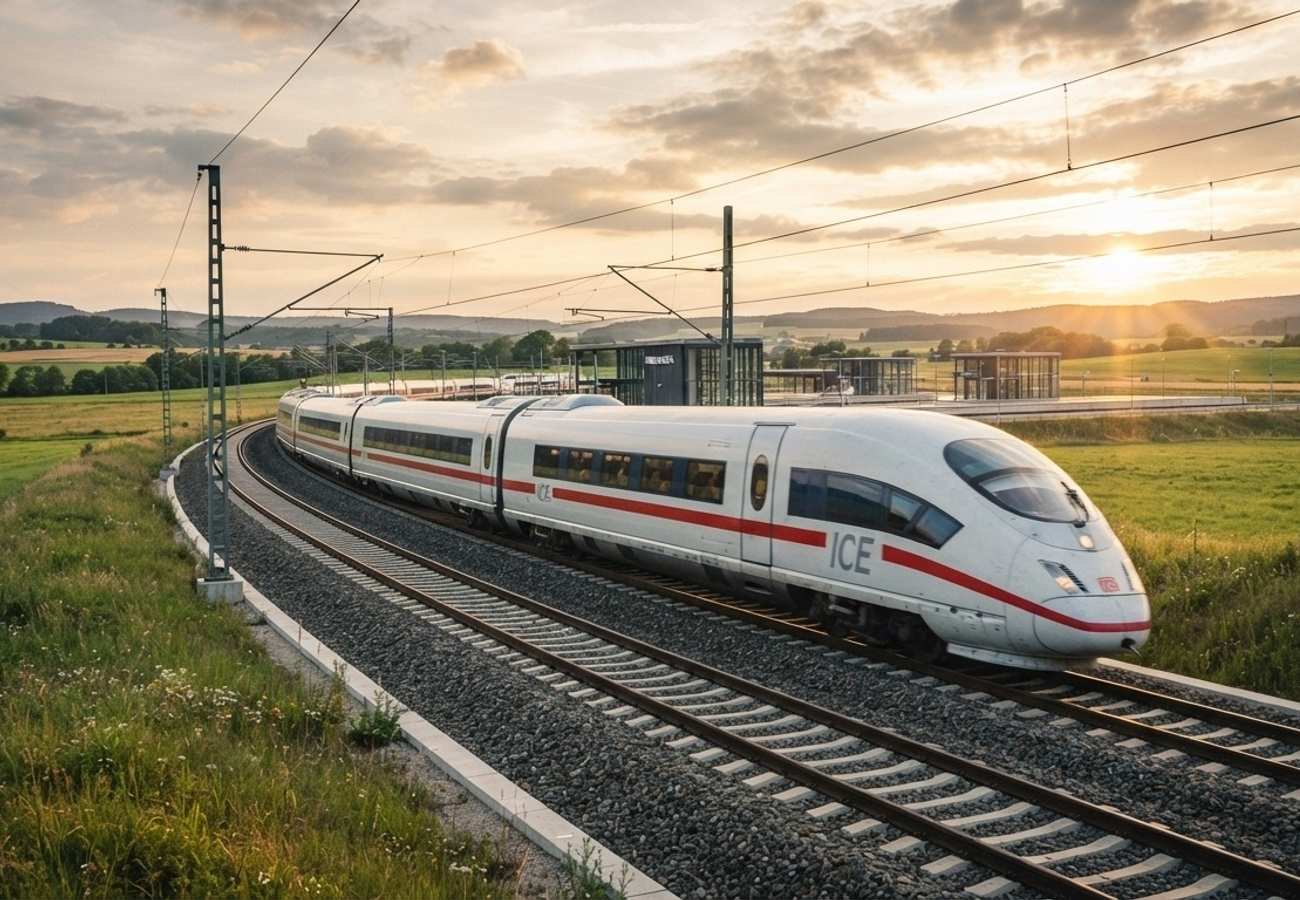
Image generated by AI
Germany has emerged as the primary western anchor for a massive European infrastructure shift, linking its upgraded rail network to Poland and the Baltic States through the Rail Baltica corridor. This integration effectively ends decades of railway isolation by implementing a standardized gauge system that connects Berlin, Warsaw, Vilnius, Riga, and Tallinn.
The transition to a high-speed, electrified network is fundamentally altering the logistics of Northern and Western Europe. By removing the technical barriers that previously forced passengers into cumbersome transfers, the corridor is stimulating regional economies and opening the Baltic region to a new wave of sustainable global tourism.
Mapping the New European Transit Corridor
The current operational framework allows travelers to traverse from Germany to Estonia without the need for overnight stays. This is achieved through a coordinated effort between several national operators, creating a seamless overland bridge.
The following data outlines the current travel segments and operational specifics:
| Route Section | Countries Connected | Main Operator | Approx. Travel Time | Key Feature |
|---|---|---|---|---|
| Berlin – Warsaw | Germany – Poland | Deutsche Bahn / PKP Intercity | ~5.5 hours | Direct EuroCity services |
| Warsaw – Mockava | Poland – Lithuania | PKP Intercity | ~6 hours | Connection to Lithuania |
| Mockava – Vilnius/Kaunas | Lithuania | LTG Link | ~2.5 hours | Cross-platform transfer |
| Vilnius – Riga | Lithuania – Latvia | LTG Link | ~4.5 hours | Direct Baltic connection |
| Riga – Tallinn | Latvia – Estonia | Baltic rail connections | ~4.5 hours | Northern Baltic extension |
This network allows a traveler to depart Berlin in the morning and arrive in Vilnius by evening, facilitating multi-country itineraries that were previously logistically difficult.
Berlin as the Western Gateway to the Baltics
Berlin Hauptbahnhof now serves as the critical starting point for journeys heading northeast. The city’s infrastructure allows international arrivals to bypass short-haul flights and transition directly to rail.
The Berlin-Warsaw leg is a cornerstone of this network, with up to six daily EuroCity services operated by Deutsche Bahn and PKP Intercity. This high-frequency connection transforms the two capitals into a synchronized hub, allowing tourism operators to bundle German cultural sites with Polish and Baltic destinations.
Strategic advantages of this expansion include:
- Direct integration with Central European rail grids.
- A significant reduction in reliance on carbon-heavy short-haul aviation.
- Enhanced accessibility for non-EU international tourists.
- Streamlined business travel between Western and Northern Europe.
Poland's Role as the Geographic Bridge
Poland provides the essential land link between Western Europe and the Baltic states. The journey from Warsaw toward the Lithuanian border passes through the Suwałki Gap—a region of immense strategic importance and scenic value.
At the Mockava border station, the transition from Polish to Lithuanian rail systems is managed via coordinated transfers. This allows passengers to move from PKP Intercity services to LTG Link trains with minimal friction, accelerating the flow of people into the Baltic heartland.
Baltic Integration: Lithuania, Latvia, and Estonia
Lithuania is currently leading the region's return to the European standard railway network. The operational link at Mockava provides direct access to Kaunas and Vilnius, the latter of which is seeing a surge in tourism due to its UNESCO-listed Old Town.
Lithuania's Connectivity Hubs
- Vilnius: Primary cultural hub connected from Mockava via LTG Link.
- Kaunas: Key economic center benefiting from improved regional mobility.
- Riga: Directly linked from Vilnius as of December 2023.
Latvia serves as the future center of the Rail Baltica corridor. Riga is positioned to become a primary railway hub, integrating the city's Art Nouveau districts and business centers with a direct link to Riga International Airport. This creates a "multi-modal" transit point where air and rail travel converge.
Estonia marks the northern terminus of the corridor. Tallinn’s medieval Old Town and tech-driven economy are now more competitive as a destination for Central European travelers. Looking forward, the vision extends beyond the rail line, with potential ferry links and the proposed FinEst underwater tunnel to connect Tallinn with Helsinki.
The Rail Baltica corridor is not merely a transport project; it is a geopolitical realignment of European mobility.
Related Travel Guides
Disclaimer
This article is for informational and educational purposes only. It does not constitute legal, financial, or professional advice. While we strive to provide accurate and up-to-date information, travel policies, regulations, and conditions change rapidly. Always verify information with official sources before making travel decisions. Nomad Lawyer makes no representations about the accuracy, reliability, completeness, or suitability of the information provided. Readers should consult qualified professionals for advice specific to their circumstances. The views expressed in this article are those of the author and do not necessarily reflect the views of Nomad Lawyer.
Kunal K Choudhary
Co-Founder & Contributor
A passionate traveller and tech enthusiast. Kunal contributes to the vision and growth of Nomad Lawyer, bringing fresh perspectives and driving the community forward.
Learn more about our team →