
Germany Flight Chaos Grounds Hundreds at Frankfurt, Munich in April 2026
Lufthansa strikes in April 2026 ground hundreds of flights across Frankfurt and Munich, stranding thousands of passengers and cascading disruptions throughout Europe's aviation network during peak spring travel.

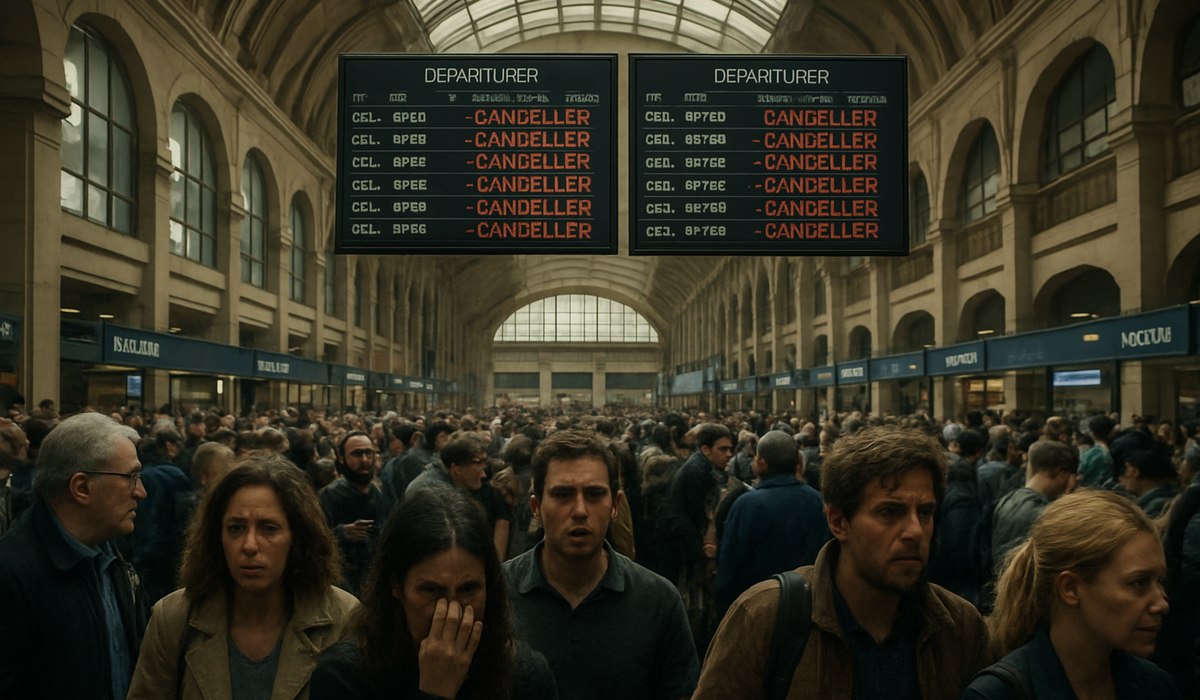
Image generated by AI
Lufthansa Strikes Ground Hundreds of Flights at Germany's Major Hubs
Lufthansa's April 2026 strike action has grounded hundreds of flights at Frankfurt and Munich airports, leaving thousands of passengers stranded across Europe during the busiest spring travel season. Cabin crew walkouts on April 10 forced the cancellation of approximately two-thirds of scheduled services at the airline's primary bases, with Frankfurt recording roughly 580 cancelled departures and arrivals. Additional disruptions loom as pilot unions prepare further stoppages for April 13 and 14, prompting Lufthansa to preemptively slash capacity on routes connecting these hubs to Berlin, Leipzig, Stuttgart, Amsterdam, Vienna, and Zurich.
Germany's flight chaos represents more than isolated airport disruptions. Frankfurt and Munich handle disproportionate volumes of Lufthansa traffic, making them critical junctions in Europe's continental network. When operations contract at these bottlenecks, the ripple effects extend across Star Alliance partners and independent carriers competing for limited capacity on rerouted itineraries.
Strike Action Triggers Mass Cancellations at Germany's Major Hubs
The industrial action commenced with unexpected force. Cabin crew members initiated a one-day strike on April 10, forcing Lufthansa to operate at skeleton capacity. Frankfurt, Germany's busiest airport and Europe's third-largest by passenger volume, absorbed the initial impact with widespread cancellations affecting domestic, European, and long-haul networks simultaneously.
Munich's secondary hub absorbed comparable disruptions, with several hundred additional scrubbed flights. Both airports serve as critical interchange points for connecting passengers, meaning each cancelled flight triggered secondary displacement of transit travelers. Lufthansa's dominant market share at these facilities—accounting for majority traffic volumes—meant that competitor airlines also faced capacity constraints from displaced passengers seeking alternative routing.
Pilot unions announced forthcoming walkouts for April 13 and 14, prompting Lufthansa to implement preemptive cuts across its European network. This forward-looking strategy aimed to minimize day-of chaos but left many travelers unable to rebook with adequate notice. The airline's decision to reduce scheduled capacity days in advance created a cascade of reservation system changes that overwhelmed customer service channels.
For real-time flight status updates and tracking disrupted itineraries, consult FlightAware for live departure boards and historical delay data.
Preemptive Flight Cuts Extend Disruptions Across European Routes
Anticipating the April 13-14 pilot strikes, Lufthansa removed numerous flights from its schedule across major European corridors. Routes from Frankfurt and Munich to Berlin, Leipzig, and Stuttgart—key domestic connections—faced substantial cutbacks. International services to Amsterdam, Vienna, and Zurich experienced schedule compression as the carrier consolidated remaining flights to maximize operational efficiency.
These preemptive cancellations intended to prevent worse-case scenarios but created secondary disruption waves. Travelers booked on cancelled flights days before the actual strike faced immediate rebooking challenges. Airline systems struggled to accommodate mass rerouting requests within hours rather than the typical advance-notice windows that allow coordinated schedule adjustments.
United States-bound passengers experienced particular complexity. Transatlantic services normally routed through Frankfurt faced redirection via alternate Star Alliance hubs. Some passengers secured rebookings through Zurich or Vienna, while others accepted routing on non-alliance carriers where seats became available. The cascading reroutes extended typical journey times by 4-8 hours for affected travelers.
Ground handling teams at Frankfurt, Munich, and downstream European hubs strained under redirected passenger volumes. Transfer desks, airline service counters, security lanes, and baggage systems all experienced heightened demand from rebooked passengers. Peak travel windows—typically early morning and evening—created compound congestion that extended wait times substantially beyond normal operations.
Domino Effect: How Lufthansa's Scale Amplifies Continental Impact
Frankfurt and Munich occupy outsized importance in Europe's aviation infrastructure. Frankfurt specifically functions as a primary long-haul connection point, routing passengers between Asia-Pacific, Middle Eastern, and transatlantic destinations. When Lufthansa reduces capacity at these hubs, the network effects ripple across multiple carriers and alliances simultaneously.
The Germany flight chaos demonstrates how concentrated airline market share can amplify localized disruptions into continental crises. Lufthansa operates approximately 60-70% of daily movements at Frankfurt and comparable shares at Munich. No competitor possesses sufficient spare capacity to absorb displaced traffic during peak travel periods.
This concentration means that other Star Alliance members—United, Brussels Airlines, Swiss International, and others—immediately experience secondary impacts. Connecting flights dependent on Frankfurt or Munich arrivals cascade into delays. Interline passengers booked across multiple carriers face broken itineraries when primary flight legs cancel.
Non-alliance carriers also absorb spillover effects. Additional security screening, baggage handling, and ground services stretch airport resources. Even passengers booked entirely on carriers unaffected by Lufthansa strikes experience delays from airport-wide congestion and extended connection times.
The Spring 2026 travel window amplified these structural vulnerabilities. April represents peak European vacation season, Easter holiday period, and early summer leisure travel. Airport capacity operated near maximum prior to strikes, leaving negligible buffer for absorption of rerouted passengers.
Passenger Recovery and Rebooking Challenges
Individual travelers experienced highly variable outcomes. Some passengers received immediate rebooking notifications through airline apps and were confirmed on alternative flights within 24 hours. Others found their bookings absent from systems, requiring manual intervention at airport service desks.
The most challenging experiences involved passengers midway through multi-leg journeys. A traveler booked Frankfurt-Berlin-Rome faced cancellation of the first segment. Airline representatives could not confirm connections to Rome without confirming the primary leg, creating circular rebooking logic that took hours to resolve at overworked service counters.
Passengers accepted onto "complicated detours" reported journeys extended by full days. A London-Istanbul connection normally routed via Frankfurt faced rerouting through Paris and Vienna, adding approximately 8 hours to total travel time. Some travelers opted to abandon plans entirely rather than accept journeys exceeding 18 total hours.
Social media documented widespread frustration with customer service accessibility. Phone lines exceeded capacity, email responses appeared days later, and online chat systems queued requests for hours. Passengers at Frankfurt and Munich faced in-person service desk lines extending 1-2 hours even with additional temporary staffing.
Rebooking fairness questions emerged across passenger communities. Travelers on premium cabin fares questioned why they were rebooked on economy seats on alternate carriers. Some passengers in economy expected accommodation (meals, hotels, ground transport) consistent with EU regulations but received only flight changes.
For detailed passenger rights information and regulatory requirements, consult the U.S. Department of Transportation, which maintains comprehensive air travel consumer protection guidance applicable to international services.
Traveler Action Checklist
Follow these sequential steps if your flight is affected by Germany flight chaos or related European disruptions:
-
Check flight status immediately via FlightAware or your airline's official app before visiting the airport, as cancellation notifications may arrive via push alert or email before SMS confirmation.
-
Document your booking reference and fare class before contacting the airline, as customer service representatives need this information to identify rebooking options and applicable compensation eligibility.
-
Contact your airline directly through official channels (phone, official website, airport service desk) within 2-4 hours of notification, as seat availability decreases exponentially as other passengers initiate rebooking simultaneously.
-
Request alternative routing options specifying your preferred departure times and connections, as agents may default to convenient rebookings rather than optimal alternatives if not explicitly directed.
-
Confirm accommodation eligibility under EU261/2004 regulations (for EU departures or arrivals) or applicable international
Disclaimer
This article is for informational and educational purposes only. It does not constitute legal, financial, or professional advice. While we strive to provide accurate and up-to-date information, travel policies, regulations, and conditions change rapidly. Always verify information with official sources before making travel decisions. Nomad Lawyer makes no representations about the accuracy, reliability, completeness, or suitability of the information provided. Readers should consult qualified professionals for advice specific to their circumstances. The views expressed in this article are those of the author and do not necessarily reflect the views of Nomad Lawyer.
Kunal K Choudhary
Co-Founder & Contributor
A passionate traveller and tech enthusiast. Kunal contributes to the vision and growth of Nomad Lawyer, bringing fresh perspectives and driving the community forward.
Learn more about our team →