
Germany Aligns With UK As Ambition Makes Unscheduled Warnemünde Call After Shipyard Manoeuvre
Germany Aligns With UK As Ambition Makes Unscheduled Warnemünde Call After Shipyard Manoeuvre
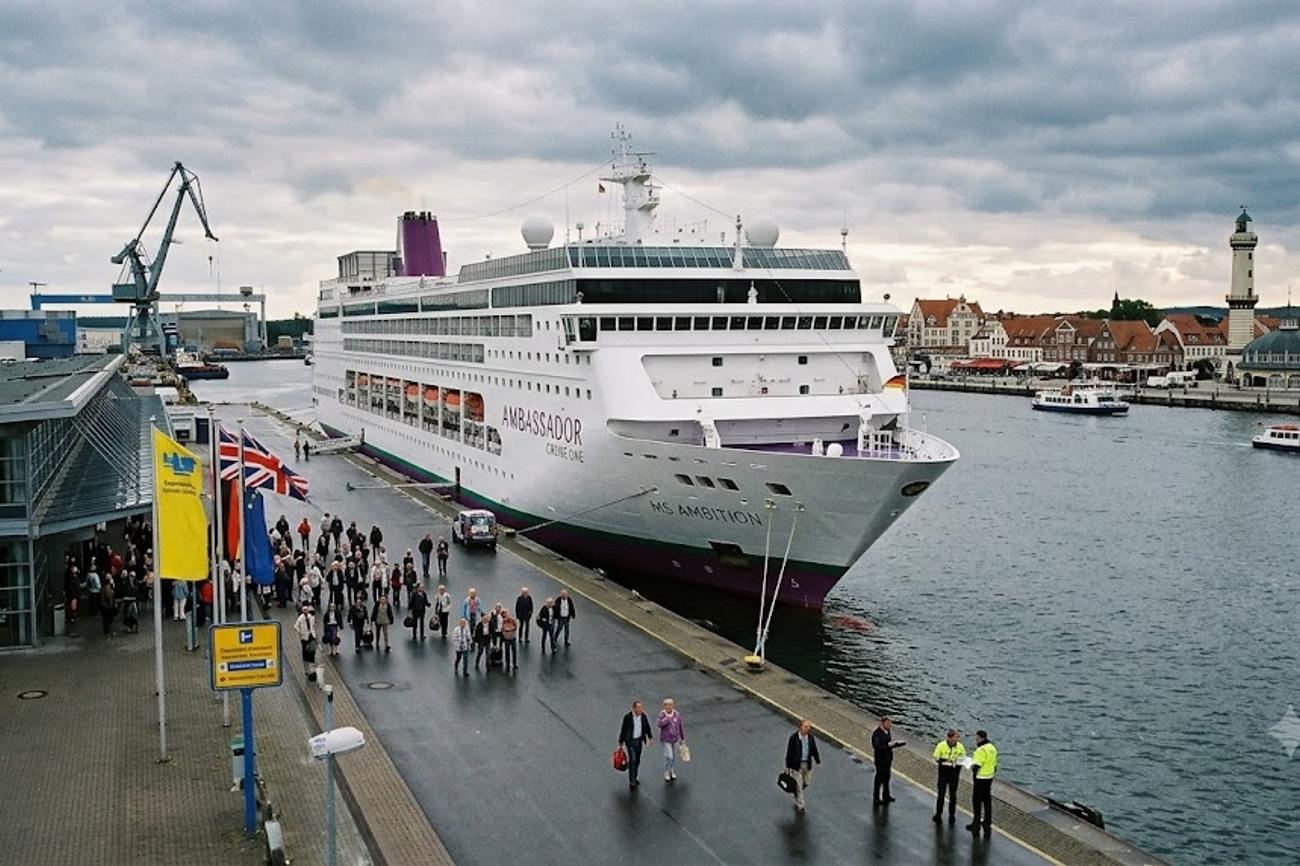
Image generated by AI
Two FairPlay tugboats, specifically FairPlay 5 and FairPlay 20, were required to execute a complex turning maneuver inside a shipyard basin to position the cruise ship Ambition at berth P1-4. This unscheduled arrival in Warnemünde, Germany, highlights the precarious nature of maritime logistics in the Baltic Sea, where the intersection of aging vessel architecture and tight port infrastructure necessitates high-precision coordination. For the cruise industry, the movement of the Ambition—a ship with a fragmented identity spanning several brands—serves as a case study in the lifecycle of mid-sized cruise assets and the logistical burdens they place on European gateway ports.
The Logistics of an Unscheduled Baltic Call
The arrival of the Ambition in Warnemünde was not a standard passenger stop, but rather an operational anomaly. The vessel was forced to undergo a specific maneuver within the shipyard basin, a restricted maritime space that leaves zero margin for error. The deployment of two specialized tugs from the FairPlay fleet indicates that the ship's own propulsion and thruster systems were insufficient for the required pivot, or that port authorities mandated external assistance to mitigate risk to the shipyard infrastructure.
Warnemünde serves as the primary maritime gateway for the Rostock region in Mecklenburg-Vorpommern. Because the port is designed to handle a high volume of Baltic Sea traffic, the allocation of berth P1-4 for an unscheduled call suggests a prioritization of the vessel's needs over standard tourist traffic. This specific location is critical for ships requiring immediate access to technical facilities or emergency stabilization, though the official reason for this specific call remains undisclosed by the operator.
The coordination of such a movement involves a tripartite communication chain between the ship’s bridge team, the International Association of Ports and Harbors standards for shore-based personnel, and the tug operators. In the confined waters of a shipyard basin, the physics of a cruise ship's windage—the surface area exposed to wind—can make a vessel behave like a sail, necessitating the precise torque provided by FairPlay 5 and FairPlay 20 to prevent collisions with the quay.
Vessel Identity and Operational Data
The Ambition is not a new entry to the seas; it is a repurposed asset that has transitioned through multiple corporate identities to remain commercially viable. This "ship-hopping" is a common strategy in the cruise industry to extend the life of vessels that no longer fit the "mega-ship" profile of primary market leaders.
| Operational Metric | Detail |
|---|---|
| Current Vessel Name | Ambition |
| Legacy Identity | AIDAmira |
| Current Operator | Ambassador Cruise Line |
| Primary Port Location | Warnemünde, Germany |
| Support Vessels | FairPlay 5 & FairPlay 20 |
| Assigned Berth | P1-4 |
| Arrival Classification | Unscheduled |
| Original Launch Year | 1999 (as Mistral) |
The ship's lineage reveals a pattern of market adaptation. Originally launched in 1999 as the Mistral for Festival Cruises, it later operated as the Grand Mistral and the Costa neoRiviera. In 2019, it underwent a significant refurbishment to become the AIDAmira under AIDA Cruises, before its 2022 acquisition by Ambassador Cruise Line. Each transition represents a shift in target demographics—moving from the luxury-leaning Festival Cruises to the more casual, German-centric AIDA, and finally to the British-focused market served by Ambassador.
Expert Analysis: The Hidden Costs of Vessel Aging
For travelers and industry analysts, the unscheduled arrival of the Ambition is a signal of the inherent risks associated with "legacy" cruise ships. When a vessel built in 1999 is rebranded and repurposed four times over two decades, the mechanical stress on the hull and propulsion systems accumulates. While the source does not confirm a technical failure, the necessity of an unscheduled call at a shipyard basin—rather than a standard passenger terminal—strongly suggests an operational requirement that exceeds routine maintenance.
For passengers booking routes on legacy ships, the direct consequence is an increased probability of itinerary volatility. The reliance on tugboats like FairPlay 5 and 20 for basic positioning in a known port suggests that the vessel may lack the modern azipod propulsion systems found in newer ships, which allow for 360-degree maneuverability without external help.
The pricing pressure this creates is twofold. First, the operator must absorb the high cost of emergency tug hire and unscheduled berth fees at P1-4. Second, if these unscheduled calls become a pattern, insurance premiums for the vessel rise. For the traveler, this often manifests as "hidden" costs in the form of higher cruise fares or a reduction in the quality of onboard amenities as capital is diverted toward maintaining aging machinery.
Furthermore, the use of Warnemünde as a technical stop illustrates the port's strategic importance. By providing a reliable interface between the Baltic Sea and the industrial capabilities of Rostock, the port ensures that vessels can be stabilized before they cause a wider blockage in the shipping lanes. The efficiency of the World Ports Sustainability Program and similar frameworks ensures that these unscheduled movements do not paralyze regional tourism.
Key Takeaways
- Operational Reliance: The Ambition required the combined power of two tugs (FairPlay 5 and 20) to navigate the Warnemünde shipyard basin, indicating a lack of autonomous maneuverability in confined spaces.
- Asset Lifecycle: The vessel's history—transitioning from Mistral (1999) to AIDAmira and finally Ambition—highlights the industry trend of recycling older ships for niche markets.
- Port Strategic Value: Warnemünde’s berth P1-4 serves as a critical safety valve for unscheduled Baltic calls, preventing technical issues from disrupting broader regional maritime traffic.
- Market Shift: The ship's move to Ambassador Cruise Line marks a transition from the German market (AIDA) to the British cruise sector.
FAQ: Ambition Warnemünde Call 2024
Why did the Ambition need tugboats in Warnemünde? The vessel used FairPlay 5 and FairPlay 20 to turn within the shipyard basin. This is often necessary for older ships lacking advanced thrusters or when navigating restricted spaces to ensure the vessel reaches berth P1-4 safely.
Is the Ambition the same ship as the AIDAmira? Yes. The vessel operated as the AIDAmira from 2019 until 2022, when it was acquired by Ambassador Cruise Line and renamed Ambition.
Did this unscheduled stop affect passengers? The available reports do not confirm whether passengers were onboard or if excursions were cancelled. The movement focused on the technical positioning of the ship at a shipyard berth.
What is the significance of berth P1-4? Berth P1-4 in Warnemünde is a recognized location for vessel berthing that allows for specific operational or technical requirements, separate from the primary tourist terminals.
When a ship changes its name four times in twenty years, the history is written in the hull, not the brochure.
Tags: Ambition Cruise Ship, Warnemünde Port, Ambassador Cruise Line, Baltic Sea Maritime, FairPlay Tugboats, Rostock Shipping
Related Travel Guides
Disclaimer
This article is for informational and educational purposes only. It does not constitute legal, financial, or professional advice. While we strive to provide accurate and up-to-date information, travel policies, regulations, and conditions change rapidly. Always verify information with official sources before making travel decisions. Nomad Lawyer makes no representations about the accuracy, reliability, completeness, or suitability of the information provided. Readers should consult qualified professionals for advice specific to their circumstances. The views expressed in this article are those of the author and do not necessarily reflect the views of Nomad Lawyer.
Naina Thakur
Contributor & Travel Specialist
Travel enthusiast and legal writer covering visa regulations, responsible tourism, and cultural journeys across global destinations.
Learn more about our team →