
Gangneung's Legendary Sundubu Jjigae: Inside South Korea's Handmade Tofu Capital and Its Ancient Recipe
Discover why travelers flock to Gangneung's Chodang-dong district for authentic sundubu jjigae—a centuries-old silky tofu stew that locals call soul food and the ultimate pilgrimage for Korean cuisine enthusiasts.

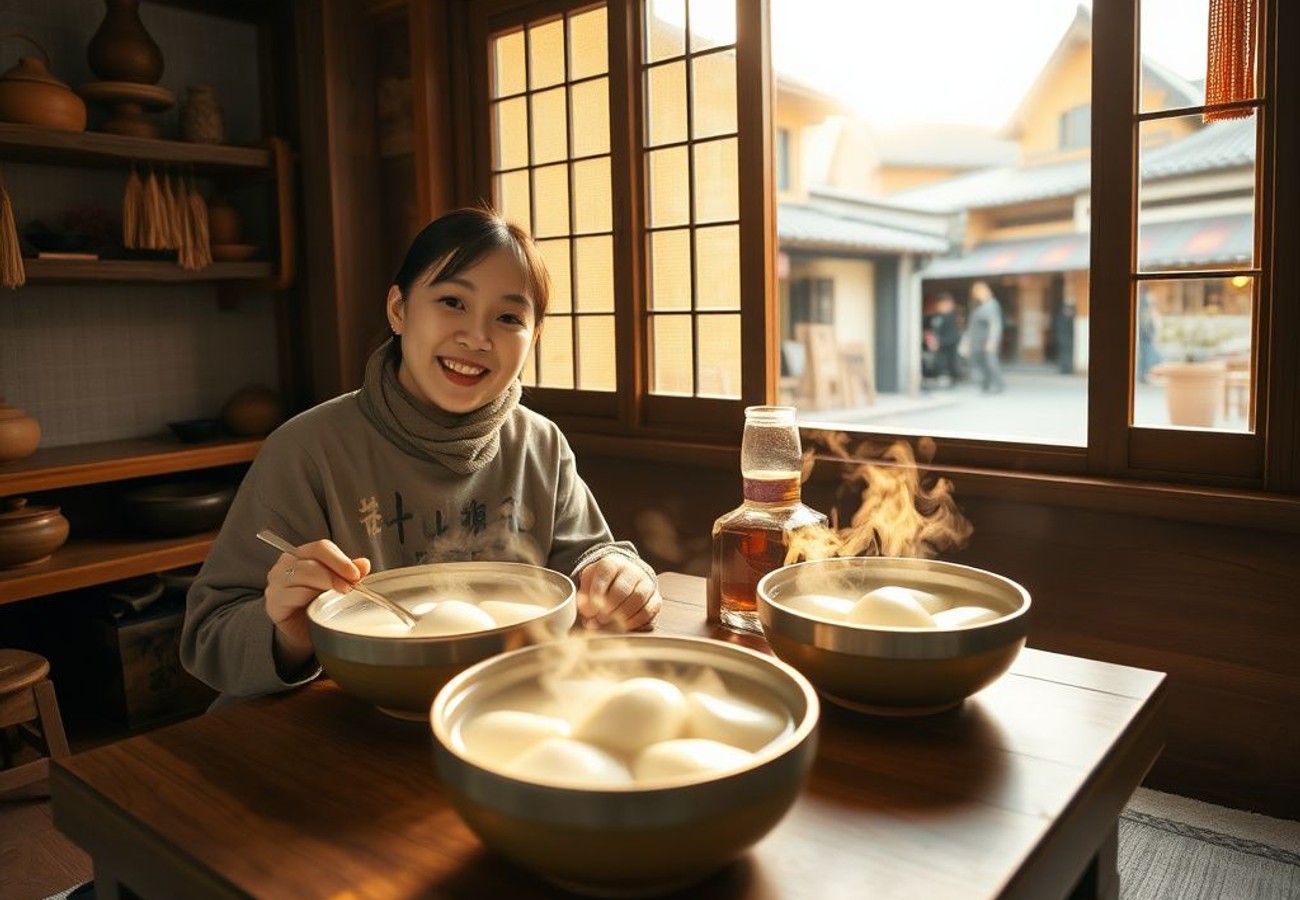
Image generated by AI
The KTX bullet train rockets eastward from Seoul Station, accelerating past the megalopolis's endless construction cranes and high-rise sprawl. Within two hours, the urban chaos dissolves into something gentler: rolling hills, river valleys, and quiet slate-roofed towns. One hundred miles later, you arrive at Gangneung.
Most travelers know this east coast city for its beaches. Miles of golden sand line the coastline, backed by resort hotels, shopping arcades, and gelato shops. But there's another reason—a far more compelling one—why food pilgrims make the journey here.
The Legendary Tofu That Changed Everything
Sundubu isn't just any tofu. It's a silky, cream-colored delicacy that's been handmade in Gangneung for over five hundred years, traditionally served as sundubu jjigae—a steaming stew that simmers with seafood, meat, or vegetables.
The legend is as compelling as the dish itself. According to local lore, a member of the royal household developed the recipe in the 1500s by mixing soy milk with seawater, creating thick, velvety curds with an unmistakable texture that mass-produced versions simply cannot replicate.
Reddit: "I traveled to South Korea expecting the nightlife and tech scene. Left obsessed with a tiny tofu restaurant in Gangneung. That sundubu changed my life." — r/travel
Today, you'll find sundubu packaged in plastic tubes in supermarkets across South Korea. Factory-made. Pasteurized. Forgettable.
But in Gangneung? It's handcrafted. Unpasteurized. Artisanal. And there's only one neighborhood where the real thing still lives.
Chodang-dong: Where Tofu is Religion
Tucked a few hundred yards inland from the beach, Chodang-dong barely qualifies as a neighborhood—just a couple of palm-shaded blocks near the Gyeongpo lagoon. Yet this humble area is home to some of South Korea's oldest tofu restaurants, many operating for decades under the same families.
At the center of this culinary ecosystem sits the Oldtime Chodang Sundubu Restaurant. Owner Lee Young-soon is a force of nature: rouged cheeks, thickly mascaed eyelashes, a lilac hoodie, and the kind of infectious confidence that draws Korean celebrities and TV stars through her doors for decades.
"We make our tofu every day, by hand. Not many restaurants do that anymore," Lee tells me, gesturing into her intimate dining room—vinyl-topped tables, potted plants, flock wallpaper adorned with black-and-white photos of famous patrons.
The kitchen is barely larger than a closet. Pans sizzle. A vintage radio blares K-pop. Lee lifts the lid of a giant steel vat; inside, clouds of fresh sundubu marinate in silence.
"We only use fresh seawater and top-quality soybeans," she explains. "We don't strain our sundubu. It must keep its soft texture."
The Meal That Makes You Understand Korea
Minutes later, a ceramic crock arrives at your table, bubbling and piping hot. Lee recommends the spicy version, flavored with a pungent soybean paste that locals call the "rice thief"—because it's so addictive, you can't stop eating.
The sundubu jjigae arrives with sticky rice and banchan (small side dishes): kimchi, fried flatfish, sprouted soybeans, marinated peppers, pickled radishes. For the final touch, Lee cracks a raw egg into the stew, and it cooks instantly in the heat.
It's hot. Spicy. Rich with umami. A chilli kick tingles on your palate. This is what Lee calls soul food—a taste of grandmother's kitchen, a direct line to centuries of Korean culinary tradition.
By lunchtime, every table is full. A queue stretches out the door and onto the sand. People travel from across South Korea to Chodang-dong specifically for this experience. Not for the beach. Not for the hotels. For a bowl of handmade tofu that tastes like history.
Visiting Gangneung: Practical Details
Oldtime Chodang Sundubu Restaurant (Geuyesnal Chodang Sundubu in Korean) sits at 57 Chodangsundubu-gil, on a street corner near the beach.
Getting there is straightforward: the KTX train departs Seoul Station regularly and reaches Gangneung in approximately two hours. The InsideAsia 12-night Korea by Rail tour costs from £3,455 per person, including transport, bed-and-breakfast accommodation (with traditional hanok stays), and private guiding in Seoul, Gangneung, and Gyeongju.
For international visitors, Virgin Atlantic operates direct flights from London Heathrow to Seoul's Incheon International Airport. For detailed travel planning, visit visitkorea.or.kr or consult South Korea's tourism authority for up-to-date regional guides and travel advisories.
Chodang-dong's restaurants cluster within walking distance of one another, each offering their own interpretation of sundubu jjigae. But Lee's version—the one locals genuinely queue for—remains the gold standard.
Gangneung proves that the most transformative travel isn't about Instagram moments; it's about a bowl of soup that tastes like five centuries of love.
Related Travel Guides
Disclaimer
This article is for informational and educational purposes only. It does not constitute legal, financial, or professional advice. While we strive to provide accurate and up-to-date information, travel policies, regulations, and conditions change rapidly. Always verify information with official sources before making travel decisions. Nomad Lawyer makes no representations about the accuracy, reliability, completeness, or suitability of the information provided. Readers should consult qualified professionals for advice specific to their circumstances. The views expressed in this article are those of the author and do not necessarily reflect the views of Nomad Lawyer.
Raushan Kumar
Founder & Lead Developer
Full-stack developer with 11+ years of experience and a passionate traveller. Raushan built Nomad Lawyer from the ground up with a vision to create the best travel and law experience on the web.
Learn more about our team →