
FS Italiane to Launch Paris-London High Speed Rail Service via Channel Tunnel by 2029
FS Italiane Group is investing £1.7 billion to expand its high-speed fleet and launch a competitive Paris-London rail service through the Channel Tunnel by 2029.

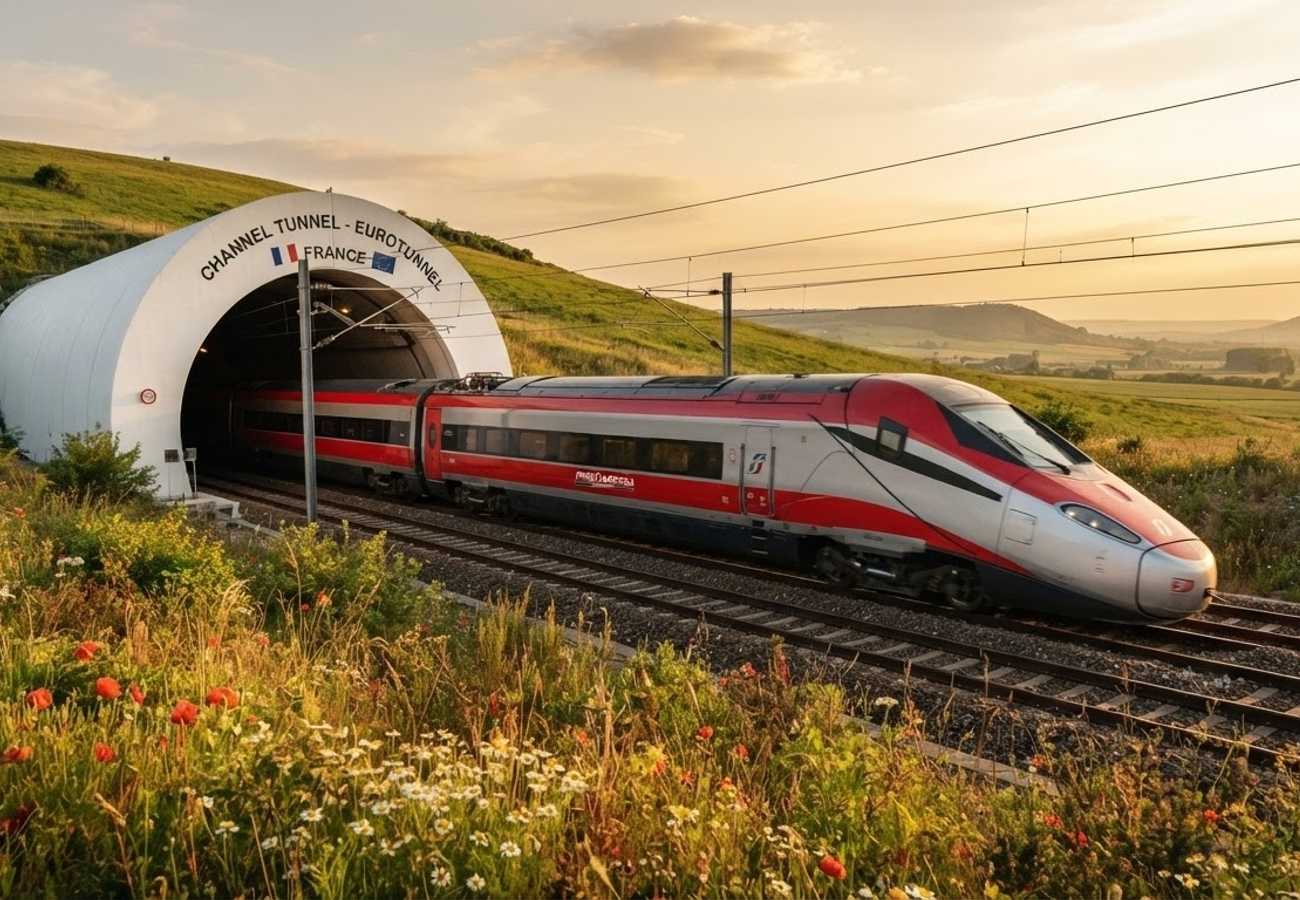
Image generated by AI
The FS Italiane Group is initiating a massive expansion of its high-speed rail network, headlined by a planned entry into the London-Paris corridor via the Channel Tunnel by 2029.
This strategic move signals the end of the long-standing operational monopoly held by Eurostar since 1994. By introducing direct competition on one of the world's most lucrative transport arteries, Italy is positioning itself as a central hub for cross-border European transit.
Fleet Expansion and Capital Investment
To facilitate this expansion, FS Italiane is committing approximately £1.7 billion (€2 billion) toward a significant fleet upgrade. The investment focuses on the acquisition of 19 new high-speed trains specifically engineered for international service.
These assets will serve two primary purposes:
- Immediate Scaling: Strengthening existing Trenitalia France operations on the Paris-Lyon, Paris-Milan, and Paris-Marseille routes.
- Future Entry: Providing the necessary rolling stock to launch the Paris-London service.
The new trains will feature upgraded interiors, high-speed Wi-Fi, and modern onboard bistro services to target premium travelers and business commuters.
Infrastructure and Operational Support
A rail network is only as reliable as its maintenance. To ensure operational stability, FS Italiane is investing £68 million in a dedicated maintenance center located near Paris.
This facility is a critical logistical requirement for any operator using the Channel Tunnel, as it allows for rapid technical support and ensures that trains adhere to the stringent safety standards required for undersea transit.
The Shift in Channel Tunnel Dynamics
For over three decades, the Channel Tunnel has operated with limited competition. However, available capacity within the tunnel now allows for new entrants. FS Italiane is not the only operator eyeing this gap; Virgin Trains is also planning to introduce services starting in 2030, potentially linking London with Paris, Brussels, and Amsterdam.
Virgin's proposed network may further expand to include direct links to Charles de Gaulle Airport and Disneyland Paris, further diversifying the transit options for leisure and business travelers.
Investment Summary
| Investment Area | Estimated Cost | Primary Objective |
|---|---|---|
| Fleet Expansion | £1.7 Billion (€2 Billion) | 19 new high-speed trains for international routes |
| Maintenance Hub | £68 Million | Technical support center near Paris |
| Target Launch Date | 2029 | Commencement of Paris-London service |
Why This Matters: Industry Analysis
From a logistical perspective, the entry of FS Italiane into the UK-Europe market is a watershed moment for passenger rights and pricing. For travelers on this route, the real impact will be a shift from a monopoly to a competitive marketplace. Historically, monopoly routes suffer from rigid pricing structures; the arrival of an Italian state-backed operator suggests a likely increase in departure frequencies and a potential downward pressure on ticket prices.
Our analysis of the route map suggests that Italy is not just looking at the UK, but is attempting to create a "seamless corridor" from the Mediterranean to the North Sea. By integrating Paris-Milan and Paris-London, FS Italiane creates a powerhouse network that makes rail a viable, time-competitive alternative to short-haul aviation.
Furthermore, the move aligns with the broader European "Flight Shame" (Flygskam) trend. As governments tighten regulations on carbon-intensive short-haul flights, the capacity of the Channel Tunnel becomes the primary bottleneck for sustainable European travel. Increasing the number of operators is the only way to scale capacity to meet this demand.
Forward Outlook
The period between 2026 and 2030 will see the most significant reorganization of European rail since the introduction of the TGV. We expect to see:
- Aggressive Pricing Wars: As FS Italiane and Virgin Trains prepare for entry, Eurostar will likely introduce loyalty incentives or price adjustments to retain market share.
- Intermodal Integration: Better synchronization between high-speed rail and urban transit hubs in London and Paris.
- Increased Fleet Standardization: A move toward trains that can seamlessly cross multiple borders without changing locomotives, reducing transit times further.
The era of the single-operator tunnel is ending, ushering in a more connected and competitive European continent.
Related Travel Guides
Disclaimer
This article is for informational and educational purposes only. It does not constitute legal, financial, or professional advice. While we strive to provide accurate and up-to-date information, travel policies, regulations, and conditions change rapidly. Always verify information with official sources before making travel decisions. Nomad Lawyer makes no representations about the accuracy, reliability, completeness, or suitability of the information provided. Readers should consult qualified professionals for advice specific to their circumstances. The views expressed in this article are those of the author and do not necessarily reflect the views of Nomad Lawyer.
Kunal K Choudhary
Co-Founder & Contributor
A passionate traveller and tech enthusiast. Kunal contributes to the vision and growth of Nomad Lawyer, bringing fresh perspectives and driving the community forward.
Learn more about our team →